 | Buy DocSouth Books
POEMS OF PAUL HAMILTON HAYNE:
Electronic Edition.
Paul Hamilton Hayne, 1830-1886.
Text scanned (OCR) and images scanned by
Lee Ann Morawski
Text encoded by
Jill Kuhn
First edition, 1999
ca. 1.1MB
Academic Affairs Library, UNC-CH
University of North Carolina at Chapel Hill,
1999.

Call number PS1905 .A2 1882 (Wilson Annex, UNC-CH)
The electronic edition is a part of the UNC-CH
digitization project, Documenting the American South.
Any hyphens occurring in line breaks have been
removed, and the trailing part of a word has been joined to
the preceding line.
All Greek characters have been transcribed as
entity references.
All quotation marks and ampersands have been transcribed as
entity references.
All double right and left quotation marks are encoded as " and "
respectively.
All single right and left quotation marks are encoded as ' and ' respectively.
Indentation in lines has not been preserved.
Running titles have not been preserved.
Spell-check and verification made against printed text using Author/Editor (SoftQuad) and Microsoft Word spell check programs.
Library of Congress Subject Headings, 21st edition, 1998
- LC Subject Headings:
- Confederate States of America -- Poetry.
- Southern States -- Poetry.
- United States -- History -- Civil War, 1861-1865 -- Poetry.
- 1999-09-20 ,
Celine Noel and Wanda Gunther
revised TEIHeader and created catalog record for the electronic edition. -
1999-08-12,
Jill Kuhn, project manager,
finished TEI-conformant encoding and final proofing. -
1999-08-12,
Jill Kuhn
finished TEI/SGML encoding - 1999-06-25,
Lee Ann Morawski
finished scanning (OCR) and proofing.


POEMS
OF
PAUL HAMILTON HAYNE
Complete Edition
WITH NUMEROUS ILLUSTRATIONS
BOSTON
D. LOTHROP AND COMPANY
32 FRANKLIN STREET, CORNER OF HAWLEY
1882
Page verso
COPYRIGHT, 1882,
BY D. LOTHROP AND COMPANY
PRESS OF
L. N. FREDERICKS.
31 Hawley St., Boston.
Page iii
TO
COLONEL JOHN G. JAMES,
PRESIDENT OF THE STATE AGRICULTURAL AND MECHANICAL COLLEGE
OF TEXAS,
These Verses,
IN WHICH HE HAS TAKEN SO UNSELFISH AN INTEREST,
ARE
AFFECTIONATELY DEDICATED.
Page v
BIOGRAPHICAL SKETCH.
IT had little to do with Byron's success as a poet that he was born in the purple of the English aristocracy; or with the quality of Shelley's genius that he was the son of a Sir Timothy, who prided himself on a descent from a long line of British squires; or that Algernon Swinburne's father was a baronet. And yet if our poets have gentle blood in their veins, other things being equal, we prefer that they should have it.
Good birth, as a general thing, argues good breeding, refinement, education, fixed social position, and a wide margin of generous leisures; all of which have much to do with the outcome of a poet's life.
We do not believe that Tennyson would ever have written as he has, if it had been his fortune to labor for his daily bread. Even had the genius all been there, the wide leisures would have been wanting, and he would have produced his poems, not as Goethe, at his "unhasting ease,"--absolutely free from all exigence--but under the pressure of a goad, which would have destroyed all their beautiful spontaneity.
It is therefore to the advantage of our poet, PAUL HAMILTON HAYNE, that he had ancestors. It may sound somewhat unrepublican perhaps, to hear him wish, as he does in one of his keen sonnets, that these same ancestors had been content to stay in their four-hundred-year-old Shropshire Manor-House, enjoying the positive good England gave them, rather than go sailing over seas in quest of what might be of questionable benefit; but we can forgive him, in view of his antecedents on this side the water, of which he may be proud as well. His English progenitors settled, early in colonial days, in Charleston, South Carolina, and from the first were of importance in the civil affairs of the young State. They furnished noble patriots, who shed their blood in Revolutionary days, for the liberties of their adopted country. The
Page vi
name of the renowned statesman and orator, Robert G. Hayne, who was the poet's uncle, has become the possession of the country. While in the Senate of the United States, he was not afraid to match his strength with Webster's, and he was governor of South Carolina when to be governor of the Palmetto State was an honor worth the winning.
The subject of this sketch is the only child of Lieutenant Hayne, a naval officer, who died at sea when his son was an infant; his mother, recently deceased, was a South Carolina lady, of good English and Scotch descent. He was born in Charleston, January 1st, 1830, and educated at Charleston College, from which he was graduated. Inheriting the prestige of a noble name, high position, and a sufficient amount of wealth, the world was before the youth, and he was free to choose his path. From earliest boyhood his fondness for literature, particularly poetry, was pronounced, and there was everything around him to foster this love. The Charleston of thirty-five years ago was a very different place from the Charleston of to-day. The old Huguenot element, with its aristocratic names and associations, was strong, and the large admixture of good English blood helped to make its people just a little exclusive. Boston herself did not gather the mantle of her self-importance in a more queenly manner about her than did this city by the sea. There was a decided literary element, too, among its higher classes. Legarè's wit and scholarship brightened its social circle; Calhoun's deep shadow loomed over it from his plantation at Fort Hill; Gilmore Simms's genial culture broadened its sympathies. The latter was the Macænas to a band of brilliant youths who used to meet for literary suppers at his beautiful home; and here it was that the love for old Elizabethan lore, and the study of the classics of the English tongue, which has always characterized Mr. Hayne, found one of its best stimulants.
No sooner had he graduated than he threw himself actively into literary life. He became connected with the journalism of the city, and when the enthusiastic group of young scholars established a Literary Monthly Magazine (Russell's) Mr. Hayne was appointed its editor.
His first volume of Poems was published by the old house of Ticknor & Co., Boston, in 1855, when he was some twenty-five years old, his second in 1857, and his third in 1860. These all met with such success as encouraged him to adopt fully a literary life as his vocation.
Page vii
In the meantime he had married Miss Mary Middleton Michel, of Charleston, the daughter of in eminent French physician, who received a gold medal from Napoleon the Third, for services under the first Napoleon at the battle of Leipsic. Of the poet's wife it is but the scantest justice to say that she has been the inspiration, the stay, the joy of his life. No poet ever was more blessed in a wife, and she it is, who, by her self-renunciation, her exquisite sympathy, her positive, material help, her bright hopefulness, has made endurable the losses and trials that have crowded Mr. Hayne's life. Those who know how to read between the lines can see everywhere the influence of this irradiating and stimulating presence.
Then came the disasters of the civil war. Mr. Hayne, whose health, delicate from his childhood, would not allow him to take field service, became an aid on Governor Pickens's staff. During the bombardment of his native city, his beautiful home was burned to the ground, and his large, handsome library utterly lost. Even the few valuables, such as the old family silver, which he succeeded in securing and removing to a bank in Columbia for safe-keeping, were swept away in the famous "march to the sea;" and there was nothing left for the homeless and ruined man but exile among the "Pine Barrens" of Georgia. There he established himself, in utter seclusion, in a veritable cottage (or rather shanty, dignified at first as "Hayne's Roost"), behind whose screens of vines, among the peaches, melons, and strawberries of his own raising, he has fought the fight of life with uncomplaining bravery, and persisted in being happy.
Here, then, at "Copse Hill," nested amid his greenery and his pines, our poet has lived for fifteen years,--content with little of this world's gear, happy in his chosen work, writing as his frail health would permit, and in manly independence. In 1872, the Lippincotts published his Legends and Lyrics, and in 1873 his edition of his friend Henry Timrod's Poems appeared, accompanied by one of the most pathetic biographical memorials of which literature gives an example. In 1875, The Mountain of the Lovers was published. A Life of Gilmore Simms (still in MS.) was also written, with Memorial Sketches of Governor Hayne and Mr. Legarè,--so that these years of seclusion have been well filled up with literary labor; and during the past five years the names of not many writers have appeared more frequently, perhaps, in the pages of our current literature, than that of the recluse of "Copse Hill." Here he has interpreted Nature, we think, with as clear an
Page viii
insight as the poet of Rydal Mount. He has made the melancholy moanings of his Georgia pines sob through his verses. He has given voices to the Midnight Thunder; to the Windless Rain; to the Muscadines of the Southern Forests; to their Woodland Phases; to the Aspects of the Pines, as has not been heretofore done.
It were superfluous to enter upon any criticism of his poems, nor is this the place for it. They are left with the reader, who, if he cannot, of himself, find therein the aromatic freshness of the woods,--the swaying incense of the cathedral-like aisles of pines,--the sough of dying summer winds,--the glint of lonely pools, and the brooding notes of leaf-hidden mocking-birds,--would not be able to discern them, however carefully the critic might point them out.
MARGARET J. PRESTON.
Page ix
CONTENTS.
- The Will and the Wing . . . . . 1
- "The Laughing Hours before her Feet" . . . . . 1
- Eve of the Bridal . . . . . 2
- My Father . . . . . 3
- Song . . . . . 3
- Song . . . . . 4
- By the Grave . . . . . 4
- Song of the Naiads . . . . . 5
- Lethe . . . . . 5
- Tile Realm of Rest . . . . . 6
- The Island in the South . . . . . 7
- Ode . . . . . 9
- Queen Galena . . . . . 13
- The Poet's Trust in his Sorrow . . . . . 13
- The Brook . . . . . 14
- Nature the Consoler . . . . . 14
- The Soul Conflict . . . . . 16
- The Presentiment . . . . . 16
- The Two Summers . . . . . 16
- Lines . . . . . 17
- Song . . . . . 18
- On a Portrait . . . . . 18
- The Shadow . . . . . 18
- The Winter Winds may wildly rave . . . . . 19
- Under Sentence . . . . . 19
- The Village Beauty . . . . . 20
- After Death . . . . . 21
YOUTHFUL POEMS
- October . . . . . 25
- Life and Death . . . . . 25
- Shelley . . . . . 26
- Poets of the Olden Time . . . . . 26
- "Now while the Rear Guard" . . . . . 26
- "Pent in this Common Sphere" . . . . . 26
- "Between the Sunken Sun and the New Moon" . . . . . 27
- Ancient Myths . . . . . 28
- O God! What Glorious Seasons Bless Thy World! . . . . . 28
- "Along the Path Thy Bleeding Feet" . . . . . 28
- "Too oft the Poet in Elaborate Verse" . . . . . 28
- Mountain Sonnets . . . . . 29
- Composed in Autumn . . . . . 29
- Great Poets and Small . . . . . 30
- My Study . . . . . 30
- To-- . . . . . 30
- To W. H. W. . . . . . 31
- Lines . . . . . 31
- "An Idle Poet Dreaming" . . . . . 32
SONNETS.
- Antonio Melidori . . . . . 35
- Allan Herbert . . . . . 46
- From The Conspirator, an Unpublished Tragedy . . . . . 49
- Experience in Poverty . . . . . 51
- The True Philosophy . . . . . 52
- Love's Caprices . . . . . 52
- Creeds . . . . . 54
- The Universality of Grief . . . . . 54
- The Penitent . . . . . 54
- Dramatic Fragment . . . . . 55
- Reward of Fickleness . . . . . 55
- A Character . . . . . 56
- Morals of Desperation . . . . . 58
- The Condemned . . . . . 58
- Antipathies . . . . . 60
- Misconstruction . . . . . 61
DRAMATIC SKETCHES.
Page x
- My Mother-land . . . . . 65
- Ode . . . . . 67
- Charleston . . . . . 71
- Stuart . . . . . 72
- Beyond the Potomac . . . . . 73
- Beauregard's Appeal . . . . . 74
- The Substitute . . . . . 75
- Battle of Charleston Harbor . . . . . 77
- Charleston at the close of 1863 . . . . . 78
- Scene in a Country Hospital . . . . . 79
- Vicksburg--a ballad . . . . . 80
- The Little White Glove . . . . . 80
- Stonewall Jackson . . . . . 82
- Sonnets . . . . . 84
- Our Martyrs . . . . . 85
- Forgotten . . . . . 86
POEMS OF THE WAR.
- Daphles--an Argive Story . . . . . 89
- Aëthra . . . . . 100
- Renewed . . . . . 100
- Krishna and his Three Handmaidens . . . . . 102
- Under the Pine (To the Memory of Henry Timrod) . . . . . 103
- A Dream of the South Winds . . . . . 105
- In the Mist . . . . . 105
- A Summer Mood . . . . . 106
- Midnight . . . . . 106
- The Bonny Brown Hand . . . . . 106
- Fire Pictures . . . . . 111
- An Anniversary . . . . . 114
- From the Woods . . . . . 114
- Dolce far Niente . . . . . 115
- Cambyses and the Macrobian Bow . . . . . 116
- By the Autumn Sea . . . . . 118
- The Wife of Brittany . . . . . 118
- The River . . . . . 137
- The Story of Glaucus the Thessalian . . . . . 138
- The Nest . . . . . 142
- Not Dead . . . . . 142
- Sonnet . . . . . 143
- Marguerite . . . . . 143
- Apart . . . . . 144
- The Lotos and the Lily . . . . . 144
- Windless Rain . . . . . 146
- "In Utroque Fidelis" . . . . . 146
- Nature Betrothed and Wedded . . . . . 147
- Chloris . . . . . 147
- Fortunio . . . . . 148
- A Feudal Picture . . . . . 150
- The Warning . . . . . 152
- Drifting . . . . . 152
- Sonnets . . . . . 153
- Ode to Sleep . . . . . 154
- Song . . . . . 156
- Hopes and Memories . . . . . 156
- Widderin's Race . . . . . 156
- October . . . . . 162
- Will . . . . . 163
- Here and There . . . . . 163
- Welcome to Winter . . . . . 164
- To My Mother . . . . . 164
- Sonnets . . . . . 165, 166
- The Mountain of the Lovers . . . . . 166
- The Vengeance of the Goddess Diana . . . . . 178
- The Solitary Lake . . . . . 187
- The Voice in the Pines . . . . . 188
- Visit of the Wrens . . . . . 188
- Morning . . . . . 190
- Golden Dell . . . . . 191
- Aspect of the Pines . . . . . 191
- Midsummer in the South . . . . . 192
- Cloud Pictures . . . . . 193
- Sonnet . . . . . 194
- In the Pine Barrens--Sunset . . . . . 194
- Sonnet . . . . . 195
- The Woodland Phases . . . . . 195
- After the Tornado . . . . . 195
- In the Bower . . . . . 196
- Whence? . . . . . 196
- Sonnet . . . . . 197
- Violets . . . . . 198
- By the Grave of Henry Timrod . . . . . 198
- Sonnets . . . . . 200
- Ariel . . . . . 200
- The Cloud Star . . . . . 201
- Sweetheart, Good bye! . . . . . 201
- Sonnet . . . . . 202
- Frida and her Poet . . . . . 202
- Preëxistence . . . . . 204
- Sonnet . . . . . 205
- A Thousand Years from Now . . . . . 205
- Sonnet . . . . . 206
-
Thunder at Midnight . . . . . 206
Page xi - On the Death of Canon Kingsley . . . . . 207
- When all has been said and done . . . . . 208
- The Vision in the Valley . . . . . 208
- The Arctic Visitation . . . . . 209
- The Wind of Onset . . . . . 210
- The Visit of Mahmoud Ben Suleim to Paradise . . . . . 210
- My Daughter . . . . . 215
- Our "Humming-bird" . . . . . 215
LEGENDS AND LYRICS.
- Unveiled . . . . . 219
- Muscadines . . . . . 222
- In a Spring Garden . . . . . 224
- In Degree . . . . . 225
- The Skeleton Witness . . . . . 225
- Storm Fragments . . . . . 225
- Above the Storm . . . . . 227
- Underground . . . . . 227
- The Dryad of the Pine . . . . . 228
- Welcome to Frost . . . . . 229
- The Pine's Mystery . . . . . 229
- To a Bee . . . . . 229
- The first Mocking Bird in Spring . . . . . 230
- The Red and the White Rose . . . . . 231
- Before the Mirror . . . . . 232
- Two Epochs . . . . . 233
- Wind from the East . . . . . 233
- Peach Blooms . . . . . 234
- The Awakening . . . . . 235
- Love's Autumn . . . . . 235
- The Spirea . . . . . 236
- Coquette . . . . . 236
- Skating . . . . . 237
- The World within us . . . . . 237
- Forest Quiet . . . . . 238
- The Mocking Bird, . . . . . 239
- A Storm in the Distance . . . . . 239
- The Vision by the Sea . . . . . 240
- The Visionary Face . . . . . 240
- The Rose and the Thorn . . . . . 241
- The Red Lily . . . . . 241
- Lake Winnipiseogee . . . . . 242
- Lake Mists . . . . . 242
- The Inevitable Calm . . . . . 242
- The Dead Look . . . . . 242
- Jetsam . . . . . 243
- Fameless Graves . . . . . 244
- Winter Rose . . . . . 245
- Tristram of the Wood . . . . . 245
- Hints of Spring . . . . . 246
- The Hawk . . . . . 247
- Over the Waters . . . . . 247
- The True Heaven . . . . . 247
- The Breezes of June . . . . . 248
- A Mountain Fancy . . . . . 248
- Absence and Love . . . . . 248
- The Fallen Pine-Cone . . . . . 248
- Stern Truths Transfigured . . . . . 249
- Distance . . . . . 249
- Horizons . . . . . 249
- In the Gray of the Evening . . . . . 250
- The Vision at Twilight . . . . . 250
- An Hour Too Late . . . . . 251
- "Too Low and yet too High!" . . . . . 251
- The Lordship of Corfu . . . . . 251
- Tallulah Falls . . . . . 253
- The Meadow Brook . . . . . 255
- The Valley of Anostan . . . . . 256
- Two Songs . . . . . 256
- I. Freshness of Poetic Perception . . . . . 257
- II. Laocoon . . . . . 257
- III. At last . . . . . 257
- IV. A Phantom in the Clouds . . . . . 258
- V. Japonicas . . . . . 258
- VI. The Usurper . . . . . 258
- VII. December Sonnet . . . . . 258
- VIII. A Comparison . . . . . 259
- IX. Fate, or God? . . . . . 259
- X. Sonnet . . . . . 259
- XI. Earth Odors--after Rain . . . . . 260
- XII. Sonnet . . . . . 260
- XIII. Poverty . . . . . 260
- XIV. Waste . . . . . 261
- XV. A Morning after Storm . . . . . 261
- XVI. Dead Loves . . . . . 261
- XVII. Nature at Ease . . . . . 262
- XVIII. The Cnydian Oracle . . . . . 262
- XIX. The Hyacinth . . . . . 262
- XX. The Wood Far Inland . . . . . 262
- XXI. Sonnet . . . . . 263
- XXII. Magnolia Gardens . . . . . 263
- XXIII. England . . . . . 263
- XXIV. Disappointment . . . . . 264
- XXV. The Last of the Roses . . . . . 264
- XXVI. The Axe and the Pine . . . . . 264
- XXVII. Betrothal Night . . . . . 265
- XXVIII. "The Old Man of the Sea" . . . . . 265
- XXIX. Two Pictures . . . . . 265
- XXX. The Might have been . . . . . 265
- XXXI. Night Winds in Winter . . . . . 266
- XXXII. To the Querulous Poets . . . . . 266
- XXIII. In the Porch . . . . . 266
- XXXIV. The Phantom Song . . . . . 267
- XXXV. Small Griefs and Great . . . . . 267
- XXVI. The Shallow Heart! . . . . . 267
- XXVII. The Stormy Night . . . . . 268
Sonnets:
- Macdonald's Raid . . . . . 271
- The Battle of King's Mountain . . . . . 274
- The Hanging of Black Cudjo . . . . . 278
- Charleston Retaken . . . . . 280
- To the Author of "the Victorian Poets" . . . . . 283
- Hera . . . . . 283
- Below and Above . . . . . 284
- The Woodland Grave . . . . . 284
- A Character . . . . . 284
- Lyric Of Action . . . . . 285
- By a Grave . . . . . 285
- Severance . . . . . 286
- Two Graves . . . . . 287
- The World . . . . . 287
- The May Sky . . . . . 288
- A Lyrical Picture . . . . . 288
- Lamia Unveiled . . . . . 289
- Rachel . . . . . 289
- The Snow Messengers . . . . . 290
- To Alexander H. Stephens . . . . . 293
- The Enchanted Mirror . . . . . 293
- The Imprisoned Sea-Winds . . . . . 294
- Blanche and Nell . . . . . 294
- The Dark . . . . . 295
- In the Studio . . . . . 296
- Washington . . . . . 296
- In Ambush . . . . . 297
- South Carolina to the States of the North . . . . . 297
- The Stricken South to the North . . . . . 299
- The Return of Peace . . . . . 300
- Yorktown Centennial Lyric . . . . . 304
- On the Persecution of the Jews in Russia . . . . . 305
- Assassination . . . . . 306
- England . . . . . 307
- To Longfellow . . . . . 308
- "Philip my King" . . . . . 308
- A Plea for the Gray . . . . . 309
- Union of Blue and Gray . . . . . 310
- The King of the Plow . . . . . 311
- I. Longfellow Dead . . . . . 312
- II. On the Death of President Garfield . . . . . 312
- III. Dean Stanley . . . . . 313
- IV. Hiram H. Benner . . . . . 314
- V. W. Gilmore Simms . . . . . 315
- VI. Dickens . . . . . 320
- VII. To Bayard Taylor beyond us . . . . . 320
- VIII. Bayard Taylor (upon death) . . . . . 321
- IX. Richard H. Dana, Sen. . . . . . 321
- X. Bryant Dead! . . . . . 322
- XI. The Pole of Death . . . . . 322
- XII. The Death of Hood . . . . . 322
In Memoriam:
- I. Christ on Earth . . . . . 323
- II. Harvest Home . . . . . 324
- III. Reconciliation . . . . . 325
- IV. A Vernal Hymn . . . . . 325
- V. Christian Exaltation . . . . . 326
- VI. Solitude; in Youth and Age . . . . . 326
- VII. Denial . . . . . 326
- VIII. Lesson of Submission . . . . . 327
- IX. The Supreme Hour . . . . . 327
- X. A Christmas Lyric . . . . . 327
- XI. The Pilgrim . . . . . 328
- XII. Penuel . . . . . 328
- XIII. Patience . . . . . 328
- XIV. The Latter Peace . . . . . 329
- XV. Gautama . . . . . 329
- XVI. Christ . . . . . 330
- XVII. A Winter Hymn . . . . . 330
- XVIII. The Three Urns . . . . . 330
- XIX. On the Decline of Faith . . . . . 331
- XX. The Ultimate Trust . . . . . 332
- XXI. A Little While I Fain Would Linger Yet . . . . . 332
- XXII. Twilight Monologue . . . . . 333
- XXIII The Shadow of Death . . . . . 334
- XXIV. Finis . . . . . 334
- XXV. The Shadows on the Wall . . . . . 335
- XXVI. Consummatum Est . . . . . 336
- XXVII. The Broken Chords . . . . . 337
- XXVIII. The Rift within the Lute . . . . . 337
- XXIX. In Harbor . . . . . 237
- XXX. Forecastings . . . . . 338
- XXXI. Appeal to Nature of the Solitary Heart . . . . . 338
Meditative and Religious:
LATER POEMS.
- Valerie's Confession . . . . . 343
- A Meeting of the Birds . . . . . 344
- A Bachelor Bookworm's Complaint . . . . . 346
- Coquette and Her Lover . . . . . 348
- Senex to his Friend . . . . . 351
- The Observant "Eldest" Speaks . . . . . 351
- Lucifer's Deputy . . . . . 352
HUMOROUS POEMS.
Page xiii
- Little Nellie in the Prison . . . . . 357
- The Children . . . . . 359
- Will and I . . . . . 359
- Jamie and his Mother . . . . . 360
- The Three Copecks . . . . . 361
- The Reason Why . . . . . 361
- The Silken Shoe . . . . . 362
- The Black Destrier . . . . . 364
- The, Adventures of Little Bob Bonnyface . . . . . 365
- Kiss me, Katie! . . . . . 368
- Caged . . . . . 369
- Little Lottie's Grievance . . . . . 369
- A new Version of Why the Robin's Breast is Red . . . . . 370
- The Little Saint . . . . . 370
- A new Philosophy, or, Star Showers explained . . . . . 371
- Baby's First Word . . . . . 371
- The Chameleon . . . . . 372
- Flying Furze . . . . . 372
- The New Sister . . . . . 373
- Hop, Skip, and Jump, a Queer Trio personified . . . . . 373
- Dancing . . . . . 374
- Motes . . . . . 376
- The Ground Squirrel . . . . . 376
- Artie's Amen . . . . . 377
- Three Portraits of Boys . . . . . 378
- Birds . . . . . 380
- The Dead Child and the Mocking-bird . . . . . 380
- The Little Grand Duches . . . . . 381
- Roly Poly . . . . . 382
- The Imprisoned Innocents . . . . . 383
POEMS FOR CHILDREN
Page xv
LIST OF ILLUSTRATIONS.
- PORTRAIT OF PAUL HAMILTON HAYNE . . . . . Frontispiece
- HOME OF PAUL H. HAYNE . . . . . xvii
- COME! COME! AND SEEK US HERE . . . . . 5
- WE REACHED AN ISLE . . . . . 8
- GLADLY I HAIL THESE SOLITUDES . . . . . 14
- BETWEEN THE SUNKEN SUN AND THE NEW MOON . . . . . 27
- THIS IS MY WORLD . . . . . 30
- PAUL H. HAYNE'S BIRTHPLACE . . . . . 40
- THE CANVAS SPEAKS . . . . . 46
- COME, SWEETHEART, HEAR ME . . . . . 53
- ALMIGHTY NATURE THE FIRST LAW Of GOD . . . . . 59
- THEY AROSE WITH THE SUN . . . . . 73
- THE FLOWERS THAT WREATHE MY HUMBLE HEARTH . . . . . 76
- AND BY THEIR FAVORITE STREAM . . . . . 81
- LEAGUES OF GOLDEN FIELDS AND STREAMS . . . . . 96
- VOICES LOW AND SWEET . . . . . 101
- THE MOON, A GHOST OF HER SWEET SELF . . . . . 106
- UPVEILED IN YONDER DIM ETHEREAL SEA . . . . . 109
- COUNTLESS CORUSCATIONS GLIMMER . . . . . 112
- THERE COMETH A DREAM OF THE PAST TO ME . . . . . 118
- THOSE BRISTLING ROCKS . . . . . 125
- HE TURNED TO WAVE "FAREWELL" . . . . . 132
- ON THE FATEFUL STREAMLET ROLLED . . . . . 138
- VIEW US WHITE-ROBED LILIES . . . . . 145
- KING OF A REALM OF FIRS AND ICY FLOES . . . . . 149
- OUR HOPES IN YOUTH . . . . . 156
- NO, NO! STANCH WIDDERIN . . . . . 161
- EVERY DEEPEST COPSE . . . . . 168
- THE KINGDOM'S PRINCELIEST YOUTH . . . . . 174
- A MONSTER MEET FOR TARTARUS . . . . . 183
-
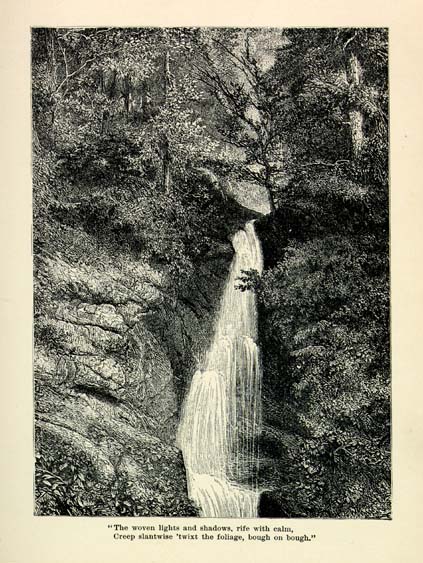
THE WOVEN LIGHT AND SHADOWS . . . . . 190
Page xvi - UPLIFT AND BEAR ME WHERE THE WILD FLOWERS GROW . . . . . 197
- WHILE SAUNTERING THROUGH THE CROWDED STREET . . . . . 204
- ON YESTERNIGHT OLD WINTER CAME . . . . . 210
- HAVE I NOT FOLLOWED . . . . . 221
- SOBER SEPTEMBER . . . . . 222
- O MASTERFUL WIND AND CRUEL . . . . . 233
- AH! MANY A GALLANT LOVED HER WELL . . . . . 236
- WHILE GRIMLY DOWN THE MOONLIT BAY . . . . . 243
- O TWILIGHT SKY OF MELLOW GRAY . . . . . 250
- GURGLE, GURGLE, GURGLE . . . . . 255
- NOW SERENE NATURE . . . . . 262
- WINDS! ARE THEY WINDS? . . . . . 266
- 'TWAS A MORN COLD AND GRAY . . . . . 273
- THAT MAN MUST DIE . . . . . 276
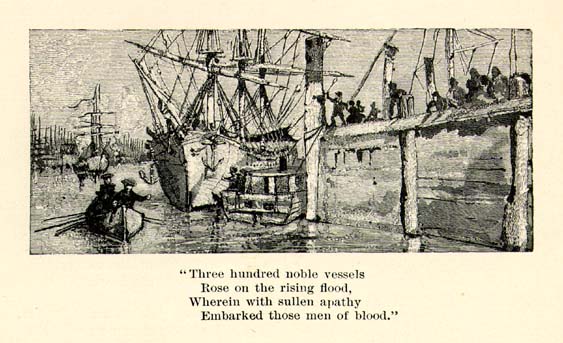
- THREE HUNDRED NOBLE VESSELS . . . . . 281
- WE TURN, MY LOVE AND I . . . . . 284
- TO PASS ONCE MORE O'ER HAMPSHIRE'S MOUNTAIN HEIGHTS . . . . . 291
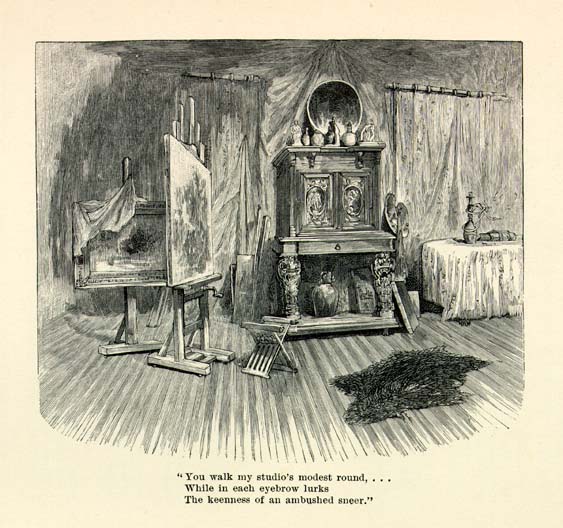
- YOU WALK MY STUDIO'S MODEST ROUND . . . . . 296
- WAR-WASTED LANDS . . . . . 303
- OLD PASSIONS MAY BE PURGED OF BLOOD . . . . . 309
- PALE MEMORY NEAR US . . . . . 317
- O'ER ALL THE FRAGRANT LAND, THIS HARVEST DAY . . . . . 324
- O WEARY WINDS! . . . . . 330
- MY THOUGHTS ARE WANDERING . . . . . 335
- FOR FULL FIVE SECONDS . . . . . 349
- NELLIE CLASPED HIS NECK . . . . . 358
- MY SHOE, PAPA . . . . . 363
- KATIE, PRETTY KATIE, KISS ME . . . . . 368
- DANCING! I LOVE IT . . . . . 375
- ROLY POLY'S JUST AWAKENED . . . . . 382

HOME OF PAUL HAMILTON HAYNE
"Copse Hill," Ga.
Page 1
YOUTHFUL POEMS.
1850-1860
THE WILL AND THE WING.
TO have the will to soar, but not the wings,
Eyes fixed forever on a starry height,
Whence stately shapes of grand imaginings
Flash down the splendors of imperial light;
And yet to lack the charm that makes them ours,
The obedient vassals of that conquering spell,
Whose omnipresent and ethereal powers,
Encircle Heaven, nor fear to enter Hell;
This is the doom of Tantalus--the thirst
For beauty's balmy fount to quench the fires
Of the wild passion that our souls have nurst
In hopeless promptings--unfulfilled desires.
Yet would I rather in the outward state
Of Song's immortal temple lay me down,
A beggar basking by that radiant gate
Than bend beneath the haughtiest empire's crown!
For sometimes, through the bars, my ravished eyes
Have caught brief glimpses of a life divine,
And seen a far, mysterious rapture rise
Beyond the veil that guards the inmost shrine.
"THE LAUGHING HOURS BEFORE HER FEET."
THE laughing Hours before her feet,
Are scattering spring-time roses,
And the voices in her soul are sweet
As music's mellowed closes;
All hopes and passions, heavenly born,
In her, have met together,
And Joy diffuses round her morn
A mist of golden weather.
As o'er her cheek of delicate dyes,
The blooms of childhood hover,
So do the tranced and sinless eyes,
All childhood's heart discover;
Full of a dreamy happiness,
With rainbow fancies laden,
Whose arch of promise grows to bless
Her spirit's beauteous Adenne.
She is a being born to raise
Those undefiled emotions,
That whisper of our sunniest days,
And most sincere devotions;
In her, we see renewed and bright,
That phase of earthly story.
Which glimmers in the morning light,
Of God's exceeding glory.
Why, in a life of mortal cares,
Appear these heavenly faces,
Why, on the verge of darkened years,
These clear, celestial graces?
'Tis but to cheer the soul that faints
With pure and blest evangels,
To prove, if Heaven is rich with saints,
That Earth may have her angels.
Page 2
Enough! 'tis not for me to pray
That on her life's sweet river,
The calmness of a virgin day
May rest, and rest forever;
I know a guardian Genius stands
Beside those waters lowly,
And labors with ethereal hands
To keep them pure and holy.
EVE OF THE BRIDAL.
YES! it has come; the strange, o'ermastering hour,
When buoyant hopes, and tender, tremulous fears
Sway the full heart with a divided power,
The flush of sunshine, and the touch of tears!
Oh! for a spell to charm away thy care,
As I could charm, were I but near thee now
To chide coy flickerings of that half despair
Of virginal shame upon thy downcast brow;
A fitful gloom 'mid blushes of bright joy.
Like those transparent clouds in summer days,
That cast their transient shadows of alloy
Across the noontide's else too dazzling blaze;
Yet, from the fair hills of this foreign shore,
I waft thee benedictions on the wind,
Hopes that a peaceful bliss forevermore
May rule the gracious empire of thy mind.
And blessing thus, the dreary distance dies,
And in a clearer than Agrippa's glass,
The enamored fancy,--what, pale visions rise,
Brightening to shape and beauty ere they pass?
A room where sunset's glory deep, though dim,
Girds thy rich chamber with luxurious grace,
Rounds the fair outline of each delicate limb,
And crowns with chastened ray thine eloquent face,
In shimmering folds thy raiments soft and rare,
Swell with the passionate heavings of thy breast,
O'er whose young loveliness, the, entranced air,
Languidly breathing seeks voluptuous rest.
Thy hand--(in two brief hours no longer thine)--
Gleams near a gossamer curtain, stirred with sighs,
And the full, star-like tears, begin to shine
In the blue heaven of thy bewildering eyes.
Tears for the girlhood, almost past away,
Its innocent life, its wealth of tender lore,
Tears for the womanhood, whose opening day,
May not reveal the untried scene before.
Not bitter tears! for him thou lov'st is true,
And all thy being quivers into flame,
A swift delicious flame that thrills thee through,
Whene'er thy memory lingers on his name.
Ev'n now I see thee turn thy timid head,
Luxuriant-locked, towards a dim retreat,
Where twilight shadows veil thy bridal bed,
And golden gloom and tender silence meet.
Page 3
MY FATHER.
MY father! in the vague, mysterious past,
My boyish thoughts have wandered o'er and o'er,
To thy lone grave upon a distant shore,
The wanderer of the waters, still at last.
Never in childhood have I blithely sprung
To catch my father's voice, or climb his knee;
He was a constant pilgrim of the sea,
And died upon it when his boy was young.
He perished not in conflict nor in flame,
No laurel garland rests upon his tomb;
Yet in stern duty's path he met his doom;
A life heroic, though unwed to fame!
First in vague depths of fancy, scarce-defined,
Love limned his wavering likeness on my soul,
Till through slow growths it waxed a perfect whole
Of clear conceptions, brightening heart and mind.
His careless bearing and his manly face,
His cordial eye; his firm-knit, stalwart form,
Fitted to breast the fight, the wreck, the storm;
The sailor's frankness and the soldier's grace.
In dreams, in dreams we've mingled, and a swell
Of feeling mightier for the eyes' eclipse,
The music of a blest Apocalypse,
Thrilled through my spirit with its mystic spell:
Ah, then! ofttimes a sadder scene will rise,
A gallant vessel through the mist-bound day,
Lifting her spectral spars above the bay,
Gloomily swayed against gray glimmering skies.
O'er the dim billows thundering, peals a boom
Of the deep gun that bursteth as a knell,
When the brave tender to the brave farewell--
And strong arms bear a comrade to the tomb.
. . . . .
The opened sod: a sorrowing band beside--
One rattling roll of musketry, and then,
A man no more among his fellow-men,
Darkness his chamber, and the earth his bride,
My father sleeps in peace; perchance more blest,
Than some he left to mourn him, and to know
The bitter blight of an enduring woe,
Longing (how oft!) with him to be at rest.
SONG
FLY, swiftly fly
Through yon fair sky,
O purple-pinioned Hours!
And bring once more the balmy night,
When from her lattice, silvery bright,
Love's beacon-star--her taper--shines
Between those dark manorial pines,
Above the myrtle-bowers.
Fly, breezes, fly,
And waft my sigh
With love's warm fondness fraught,
'Twill stir my lady's languid mood,
Where, in her verdurous solitude,
Page 4
She sits and thinks, a moonlight grace
Cast o'er her beauteous brow and face,
Touched by a passionate thought!
Glide, rivulet, glide
With whispering tide,
Through coverts low and deep,
To woo her with the airy call,
The music faint, the far-off fall,
Of fairy streams in fairy climes,
Or pleasant lapse of fairy rhymes,
Soft as her breath in sleep.
Fly, swiftly fly
Through yon calm sky,
O gentle-hearted dove!
And pausing on her favorite tree,
Murmur your plaint so tenderly,
That, born of that sweet tone, a charm
Her very heart of hearts may warm
With rosy bliss of love.
Fly, swiftly fly
Through yon fair sky,
O purple-pinioned Hours!
And bring once more the balmy night,
When front her lattice, silvery bright,
Love's beacon-star--her taper--shines
Between those, dark manorial pines
Above the myrtle-bowers!
SONG
HO! fetch me the winecup! fill up to the brim!
For my heart has grown cold, and my vision is dim,
And I fain would bring back for a moment the glow,
The swift passion that age has long chilled with its snow;
Ho! fetch me the winecup! the red liquor gleams,
With a promise to waken youth's rapture of dreams,
And I'll drain the bright draught for that promise divine,
Though Death, Death the spectre, should hand me the wine.
'Tis not life that I live, for the blood-currents glide
Through my wan shrunken veins in so sluggish a tide,
That my heart droops and withers; what! life call you this?
O! rather, consumed by one keen thrill of bliss,
Would I die with youth's glory revivified round me.
The deep eyes that blessed, and the white arms that bound me;
O! Rather than brood in this dusk of desire,
Sink down, like yon marvellous sunset, all fire,
The soul clad with wings, and the brain steeped in light;
Then come, potent wizard! I call on thy might,
Breathe a magical mist o'er the ravage of Time,
Roll back the sad years to the flush of my prime,
And I'll drain thy bright draught for that vision divine,
Though Death, Death the Spectre, should hand me the wine!
BY THE GRAVE.
[Extract from an unfinished narrative poem]
THIS is the place--I pray thee, friend,
Leave me alone with that dread grief,
Whose raven wings o'erarch the grave,
Closed on a life how sad and brief!
Already the young violets bloom
On the light sod that shrouds her form,
And Summer's awful sunshine strikes
Incongruous on the spirit's storm.
She died, and did not know that I,
Whose heart is breaking in this gloom,
Had shrined her love, as pilgrims shrine
A blossom from some saintly tomb.
Page 5
And, ah! Indeed, it was a tomb,
The tomb of Hope, so ghastly-gray,
Whence sprung that flower of love that grew
Serenely on the Hope's decay.
A pallid flower that bloomed alone,
With to warm light to keep it fair,
But nurtured by the tears that fell,
Even from the clouds of our despair.
She perished, and her patient soul
Passed to God's rest, nor did she know
I kept the faith we could not plight
In honor, or in peace below.
But, Love! at last, all, all is clear.
You see the flame of that fierce fate,
Which blazed between my life, and yours,
And left them both--how desolate!
And well you comprehend that now
My heart is breaking where I stand,
But mid the ruin, shrines its faith,
A relic from love's Holy Land.
SONG OF THE NAIADS.
GAY is our crystal floor,
Beneath the wave,
With strange gems flaming o'er
The Genii gave;
Sweet is the purple light
That haunts out happy sight,
And low and sweet the lulling strains that sigh
While the tides pause, and the faint zephyrs die.

"Come, come and seek us here,
In these cool deeps."
Come! come! and seek us here,
In these cool deeps,
Where all is calmly fair,
And sorrow sleeps:
Thy burning brow shall rest,
Couched on a tender breast,
And, charmed to bliss, thy soul shall catch the gleams
Of mystic glories in Elysian dreams.
Come! ere the earth rows drear,
The tempests rave,
And the fast-failing year
Is nigh its grave:
Thy summer, too, is past,
Wouldst thou have peace at last?
O! here she dwells serenely in still caves,
And waits to woo thee underneath the waves.
LETHE.
A DUMB, dark region through whose desolate heart
Creeps a dull river with a stagnant flood;
Its skies are sombre-hued, and dreary clouds,
No wind hath ever stirred, hang low and dim
Page 6
Above the barren woodlands; all things droop
In slumber; the little willow stoops to kiss
The waves, but not a ripple murmurs back
Its salutation, and wan starlike flowers
Yield a white radiance to the failing sense,
And odors pregnant with the charms of rest,
And glamour of Oblivion; all things droop
In slumber; for whate'er hath passed the bounds
Of this miraculous kingdom, bird or beast,
Men lured from action, or soul-sick of life,
Weary and heartsore, maids in love's despair,
Or mothers stricken by their first-born's crime--
All sink without a struggle to deep peace.
Prone in the gleam the river casts abroad,
A gleam more pallid than the light of Hades,
Lie those who sought this region ages since;
Their upturned brows are smooth, and tranced with calm.
And on their shadowy lips a waning smile
Fitfully glimmers; round them rest the forms
Of savage beasts; the lion all unnerved,
Drowsy and passionless, his huge limbs relaxed,
And curved to lines of languor: the fierce pard
Tamed to a breathless quiet, whilst afar,
Gloom the gaunt shapes of mighty brutes of eld,
The world's primeval tenants; all things droop
In slumber; even the sluggish river's flow
Sounds like the dying surges of the sea
To ears far inland, or the feeblest sigh
Of winds that faint on lofty mountain-tops.
This is the realm--"Oblivion"--this the stream
Which mortals have called--"Lethe!"
THE REALM OF REST.
In the realm that Nature boundeth
Are there balmy shores of peace,
Where no passion-torrent soundeth,
And no storm-wind seeks release?
Rest they 'mid the waters golden,
Of some strange untravelled sea,
Where low, halcyon airs have stolen,
Lingering round them slumbrously?
Shores begirt with purple hazes,
Mellowed by gray twilight's beams,
Whose weird curtains shroud the mazes,
Wandering through a realm of dreams;
Shores, where Silence wooes Devotion,
Action faints, and echo dies,
And each peace-entranced emotion
Feeds on quiet mysteries.
If there be, O guardian Master,
Genius of my life and fate,
Bear me from the world's disaster,
Through that kingdom's shadowy gate;
Let me lie beneath its willows,
On the fragrant, flowering strand,
Lulled to rest by breezeless billows,
Thrilled with airs of Elfin-land.
Slumber, flushed with faintest dreamings;
Deep that knows no answering deep,
Unprofaned by phantom-seemings,
--Mockeries of Protéan sleep;--
Noiseless, timeless, half forgetting,
May that sleep Elysian be,
While serener tides are setting,
Inward, from the roseate sea.
Hark! to mine a voice is calling,
Sweet as tropic winds at night,
Gently dying, faintly falling
From some marvellous mystic height,
Page 7
Troubled Thought's unhallowed riot
By its wandering glamour kissed,
Feels a charm of sacred quiet,
Fold it, like enchanted mist.
"There's a realm, thy footsteps nearing,"
[Thus the voice to mine replies]
"Where the heavy heart despairing,
Breathes no more its life in sighs;
'Tis a realm, imperial, stately,
Refuge of dethronèd Years,
Calm as midnight, towering greatly,
Through a moonlit veil of tears.
"Though an empire, freedom reigneth,
Kingly brow, and subject knee,
Each with what to each partaineth,
Slumbering in equality;
'Tis a sleep, divorced from dreamings,
Deep that knows no answering deep,
Unprofaned by phantom-seemings--
Noiseless, wondrous, timeless sleep.
"On its shores are weeping willows,
Action faints, and Echo dies,
And the languid dirge of billows,
Lulls with opiate symphonies;
But beside that, murmurous ocean
All who rest, repose in sooth,
And no more the stilled emotion
Stirs to joy, or wakens ruth.
"Thou shalt gain these blest dominions,
Thou shalt find this peaceful ground,
Shaded by Oblivion's pinions,
Startled by no mortal sound,
Noiseless, timeless, ALL forgetting,
Shall thy sleep Elysian be,
While eternal tides are setting
Inward from that mystic sea."
THE ISLAND IN THE SOUTH.
THE ship went down at noonday in a cam,
When not a zephyr broke the crystal sea.
We two escaped alone: we reached an isle
Whereon the water settled languidly
In a long swell of music; luminous skies
O'erarched the place, and lazy, broad lagoons
Swept inland, with the boughs of plantain trees
Trailing cool shadows through the dense repose;
All round about us floated gentle airs,
And odors that crept upward to the sense
Like delicate pressures of voluptuous thought.
I, with a long bound, leapt upon the shore
Shouting, but she, pavilioned in dark locks,
Sobbed out thanksgiving; 'twixt the world and us,
Distance that seemed Eternity outrolled
Its terrible barriers; on the waste a Fate
Stood up, and stretching its blank hands abroad
Muttered of desolation. Did we weep,
And groaning cast our foreheads in the dust?
So it had been, but in each others eyes
Smiled a new world, dearer than that which rose
Beneath the lost stars of the faded West.
That very morn the white-stoled priest of God
Had blessed us with the church's choicest prayers,
And these did gird us like a sapphire wall
When the floods threatened, and the ghastly doom
Moaned itself impotent; free we were to love
To the full scope of passion; a few suns,
And in the deep recesses of the woods
We built ourselves a cabin; the dim spot
Was fortressed by the tropic's giant growths,
Luxuriant Titans of a hundred years;
And the vines, laced and interlaced between,
Drooped with a flowery largess many-hued.
Page 8
It was a place of Faëry; songs of birds
That glimmered in and out among the leaves,
Like magical dreams embodied, wooed the winds
To gentlest motion of benignant wings;
And the sun veiled his radiance, and the stars
Peered through the shadowy stillness with a light
So spiritual, the forest seemed to wane
In tremulous lines waved down the silvery aisles.
There lived, there loved we, as none else have lived
And loved, I think, since the primeval blight
Rained down its discords, and death clinched the curse.
No shallow mockeries of a worn-out age,
Effete and helpless, bound young passion round
With the cold fetters of detested forms:
Civilization was not there to set
Its specious seal of custom on our hearts,
Prisoning the bolder virtues; we might dare
To act, speak, think, as the true nature moved,
Untutored and majestic; our souls grew
To the stature of the spirit, that looks down
From the unpolluted regnancy of heavens
That hold no curses; the glad universe
Showered rare benedictions on our path;
Matter was merged in poesy: the winds
From the serene Pacific, the quick gales
From mountainous ridges in the uppermost air,
The eternal chorus of far seas serene,
The harmony of forests, the small voice
That trembles from the happy rivulet's breast,
All touched us with that sweet philosophy
Which, if we woo the visible world aright,
Blesses experience with new gates of sense
Where through we gain Elysium.

"We reached an isle
Whereon the waters settled languidly."
So the years
Were winged and odorous with a thousand joys,
Of which the poor slave to the hollow law
We term society, hath had no dream;
Our love was comprehensive, full, divine,
Rounding the perfect orbit wherein life
Should gravitate to God, even as the spheres
Roll to the central fire; love mastered life
As maelstroms suck still waters, love the one
Electric current through act, reason, will,
Throbbing like inspiration; no vain touch
Of weak, fantastic passion, no thin glow
Of morbid longing, fluttering feebly up
From shallow brains, stirred to a dubious flame,
And tortured with false throes of sentiment--
(That bastard whimperer to the deity, Love--
As a changeling to the Titans)--no red heat
Of base desire, fusing the delicate thought
To chaos; but a steadfast, genial sun,
A luminous glory, gentle as intense,
Making our fate a heaven of warmth, light, rest,
Whose very clouds were halos, and whose storms
Were tempered into music. Thus time stole
On muffled wings through the still air of bliss,
Gathering our ripened hopes, and sowing seeds
Of joy to come. My innocent bud had flowered
To beauty--oh! such beauty as these lips,
Touched though they were with fire, might not profane
With shackles of mean utterance. Oh, God! God!
Page 9
Why didst thou take her from me? Why transform
The passionate presence in my shielding arms,
To this poor phantom of a broken brain,
Mocking my woe with shadows? On a night
When the still sea was calmest, the bright stars
Most bright and a warm breathing on the wind
Spoke of perpetual summer, a strange voice
I scarce could hear, said: "It is evening time,"
And a wan hand my eyes were blind to note
Beckoned her far away.
The awful grief closed round me like an ocean. I was mad,
And raved my memory from me. When again
The world dawned, as a dreary landscape dawns
Grotesquely through the sluggish mists of March,
I walked once more in a great capital's streets,
A savage 'midst the civilized, a man--
Shattered and wrecked, I grant you--still a man
Amongst the puppets that usurp that name
And act the fraud so basely, that the Fiend
Wearies to death the echoes of his hell
In laughter at them. I am with you still,
Emasculate denizens of the stifling mart,
Where heaven's free winds are throttled in the fumes
Of furnaces, and the insulted sun
Glooms through the crowding vapors at midday.
Like it God, re-collecting to himself
His immortality; where nerveless limbs
Bear nerveless bodies to their separate dens
Of torture, and lean, wide-eyed revellers
Foster the hungering worm that never dies,
And fan the lurid fire unquenchable;
Where stealthy avarice larks in wait to sack
The widow's house; and license of low minds,
Loaded with prurient knowledge, and no hearts
(Self-worship having killed them), make the world
A Pandemonium. I am with you still;
But the hours creep on to a more fortunate time;
A vessel swells her broad sails in the bay,
And the breeze bloweth seaward; I will seek
My island in the southern waves again;
A thousand memories urge me, tones that slept
Waken to invitation; I can feel
The Hesperian beauty of that realm of peace
Flushing my brain and fancy; but through all
The ruddy vision glides a tender shade,
And pauses with mute meaning by a grave.
ODE.
Delivered on the first anniversary of the Carolina Art Association, Feb. 10, 1856.
THERE are two worlds wherein our souls may dwell,
With discord, or ethereal music fraught,
One the loud mart wherein men buy and sell
(Too oft the haunt of grovelling moods of Hell),
The other, that immaculate realm of thought,
In whose bright calm the master-workmen wrought,
Where genius lives on light,
And faith is lost in sight,
Where crystal tides of perfect harmony swell
Page 10
Up to the heavens that never held cloud,
And round great altars reverent hosts are bowed,
Altars upreared to love that cannot die,
To beauty that forever keeps its youth,
To kingly grandeur, and to virginal truth,
To all things wise and pure,
Whereof our God hath said, "Endure! endure!
Ye are but parts of me,
The hath been, and the evermore to be,
Of my supremest Immortality!"
We falter in the darkness and the dearth
Which sordid passions and untamed desires
Create about us; universal earth
Groans with the burden of our sensual woes;
The heart heaven gave for homage is consumed
By the wild rages of unhallowed fires
The blush of that fine glory which illumed
The earlier ages, hath gone out in gloom;
There is no joy within us, no repose
One creed our beacon, and one god our hold,
The creed, the god, of gold;
The heavenward wingèd Instinct that aspires,
Like a lost seraph with dishevelled plume,
Pants humbled in the "slough of deep Despond,"
The present binds us, there is no Beyond,
No glorious Future to the soul content
With the poor husks and garbage of this world;
And are indeed the wings of worship furled
Forevermore ? Is no evangel blent,
No sweet evangel, with the hiss and hum
Of the century's wheels of progress? Science delves
Down to the earth's hot vitals, and explores
Realms arctic and antarctic, the strange shores
Of remote seas, or with raised vision stands,
All undismayed, amidst the starry lands:
Man too, material man, our baser selves,
She hath unmasked even to the source of being;
Almost she seems a god,
Deep-searching and far-seeing;
And yet how oft like some wild funeral wail
Which goes before the burial of our hopes,
Emerging from the starry-blazoned copes
Of highest firmaments, or darkest vale
Of the nether earth, or from the burdened air
Of chambers where this mortal frame lies bare,
Probed to the core, her saddening accents come;
"What! call'st thou man a seraph? nay, a clod,
The veriest clod when his frail breath is spent,
Man shows to us who know him; what is he?
A speck! the merest dew-globe 'midst the sea
Of life's infinity;"
Or, "we have probed, dissected all we can,
But never yet, in any mortal man,
Found we the spirit! thing of time and clay,
Eat, drink, enjoy thy transient insect-day!"
Thus Science; but while still her mocking voice
Rings with a cold sharp clearness in our ears,
Her beauteous sister, on whose brow the years
Have left no cankering vestige of decay,
Page 11
Eternal Art, she of the fathomless eyes
Brimming with light, half worship, half surprise,
In whose right hand a branch of fadeless palms,
Plucked from the depths of golden shadowed calms,
Points upward to the skies,
She answers in a minor, sweet and strange
The while, all graces in her aspect meet,
And Doubt and Fear shrink shuddering at her feet,
"I bring a nobler message! Soul, rejoice!
Rise with me from thy troublous toils of sense,
Thy bootless struggles, born of impotence,
Rise to a subtler view, a broader range
Of thought and aim;
Mine is a sway ideal,
But still the works I prompt, alone, are real;
Mine is a realm from immemorial time
Begirt by deeds and purposes sublime,
Whose consecration is faith's quenchless flame,
Whose voices are the songs of poet-sages,
Whose strong foundations resting on the ages,
The throes and crash of empires have not shaken,
Nor any futile force of human rages.
"Come! let us enter in!
Behold, the portal gates stand open wide!
Only, from off thy spirit shake the dust
Of any thought of sin,
Or sordid pride,
For sacred is the kingdom of my trust,
By mind, and strength, and beauty sanctified."
She spake! and o'er the threshold of a sphere,
A marvellous sphere, they passed;
From the deep bosom of the purpling air
A lambent glory broke along the vast,
Horizon line, whence clouds, like incense, rolled
Athwart a firmamental arc of gold
And sapphire; clouds not vapor-born,
But clasping each the radiant seeds of morn,
Which suddenly, clear zenith heights attained,
Burst into light, unfolding like a flower,
From out whose quivering heart a mystic shower
Of splendor rained:
A spell was hers to conquer time and space,
For from the desert grandeur of that place
A hundred temples rise,
The marble poems of the bards of old,
Whereon 'twere well to look with reverent eyes,
Because they body noblest aspirations,
Ethereal hopes, and winged imaginations,
Whether to fabled Jove their walls were raised,
Or on their inner altar offerings blazed
To wise Athèna, or, in Christian Rome
Beneath St. Peter's mighty circling dome,
A second Heaven, the golden censers swing,
The clear-toned choirs those hymns of rapture sing,
Which, on harmonious waves of gratulation,
The outburst of the sense of deep salvation,
Uplift the spirit where the Incarnate Word
Amid the praise no ear of man hath heard,
The peace no mind of man can comprehend,
Awaits to welcome Time's worn wanderers home!
Page 12
"But look again!" Art's eager Genius cried:
"Thou hast not seen the end,
Scarce the beginning!" As she spake, a tide
Of all the mighty masters, loved, adored,
From out the shining distant spaces poured,
All those who fashioned, through an inward dower,
The concrete forms of beauty and of power;
Whether from white Pentelic quarries brought,
The voiceless stone uprose, a breathing thought,
Or, from the mystic rays of rainbows drawn,
And colors of the sunset and the dawn,
The painter's pencil his ideal fine,
Had clothed in hues divine;
Or, skilled in living words
Melodious as the natural voice of birds
(But each a sentient thing, a meaning grand,
It is not given to all to understand),
The poet from the shade of breezy woods,
From barren seaside solitudes,
And from the pregnant quiet of his soul
Outbreathed the numbers that forever roll
Perennial, as the fountains of the sea,
And deep almost as deep eternity!
Near and yet nearer the bright concourse came,
Their faces all aflame,
As when of yore the quick creative thrill
Did smite them into utterance, and the throng,
Awed by the fiery burden of the song,
Grew reverent pale and still;
O! solemn and sublime Apocalypse
That wresteth, from the dreary death-eclipse,
The sacred presence of these marvellous men!
Yonder the visible Homer moves again,
Moves as he moved below,
Save that his smitten vision
Rekindled at the fount of fire Elysian,
Burns with a subtler, grander, deeper glow,
And yonder Æschylus, with "thunderous brow,"
Scarred by the lightning of his own creations,
Wrapped in a cloud of sombre meditations,
Hath seized the tragic muse, as if to her
He scorned to bend an humble worshipper,
But would extort her gifts;
Then Shakespeare mild,
Blessed with the innocent credence of a child,
With a child's thoughts and fancies undefiled,
And yet a Magian strong
To whom the springs of terrible fears belong,
Of majesty, and beauty, and delight,
To the weird charm of whose infallible sight,
The heart's emotions,
Though turbid as the tides of darkest oceans,
Shone clear as water of the woodland brooks--
He passed with wisdom thronèd in his looks
Attempered by the genial heats of wit;
While close beside him, his grand countenance lit
By thoughts like those which wrought his Judgment Day,
Grave Michel Angelo
His massive forehead lifts,
In a strange Titan fashion, unto Heaven;
Next Raphael comes, with calm and star-like mien,
Fresh from the beatific ecstasy,
His face how beautiful, and how serene! Since God for him the awful veil had riven
Page 13
That shrouds Divinity,
And rolled before his wondering mind and eye
Visions that we should gaze on but--to die!
They passed, and thousands more passed by with them;
Again Art's Genius spake: "Lo! these are they
Who, through stern tribulations,
Have raised to right and truth the subject nations;
Lo! these are they,
Who, were the whole bright concourse swept away,
Their fame's last barrier, built the surge to stem
Of chaos and oblivion, whelmed beneath
The pitiless torrent of eternal death,
Would yet bequeath to races unbegot
The precepts of a faith which faileth not;
Pointing, from troublous toils of time and sense,
From bootless struggles born of impotence,
To that fair realm of thought,
In whose bright calm these master-workmen wrought,
Where crystal tides of perfect music swell
Up to the heavens that never held a cloud,
And round great altars worshipping hosts are bowed--
Altars upreared to love that cannot die,
To beauty that forever keeps its youth,
To kingly grandeur, and to virginal truth,
To all things wise and pure,
Whereof our God hath said: 'Endure! endure!
Ye are but parts of me,
The HATH BEEN, and the evermore TO BE,
Of my supremest Immortality!' "
QUEEN GALENA, OR THE SULTANA BETRAYED.
HOLD! let the heartless perjurer go!
Speak not! strike not! he is my foe,
From me, me only, comes the blow--
I will repay him woe for woe;
Look in my eyes! my eyes are dry,
I breathe no plaint, I heave no sigh,
But--will avenge me ere I die.
Think you that I shall basely rest,
And know the bosom mine hath prest,
Is couched upon a colder breast?
Think you that I shall yield the West,
The Orient soul my nature nurst,
Till the black seed of treachery burst
And blossomed to this deed accurst?
My rival! O! her glance is meek,
Her faltering presence wan, and weak
As the faint flush that tints her cheek.
'Tis not on her that I would wreak
My vengeance--sooner would I wring
Life from an insect-birth of spring
Than palter with so poor a thing.
But he--I tell you if he flew,
As it was once his wont to do,
Repentant--Pleading--quick to woo,
With all his wild heart flaming through
The glance of passion--it were sweet,
Yea, more! 'twere righteous, just, and meet,
To slay him kneeling at my feet!
He shall not wed her; by Heaven's light
He shall not; o'er my lurid sight
Throbs a thick fire; the ancient might
Of a stern race is stirred to-night;
My sovereign claim annul--disown!
I will repay him groan for groan,
Or--stab him at the altar-stone!
THE POET'S TRUST IN HIS SORROW.
O GOD! how sad a doom is mine,
To human seeming:
Thou hast called on me to resign
So much--much!--all--but the divine
Delights of dreaming.
Page 14
I set my dreams to music wild,
A wealth of measures,
My lays, thank Heaven! are undefiled,
I sport with Fancy as a child
With golden leisures.
And long as fate, not wholly stern,
But this shall grant me,
Still with perennial faith to turn
Where Song's unsullied altars burn
Nought, nought, shall daunt me!
What though my worldly state be low
Beyond redressing;
I own an inner flame whose glow
Makes radiant all the outward show;
My last great blessing!
THE BROOK.
BUT yesterday this brook was bright,
And tranquil as the clear moonlight,
That wooes the palms on Orient shores,
But now, it hoarse, dark stream, it pours
Impetuous o'er its bed of rock,
And almost with a thunder-shock
Boils into eddies, fierce and fleet,
That dash the white foam round our feet,
A raging whirl of waters, rent
As if with angry discontent.
A tempest in the night swept by,
Born of it murk and fiery sky,
And while the solid woodlands shook,
It wreaked its fury on the brook.
The evil genius of the blast
Within its quiet bosom passed,
And therefore this transfigured tide,
Which used as lovingly to glide
As thought through spirits sanctified,
Rolls now a whirl of waters, rent
As if with angry discontent.
I knew, of late, a creature, bright
And gentle as the clear moonlight,
The tenderest and the kindest heart
That ever played Love's selfless part,
Across whose unperturbèd life,
A sudden passion swept, in strife,
With wild, unhallowed forces rife.
It stirred her nature's inmost deep,
That nevermore shall rest or sleep,
Remorse, its rugged bed of rock,
O'er which for aye, with thunder-shock,
The tides of feeling, fierce and fleet,
Are dashed to foam or icy sleet,
A raging whirl of waters, rent
By something worse than discontent!
NATURE THE CONSOLER.
GLADLY I hail these solitudes, and breathe
The inspiring breath of the fresh woodland air,
Most gladly to the past alone bequeath
Doubt, grief, and care;
I feel a new-born freedom of the mind,
Nursed at the breast of Nature, with the dew
Of glorious dawns; I hear the mountain wind,
Clear is if elfin trumpets loudly blew,
Peal through the dells, and scale the lonely height,
Rousing the echoes to it quick delight,
Bending the forest monarchs to its will,
'Till all their pond'rous branches shake and thrill
In the wide-wakening tumult; far above
The heavens stretch calm and blessing; far below
The mellowing fields are touched with evening's glow,
And many pleasant sight and sound I love
Would gently woo me from all thoughts of woe:
Sunlighted meadows, music in the grove,
From happy bird-throats, and the fairy rills
That lapse in silvery murmurs through the hills;

"Gladly I hail these solitudes, and breathe
The inspiring breath of the fresh woodland air."
Page 15
Great circles of rich foliage, rainbow-crowned
By autumn's liberal largess, whilst around
Grave sheep lie musing on the pastoral ground,
Or sending a mild bleat
To other flocks afar,
The fleecy comrades they are wont to meet
Homeward returning 'neath the vesper star!
Oh, genial peace of Nature! divine calm
That fallest on the spirit, like the rain
Of Eden, bearing melody and balm
To soothe the troubled heart and heal its pain,
Thy influence lifts me to it realm of joy,
A moonlight happiness, intense but mild,
Unvisited by shadow of alloy,
And flushed with tender dreams and fancies undefiled.
The universe of God is still, not dumb,
For many voices in sweet undertone
To reverent listeners come;
And many thoughts, with truth's own honey laden,
Into the watcher's wakeful brain have flown,
Charming the inner ear
With harmonies so low, and yet so clear,
So undefined, yet pregnant with a feeling,
An inspiration of sublime revealing,
That they whose being the strong spell shall hold,
Do look on earthly things
Through atmospheres of rich imaginings,
And find, in all they see,
A meaning manifold;
The forces of divine vitality
Break through the sensual gloom
About them furled,
All instinct with the radiant grace and bloom
Caught from the glories of a lovelier world,
A lovelier world! in the thronged space on high,
Dwells there indeed a fairer star than ours,
Circled by sunsets of more gorgeous dye,
And gifted with an ampler wealth of flowers?
Can heavenly bounty lavish richer stores
Of color, fragrance, beauty, and delight
On mortal or immortal sight,
In any sphere that rolls around the sun?
See what a splendor from the dying day
Through the grand forest pours!
Now, lighting up its veteran crests with glory,
Now, slanting down the shadows dim and hoary,
Till, in the long-drawn gloom of leafy glades,
At the far close of their impervious shades,
The purple splendor softly melts away!
Now, overarched by dewy canopies,
And awed by dimness that is hardly gloom,
We stand amidst the silence with hushed lips,
Watching the dubious glimmer of the skies
Paled by the foliage to a half-eclipse,
And struggling for full room,
With intermittent gleams, that quickly die
In throbs and tremors, waning suddenly
To the mere ghosts of flame, to apparitions
Impalpable as star-beams in deep seas,
Lost in the dark below the surface-rustling breeze.
Latest of all these marvellous transitions,
And crowning all with their ineffable grace,
The eyes of the night's empress, witching sweet,
Scatter the shadows in each secret place.
So that, where'er her beamy glances fleet,
Page 16
Shot through and through, as if with arrowy might,
The dusky gloaming falls before her shafts of light.
THE SOUL-CONFLICT.
DEFEATED! but never disheartened!
Repulsed! but unconquered in will,
Upon dreary discomfitures building
Her virtue's strong battlements still,
The soul, through the siege of temptations,
Yields not unto fraud, nor to might,
Unquelled by the rush of the passions,
Serene 'mid the tumults of fight.
She sees a grand prize in the distance,
She hears a glad sound of acclaims,
The crown wrought of blooms amaranthine,
The music far sweeter than Fame's.
And so, 'gainst the rush of the passions
She lifts the broad buckler of right,
And so, through the glooms of temptation,
She walks in a splendor of light.
THE PRESENTIMENT.
OVER her face, so tender and meek,
The light of a prophecy lies,
That has silvered the red of the rose on her cheek,
And chastened the thought in her eyes!
Beautiful eyes, with an inward glance,
To the spirit's mystical deep;
Lost in the languid dream of a trance,
More solemn and saintly than sleep.
And, forever and ever, she seems to hear
The voice of a spirit implore,
"Come! enter the life that is noble and clear;
Come! grow to my heart once more."
And, forever and ever, she mutely turns
From a mortal lover's sighs;
And fainter the red of the rose-flush burns,
And deeper the thought in her eyes.
The seeds are warm of the churchyard flowers,
That will blossom above her rest,
And a bird that shall sing by the old church towers,
Is already fledged in its nest!
And so, when a blander summer shall smile,
On some night of soft July,
We will lend to the dust her beauty awhile,
In the hush of a moonless sky.
And later still, shall the churchyard flowers,
Gleam nigh with a white increase;
And a bird outpour, by the old church towers,
A plaintive poem of peace.
THE TWO SUMMERS.
THERE is a golden season in our year,
Between October's hale and lusty cheer,
And the hoar frost of winter's empire drear;
Which, like a fairy flood of mystic tides,
Whereon divine tranquillity abides,
The kingdom of the sovereign months divides;
The wailing autumn winds their requiems cease,
Ere winter's sturdier storms have gained release,
And heaven and earth alike are bright with peace.
O soul! thou hast thy golden season too!
A blissful interlude of birds and dew,
Of balmy gales, and skies of deepest blue!
Page 17
That second summer, when thy work is done,
The harvest hoarded, and the mellow sun
Gleams on the fruitful fields thy toil has won;
Which, also, like a fair mysterious tide,
Whereon calm thoughts like ships at anchor ride,
Doth the broad empire of thy years divide.
This passed, what more of life's brief path remains,
Winds through unlighted vales, and dismal plains,
The haunt of chilling blight, or fevered pains.
Pray, then, ye happy few, along whose way
Life's Indian summer pours its purpling ray,
That ye may die ere dawns the evil day.
Sink on that season's kind and genial breast,
While peace and sunshine rule the cloudless west,
The elect of God, whom life and death have blessed!
LINES.
"Though dowered with instincts keen and high."
"I weep
My youth, and its brave hopes, all dead and gone,
In tears which burn." --PARACELSUS.
"Though dowered with instincts keen and high."
"I weep
My youth, and its brave hopes, all dead and gone,
In tears which burn."
--PARACELSUS.
THOUGH dowered with instincts keen and high,
With burning thoughts that wooed the light,
The scornful world hath passed him by,
And left him lonelier than the night.
Yes! cold and hopeless, one by one
The stars of faith have quenched their flame,
And like a waning polar sun,
Declines the latest hope of fame.
He longed to sing one noble song,
To thrill, with passion's living breath,
The fools whose scorn had worked him wrong,
And baffle fate, and conquer death.
Dear God! doth thou endow with powers,
Whose aspirations mock the bars
Of time and sense, whose vision towers
Irradiate 'mid thy sovereign stars,
Only to furnish some faint gleams,
Of loftier beauty, quick withdrawn,
Leaving a frenzied hell of dreams,
And wailings for the vanished dawn?
The oracles of fancy mute,
Ambition's priests dethroned and fled,
He wanders with a tuneless lute,
Through dreary regions of the dead.
But from that place of bale uploom
The phantoms of unburied years,
The haunting care, the grief, the gloom,
The treacherous hopes, the pale-eyed fears
That stormed his spirit's brave design,
That clogged its wings, betrayed its trust.
Defaced its creed, and dashed the wine
In song's bright chalice, to the dust.
Ah, Heaven! could he retrace his life
From out this realm of doubt and dearth,
He would not court thought's eagle strife,
But clasp the calm that clings to earth.
Above, the threatening thunders wait
For dauntless souls that dare aspire,
But lowly lives are safe from hate,
And peace is wed to meek desire.
Yet, birds that breast the turbulent air
Are worthier than the things that creep,
And nobler is a high despair
Than weak content, or sluggish sleep.
Page 18
SONG.
O! YOUR eyes are deep and tender,
O! your charmèd voice is low,
But I've found your beauty's splendor
All a mockery and a show;
Slighted heart and broken promise
Follow wheresoe'er you go.
All your words are fair and golden,
All your actions false and wrong,
Not the noblest soul's beholden
To your weak affections long;
Only true in--lover's fancy,
Only constant in--his song.
ON A PORTRAIT.
A widower muses over the likeness of his dead wife.
THE face, the beautiful face,
In its living flush and glow,
The perfect face in its peerless grace
That I worshipped long ago;
That I worshipped when youth was strong and bold,
That I worship now,
Though the pulse of youth grows faint and low,
And the ashes of hope are cold.
The face, the beautiful face,
Ever haunting my heart and brain,
Bringing ofttimes a dream of heaven,
Ofttimes the pang of a pain
Which darteth down like a lightning flash
To the dreadful deeps,
Where the gems of a shipwrecked life are cast,
And its dead cold promise sleeps.
Sweet face! shall I meet thee again,
In the passionless land of palms,
By the verge of Heaven's enchanted streams
In the hush of its perfect calms;
Or, forever and ever, and evermore,
While the years depart,
While the ages roll,
Walk the glooms of a ghostly shore,
Made wild by a phantom-haunted brain,
And a cloud-encircled soul;
By a haunted brain and a cheerless heart,
While the years and the ages roll?
No answer comes to my cry,
Though out of the depths I call:
Not the faintest gleam of a hopeful beam
Shines over the shroud and pall.
My soul is clothed with sackcloth and dust,
And I look from my widowed hearth
With a vacant eye on the tumult and stir
Of this weary, dreary earth;
For my soul is dead and its hopes are dust,
And the joy of passion, the strength of trust,
These passed from the world with her.
THE SHADOW.
THE pathway of his mortal life hath wound
Beneath a shadow; just beyond it play
The genial breezes, and the cool brooks stray
Into melodious gushings of sweet sound,
Whilst ample floods of mellow sunshine fall
Like a mute rain of rapture over all.
Oft hath he deemed the spell of darkness lost,
And shouted to the dayspring; a full glow
Hath rushed to clasp him; but the subtle woe,
Unvanquished ever, with the might of frost,
Regains its sad realm, and with voice malign
Saith to the dawning joy: "This life is mine!"
Page 19
Still smiles the brave soul, undivorced from hope!
And, with unwavering eye and warrior mien,
Walks in the shadow, dauntless and serene,
To test, through hostile years, the utmost scope
Of man's endurance--constant to essay
All heights of patience free to feet of clay.
Still smiles the brave soul, undivorced from hope!
But now, methinks, the pale hope gathers strength;
Glad winds invade the silence; streams, at length,
Flash through the desert; 'neath the sapphire cope
Of deepening heavens he hails a happier day,
And the spent shadow mutely wanes away.
THE WINTER WINDS MAY WILDLY RAVE.
THE winter winds may wildly rave,
How wildly o'er thy place of rest!
But, love! thou hast a holier grave
Deep in a faithful human breast.
There, the embalmer, Memory, bends,
Watching, with softly-breathed sighs,
The mystic light her genius lends
To fadeless cheeks and tender eyes.
There in a fathomless calm, serene,
Thy beauty keeps its saintly trace,
The radiance of an angel mien,
The rapture of a heavenly grace.
And there, O gentlest love! remain
(No stormy passion round thee raves),
Till, soul to soul, we meet again.
Beyond this ghostly realm of graves.
UNDER SENTENCE.
PLACE--Scotland. TIME--Thirteenth Century.
OFF! off! no treacherous priest for me!
What's Heaven? what's Hell? Eternity!
It hath no meaning to mine ear.
Unless--Stay, father! Canst thou swear
By holy Rood, that I shall meet
Him there, whose crime made murder sweet?
Him whose black soul I've hurled before?
He's gone! How cold my dungeon floor!
And the rack wrenches still! This hand,
Which stiffened to a fire-hot band
Of steel, crushing his base breath out,
They've foully mangled! See that gout
Of blood there--there, too! What care I?
It did its work well: let it lie!
I'd give ten mortal lives, I trow,
As full of sweets as mine of woe,
To feel that quivering throat once more;
To view the blue-tinged, strangling gore
Spout from his lips! To watch the dim
Film o'er those cruel eyeballs swim,
And the black anguish of his stare,
Dashed blind with horror! Lords! beware
Much trifling! We are dogs, ye ken,
Who yet may rise, and smite like men.
What's this? Ah, yes! the flower I took
From her! I think her dying look
Baptized it, for it keeps so fair.
I wonder if they decked her hair
With other flowers like this, ere yet
They lowered her beauty to the wet,
Dark mould? If maiden dust to flowers
(Some say so) turns, not all the bowers
This spring shall warm will equal those
To blossom from her pure repose!
My nuptial night! God's blood! what right
Had I to nuptials? To the bright
Page 20
Keen joy that burns on wedded lips?
My life-star could not break the eclipse
Wherein 'twas born! So that dark doom
Which hounds me to a shameful tomb,
Ordained that the fiend's trick they used
Should trap me! Faith, love, peace abused
I woke to find my heart bereft
Of its one treasure! What was left?
What, but that mandate Vengeance, hissed
With hot, tongue thro' a seething mist,
Of passion; the fierce mandate, "Kill?"
Aye! but she, too, lay blanched and still.
Blanched on the couch I dreamed would be
My wedding couch! Oh, infamy!
His outrage smote her to the heart;
It crashed the gates of life apart,
Where through her shuddering soul took flight!
But ere the death-dew dimmed her sight,
She gave me, as I said, this flower,
And--one long smile! To my last hour
I've shrined her smile! If, if somewhere
There be a heaven, benign and fair,
Its saints, I feel, must smile so there!
Dread God! couldst thou have marked my wrong,
Yet sheathed thy lightning? I was strong
And lusty as the hillside roe;
Could wield the brand and bend the bow
So deftly, that his lordship deigned
To show me favor! Was it feigned?
I know not! His last kindness took
A strange shape truly; for it shook
My hopes to atoms! Yet he fell
Prone with them! Shall we meet in hell?
I ask again. Ha! if we do
And there's a single nerve, or thew,
Or muscle left to naked soul,
I'll strangle him once more; enroll
My ruthless arms round breast and throat,
And wring from out his gorge that note
Of palsied fear! I'll do 't, tho' all
The devils should pull me back, and call
Fresh torments on my anguished head:
Doubtless they'll take his part instead.
Of mine, being devils, and he the worst;
A prince amongst their tribes accurst
By this time; for a month has sped,
Beshrew me, since he joined the dead,
The damned dead! Full time I trow,
For all the bounds of hell to know
That Satan's rivalled! Hark without!
The gathering tramp, the approaching shout
Of thousands! Well, their scaffold's high;
Fair chance for all to see me die!
THE VILLAGE BEAUTY.
THE glowing tints of a tropic eve,
Burn on her radiant cheek,
And we know that her voice is rich and low,
Though we never have heard her speak;
So full are those gracious eyes of light,
That the blissful flood runs o'er,
And wherever her tranquil pathway tends
A glory flits on before!
O! very grand are the city belles,
Of a brilliant and stately mien,
As they walk the steps of the languid dance,
And flirt in the pauses between;
But beneath the boughs of the hoary oak,
When the minstrel fountains play,
I think that the artless village girl
Is sweeter by far than they.
Page 21
O! very grand are the city belles,
But their hearts are worn away
By the keen-edged world, and their lives have lost
The beauty and mirth of May;
They move where the sun and the starry dews
Reign not; they are haughty and bold,
And they do not shrink from the cursed mart,
Where faith is the slave of gold.
But the starry dews and the genial sun
Have gladdened her guileless youth;
And her brow is bright with the flush of hope,
Her soul with the seal of truth;
Her steps are beautiful on the hills
As the steps of an Orient morn,
And Ruth was never more fair to see
In the midst of the autumn corn.
AFTER DEATH.
THE passionate sobs of the dear friends that came
To look their last upon my living frame,
And catch the fainting accents of my breath,
That fluttered in the atmosphere of death,
Were hushed to silence, and the uncertain light,
That flickered o'er the arras to my sight,
Grew paler and more tremulous, as life
Sunk 'neath the power of that unequal strife,
Which pits humanity against the spell
Of one all flesh hath found invincible!
I could not see my foe: but the whole space
Was redolent of pestilence, and grace
Of all things beautiful, and grand and free,
Seemed lost in darkness evermore to me:
I struggled with the invisible arm that wound
So sternly round me, but could give no sound
To the great agony that whelmed my soul
In surges wilder than the eternal roll
Of a world's waters, thundering round the Pole.
Downward, still downward, the relentless hand
Pressed on my being, and the iron wand
Of his malign enchantment struck my heart
With a dull force that made the life-blood start
Forever from its courses; then a sense
Of coming rest, more dreamless and intense
Than ever wrapped mortality in still
And throbless freedom from all thoughts of ill,
Stole o'er the vanquished form and glimmering sight,
Till silence ruled, with nothingness and night!
Page 23
SONNETS.
Page 25
SONNETS.

OCTOBER.
THE passionate summer's dead! The sky's aglow
With roseate flushes of matured desire,
The winds at eve are musical and low,
As sweeping chords of a lamenting lyre,
Far up among the pillared clouds of fire,
Whose pomp of strange procession upward rolls,
With gorgeous blazonry of pictured scrolls,
To celebrate the summer's past renown;
Ah, me! how regally the heavens look down,
O'ershadowing the beautiful autumnal woods
And harvest fields with hoarded increase brown,
And deep-toned majesty of golden floods,
That raise their solemn dirges to the sky,
To swell the purple pomp that floateth by.
LIFE AND DEATH.
I.--LIFE.
SUFFERING! and yet majestical in pain;
Mysterious! yet, like spring-showers in the sun,
Veiling the light with their melodious rain,
Life is a warp of gloom and glory spun;
Its darkling phases are is clouds that mourn
Beneath the loftier splendors of an arch
Where deathless orbs in golden daylight burn,
And God's great pulses beat their music march.
The heaven we worship dimly girt with tears,
The spirit-heaven, what is it but a life,
Lifting its soul beyond our mortal years
That oft begin and ever end with strife:
Strife we must pass to win a happier height,
Nature but travails to reveal us--light.
II.--DEATH.
THEN whence, O Death! thy dreariness? We know
That every flower the breeze's flattering breath
Wooes to a blush, and love-like murmuring low,
Dies but to multiply its bloom in death:
The rill's glad, prattling infancy, that fills
The woodlands with its song of innocent glee,
Is passing through the heart of shadowy hills,
To swell the eternal manhood of the sea;
And the great stars, Creation's minstrel-fires
Are rolling toward the central source of light,
Where all their separate glory but expires
To merge into one world's unbroken might;
There is no death but change, soul claspeth soul,
And all are portion of the immortal whole.
Page 26
SHELLEY.
BECAUSE they thought his doctrines were not just,
Mankind assumed for him the chastening rod,
And tyrants reared in pride, and strong in lust,
Wounded the noblest of the sons of God;
The heart's most cherished benefactions riven,
Basely they strove to humble and malign
A soul whose charities were wide as heaven,
Whose deeds, if not his doctrines, were divine;
And in the name of Him, whose sunshine warms
The evil as the righteous, deemed it good
To wreak their bigotry's relentless storms
On one whose nature was not understood.
Ah, well! God's ways are wondrous; it may be
His seal hath not been set to man's decree.
POETS OF THE OLDEN TIME.
THE brave old poets sing of nobler themes
Than those weak griefs which harass craven souls;
The torrent of their lusty music rolls
Not through dark valleys of distempered dreams,
But murmurous pastures lit by sunny streams;
Or, rushing from some mountain height of thought,
Swells to strange meaning that our minds have sought
Vainly to gather from the doubtful gleams
Of our more gross perceptions. Oh, their strains
Nerve and ennoble manhood! no shrill cry,
Set to a treble, tells of querulous woe;
Yet numbers deep-voiced as the mighty main's
Merge in the ringdove's plaining, or the sigh
Of lovers whispering where sweet rivulets flow.
"NOW, WHILE THE REAR-GUARD."
NOW, while the rear-guard of the flying year,
Rugged December on the season's verge
Marshals his pale days to the mournful dirge
Of muffled winds in far-off forests drear,
Good friend! turn with me to our in-door cheer;
Draw nigh; the huge flames roar upon the hearth,
And this sly sparkler is of subtlest birth,
And a rich vintage, poet souls hold dear;
Mark how the sweet rogue wooes us! Sit thee down,
And we will quaff, and quaff, and drink our fill,
Topping the spirits with a Bacchanal crown,
Till the funereal blast shall wail no more,
But silver-throated clarions seem to thrill,
And shouts of triumph peal along the shore.
"PENT IN THIS COMMON SPHERE."
PENT in this common sphere of sensual shows,
I pine for beauty; beauty of fresh mien,
And gentle utterance, and the charm serene,
Wherewith the hue of mystic dream-land glows;
Page 27
I pine for loving music, the repose
Of low-voiced waters, in some realm between
The perfect Adenne, and this clouded scene
Of love's sad loss, and passion's mournful throes;
A pleasant country, girt with twilight calm,
In whose fair heaven a moon of shadowy round
Wades through a fading fall of sunset rain;
Where drooping lotos-flowers, distilling balm,
Gleam by the drowsy streamlets sleep hath crown'd,
While Care forgets to sigh, and Peace hath balsamed Pain.

"BETWEEN THE SUNKEN SUN AND THE NEW MOON."
BETWEEN the sunken sun and the new moon,
I stood in fields through which a rivulet ran
With scarce perceptible motion, not a span
Of its smooth surface trembling to the tune
Of sunset breezes: "O delicious boon,"
I cried, "of quiet! wise is Nature's plan,
Who, in her realm, as in the soul of man,
Alternates storm with calm, and the loud noon
With dewy evening's soft and sacred lull:
Happy the heart that keeps its twilight hour,
And, in the depths of heavenly peace reclined,
Loves to commune with thoughts of tender power;
Thoughts that ascend, like angels beautiful,
A shining Jacob's ladder of the mind."
Page 28
ANCIENT MYTHS.
YE pleasant myths of Eld, why have ye fled?
The earth has fallen from her blissful prime
Of summer years, the dews of that sweet time,
Are withered on its garlands sere and dead.
No longer in the blue fields overhead
We list the rustling of immortal wings,
Or hail at eve the kindly visitings
Of gentle Genii to fair fortunes wed:
The seas have lost their Nereids, the sad streams
Their gold-haired habitants, the mountains lone
Those happy Oreads, and the blithesome tone
Of Pan's soft pipe melts only in our dreams;
Fitfully fall the old faith's broken gleams
On our dull hearts, cold its sepulchral stone.
O GOD! WHAT GLORIOUS SEASONS BLESS THY WORLD!
O GOD! what glorious seasons bless thy world!
See! the tranced winds are nestling on the deep,
The guardian heavens unclouded vigil keep
O'er the mute earth; the beach birds' wings are furled
Ghost-like and gray, where the dim billows curled
Lazily up the sea-strand, sink in sleep,
Save when the random fish with lightning leap
Flashes above them, the far sky's impearled
Inland, with lines of Silvery smoke that gleam
Upward from quiet homesteads, thin and slow:
The sunset girds me like a gorgeous dream
Pregnant with splendors, by whose marvellous spell,
Senses and soul are flushed to one deep glow,
The golden mood of thoughts ineffable!
"ALONG THE PATH THY BLEEDING FEET."
ALONG the path thy bleeding feet have trod,
O Christian Mother! do the martyr-years,
Crownèd with suffering through the mist of tears
Uplift their brows, thorn-circled, unto God;
Most bitterly our Father's chastening rod
Hath ruled within thy term of mortal days,
Yet in thy soul spring up the tones of praise,
Freely as flowers from out a burial-sod:
Nor hath a tireless faith essayed in vain
To win from sorrow that diviner rest,
Which, like a sunset, purpling through the rain
Of dying storms, maketh the darkness blest;
Grief is transfigured, and dethronèd Fears,
Pale in the glory beckoning from the West.
"TOO OFT THE POET IN ELABORATE VERSE."
TOO oft the poet in elaborate verse,
Flushed with quaint images and gorgeous tropes,
Casteth a doubtful light, which is not hope's,
On the dark spot where Death hath sealed his curse
In monumental silence. Nature starts
Indignant from the sacrilege of words
That ring so hollow, and forlornly girds
Her great woe round her; there's no trick of Art's,
Page 29
But shows most ghastly by a new-made tomb.
I see no balm in Gilead; he is lost,
The beautiful soul that loved thee, thy life's bloom,
Is withered by the sudden blighting frost;
O Grief! how mighty; Creeds! How vain ye are:
Earth presses closely,--Heaven is cold and far.
MOUNTAIN SONNETS.
[Written on one of the Blue Ridge range of Mountains.]
HERE let me pause by the lone eagle's nest,
And breathe the golden sunlight and sweet air,
Which gird and gladden all this region fair
With a perpetual benison of rest;
Like a grand purpose that some god hath blest,
The immemorial mountain seems to rise,
Yearning to overtop diviner skies,
Though monarch of the pomps of East and West;
And pondering here, the genius of the height
Quickens my soul as if an angel spake,
And I can feel old chains of custom break,
And old ambitions start to win the light;
A calm resolve born with them, in whose might
I thank thee, Heaven! that noble thoughts awake.
Here, friend! upon this lofty ledge sit down,
And view the beauteous prospect spread below,
Around, above us; in the noonday glow
How calm the landscape rests! yon distant town,
Enwreathed with clouds of foliage like a crown
Of rustic honor; the soft, silvery flow
Of the clear stream beyond it, and the show
Of endless wooded heights, circling the brown
Autumnal fields, alive with billowy grain;
Say! hast thou ever gazed on aught more fair
In Europe, or the Orient? What domain
(From India to the sunny slopes of Spain)
Hath beauty, wed to grandeur in the air,
Blessed with an ampler charm, a more benignant reign?
The rainbows of the heaven are not more rare,
More various and more beautiful to view,
Than these rich forest rainbows, dipped in dew
Of morn and evening, glimmering everywhere
From wooded dell to dark-blue mountain mere;
O Autumn! wondrous painter! every hue
Of thy immortal pencil is steeped through
With essence of divinity; how bare
Beside thy coloring the poor shows of Art,
Though Art were thrice inspired; in dreams alone
(The loftiest dreams wherein the soul takes part)
Of jasper pavements, and the sapphire throne
Of Heaven, hath such unearthly brightness shone
To flush and thrill the visionary heart!
COMPOSED IN AUTUMN.
WITH these dead leaves stripped from a withered tree,
And slowly fluttering round us, gentle friend,
Page 30
Some faithless soul a sad presage might blend;
To me they bring a happier augury;
Lives that shall bloom in genial sunshine free,
Nursed by the spell Love's dews and breezes send,
And when a kindly Fate shall speak the end,
Down dropping in Time's autumn silently;
All hopes fulfilled, all passions duly blessed,
Life's cup of gladness drained, except the lees,
No more to fear or long for, but the rest
Which crowns existence with its dreamless ease;
Thus when our days are ripe, oh! let us fall
Into that perfect Peace which waits for all!
GREAT POETS AND SMALL.
SHALL I not falter on melodious wing,
In that my notes are weak and may not rise
To those world-wide entrancing harmonies,
Which the great poets to the ages sing?
Shall my thoughts humble heaven no longer ring
With pleasant lays, because the empyreal height
Stretches beyond it, lifting to the light
The anointed pinion of song's radiant king?
Ah! a false thought! the thrush her fitful flight
Ventures in vernal dawns; a happy note
Trills from the russet linnet's gentle throat,
Though far above the eagle soars in might,
And the glad skylark--an ethereal mote--
Sings in high realms that mock our straining sight.
MY STUDY.
THIS is my world! within these narrow walls,
I own a princely service; the hot care
And tumult of our frenzied life are here
But as a ghost, and echo; what befalls
In the far mart to me is less than naught;
I walk the fields of quiet Arcadies,
And wander by the brink of hoary seas,
Calmed to the tendance of untroubled thought:
Or if a livelier humor should enhance
The slow-timed pulse, 'tis not for present strife,
The sordid zeal with which our age is rife,
Its mammon conflicts crowned by fraud or chance,
But gleaming, of the lost, heroic life,
Flashed through the gorgeous vistas of romance.
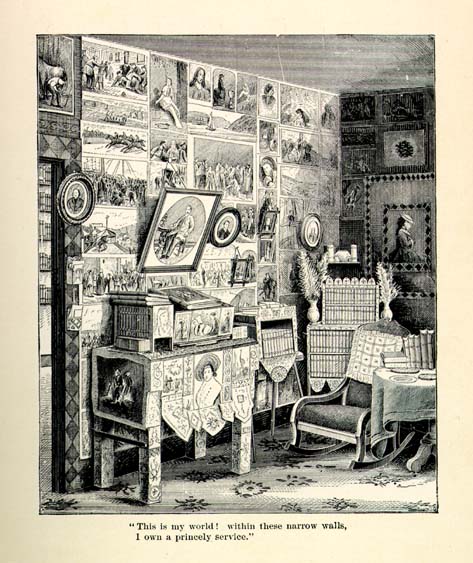
"This is my world! within these narrow walls,
I own a princely service."
TO --
BELOVÈD! in this holy hush of night,
I know that thou art looking to the South,
Fair face and cordial brow bathed in the light
Of tender Heavens, and o'er thy delicate mouth
A dewy gladness from thy dark eyes shed;
O eloquent eyes! that on the evening spread
The glory of a radiant world of dreams
(The inner moonlight of the soul that dims
This moonlight of the sense), and o'er thy head,
Thrown back, as listening to a voice of hymns,
Perchance in thine own spirit, violet gleams
Page 31
From modest flowers that deck the window-bars,
While the winds sigh, and sing the far off streams,
And a faint bliss seems dropping from the stars.
O! pour thine inmost soul upon the air
And trust to heaven the secrets that recline
In the sweet nunnery of thy virgin breast;
Speak to the winds that wander everywhere,--
And sure must wander hither--the divine
Contentment, and the infinite, deep rest
That sway thy passionate being, and lift high
To the calm realm of Love's eternity,
The passive ocean of thy charmèd thought;
And tell the aerial element to bear
The burden of thy whispered heart to me,
By fairy alchemy of distance wrought
To something sacred as a saintly prayer,
A spell to set my nobler nature free.
TO W. H. H.
How like a mighty picture, tint by tint,
This marvellous world is opening to thy view!
Wonders of earth and heaven; shapes bright and new,
Strength, radiance, beauty, and all things that hint
Most of the primal glory, and the print
Of angel footsteps; from the globe of dew
Tiny, but luminous, to the encircling blue,
Unbounded, thou drink'st knowledge without stint;
Like a pure blossom nursed by genial winds,
Thy innocent life, expanding day by day,
Upsprings, spontaneous, to the perfect flower;
Lost Eden-splendors round thy pathway play,
While o'er it rise and burn the starry signs
Which herald hope and joy to souls of power.
I pray the angel in whose hands the sum
Of mortal fates in mystic darkness lies,
That to the soul which fills these deepening eyes,
Sun-crowned and clear, the spirit of Song may come;
That strong-winged fancies, with melodious hum
Of plumèd vans, may touch to sweet surprise
His poet nature, born to glow and rise,
And thrill to worship though the world be dumb;
That love, and will, and genius, all may blend
To make his soul a guiding star of time,
True to the purest thought, the noblest end,
Full of all richness, gentle, wise, complete,
In whose still heights and most ethereal clime,
Beauty, and faith, and plastic passion meet.
LINES.
YE cannot add by any pile ye raise,
One jot or tittle to the statesman's fame;
That the world knows; to the far future days
Belongs his glory, and its radiant flame
Will burn, when ye are dead, decayed, forgot;
Therefore, your opposition matters not;
The thin-masked jealousies of present time,
Unburied in his grave, survive to keep
Page 32
Rampant the hate he deemed his highest praise,
And the rude clash of discord o'er his sleep;
But for his great, wise acts, his faith sublime,
All that the soul of genius sanctifies,
These mount where viler passions cannot climb,
These live where palsied malice faints and dies.
Still must the common voice denounce the deed,
The common heart swell with an outraged pride,
That the poor purchase of that paltry meed
His country owed him should be thus denied;
Shame on the Senate! shame on every hand
Which did not falter when recording there,
The basest act achieved for many a year,
To fire the scorn of the whole Southern land;
Nor the South only, for our foes will cry
Out on your petty pasteboard chivalry!
The people who refuse to crown the great
And good with honor, do themselves eclipse,
And doubly shameless is the recreant State,
Whose condemnation comes from her own lips.
"AN IDLE POET DREAMING."
AN idle poet, dreaming in the sun,
One given to much unhallowed vagrancy
Of thought and step; who, when he comes to die.
In the broad world can point to nothing done;
No chartered corporations, no streets paved
With very princely stone-work, no vast file
Of warehouses, no slowly-hoarded pile
Of priceless treasure, no proud sceptre waved
O'er potent realms of stock, no magic art
Lavished on curious gins, or works of steam;
Only a few wild songs that melt the heart,
Only the glow of some unearthly dream,
Embodied and immortal; what are these?
Sneers the sage world; chaff, smoke, vain phantasies!
Yet stock depreciates, even banks decay,
Merchant and architect are lowly laid
In purple palls, and the shrewd lords of trade
Lament, for they were wiser in their day
Than the clear sons of light; but prithee, how
Doth stand the matter, when the years have fled;
What means yon concourse thronging where the dead
Old singer sleeps; say! do they seek him now?
Now that his dust is scattered on the breath
Of every wind that blows; what meaneth this?
It means, thou sapient citizen, that death
Heralds the bard's true life, as with a kiss,
Wakens two immortalities; then bow
To the world's scorn, O poet, with calm brow.
Page 33
DRAMATIC SKETCHES.
Page 35
DRAMATIC SKETCHES.

ANTONIO MELIDORI.
[AMONG the heroes of the modern Greek revolution, none, perhaps, were so distinguished for acts of individual daring, and a spirit of romantic and chivalrous adventure, as Captain Antonio Melidori, a native of Candia. He waged against the Turks a partisan conflict which was often eminently successful. His own deeds of strength, and reckless hardihood, made him terrible to the foe, who were persuaded finally to look upon him as one whose life was "charmed."
It did not prove so, however, as he fell a victim to the rage and jealousy of some of his own company. Having been invited by the malcontents to a feast, Rousso (the chief of the conspirators, whom Antonio appears to have rivalled successfully both in love and war), whilst in the very act of embracing the patriot, plunged a dagger into his bosom.
There is a tradition that Antonio loved a beautiful maiden, Philota, whom in the stirring and anxious scenes of the revolution he was ultimately led to neglect, if not to forsake. A writer in "Chambers' Journal" has from this episode in the private career of the Greek partisan taken the material for a touching and graphic narrative, which has been closely, often literally followed in the composition of the ensuing "sketch."]
SCENE I.
[A place not far from the summit of Mount Psiloriti, in the Isle of Candia. Philota discovered with a basket of grapes upon her head; she looks eagerly upward. Time, a little before sunset.]
PHILOTA.
WHY comes he not? Here on this emerald sward,
Close to the cool shade of these ancient rocks,
We have met, and fondly lingered in the sunset,
Eve after eve, since first he said, "I love thee!"
Never, Antonio, hast thou been ere now
A loiterer! wherefore should my heart beat fast,
And my breath thicken, and the dew of fear
Stand chill upon my forehead? Is't an omen?
[At this moment Antonio is seen bounding quickly down the mountain; he reaches Philota and embraces her.]
ANTONIO.
Thou hast waited long, Philota, hast thou not?
PHILOTA.
'Tis true, Antonio! but thou know'st an hour,
Nay, a bare minute, drags the weariest length
When thou art from me!
ANTONIO.
Thanks, dearest, and, forgive me,
I did but dream upon the hill-top yonder
And, dreaming thus, forgot thee.
PHILOTA.
Forgot me!
ANTONIO.
Nay, nay, I mean not that! thy face, thy smiles,
Thy deep devotion, in my heart of hearts,
I keep them shrined forever, but my thoughts
Turned truant; who can hold his thoughts, Philota,
In a leash always? prithee reascend
Page 36
The mountain with me, I would show the place
Which tempted my weak thoughts to wander thus.
[They reach the most elevated portion of the mountain, whence a wide circuit of land and sea becomes visible.]
PHILOTA.
How beautiful! how glorious! see, my love,
There's not a cloud, or shadow of cloud in heaven;
Even here, the winds breathe faintly, and afar
O'er the broad circuit of the watery calm,
Peace broods upon the ocean, rules the air,
And up the sunset's dazzling pathway walks
Like a saint entering Paradise.
'Twere sweet,
How sweet, Antonio, amid scenes like these,
To live and love forever!
ANTONIO. [absently]
Dost thou think so?
Ay!--well--perhaps--
PHILOTA.
He heeds me not, his eye
Is cold and stern, what troubles thee,
Antonio?
ANTONIO.
Trouble! I am not troubled.
PHILOTA.
But thou art,
I know thou art; would'st thou deceive Philota?
ANTONIO.
[after a pause]
Now by the saints, not so; dismiss the fear
Which, like a tremulous shadow, breaks the calm
Of those soft eyes!
The matter, in brief, is this:
Tracking our mountain paths at early dawn,
Rousso--thou knowest him--hailed me from the rocks,
With words that sounded like the battle trumpets;
"It comes!" He cried; "the war-cloud rolls this way;
We too shall hear its thunders"--
PHILOTA.
Ay! and feel
Its bolts perchance--there's lightning in such clouds!
ANTONIO.
What if there be! who would not brave them all,--
All, for a cause like ours? Believe me, Love,
We stand upon the brink of troublous times:
All shall be changed here: men,--brave Grecian men,--
The blood of heroes in them,--cannot pause,
Storing the honey, harvesting the olive,
Or humbly following the tame herdsman's trade,
Whilst Freedom calls to conflict.
Look, Philota!
Dost mark yon lurid flash across the bay?
Our soldiers test their cannon! hark, below,
The drums of Affendouli--how they ring!
Already thousands of bold mountaineers
Have formed beneath his banners; dost thou hear me?
PHILOTA.
And wouldst thou wish to join them?
Ah! I see,
I see it all!--a trouble on thy brow,
Borne upward from the restless gloom within,
Hath clouded o'er thy peace. I,--a frail girl,
And gifted only with the wealth of love,
How can I satisfy the burning need
Of a strong man's ambition? Yes, tis so,
'Tis even so!--love is the woman's heaven,
Her hope, her god, her life-blood! Yet to man,
What is it but a pastime?
Page 37
ANTONIO.
Speak not thus
Oh, speak not thus, Philota! I have loved
Thee, only thee,--so help me, Virgin Mother!
But comrades from whose lips a taunt is bitter,
Have dared to hint--
PHILOTA.
What!
ANTONIO.
That I chose to stay,
Delving, like some base slave, our barren soil,
When not a Sphakiote that can carry arms
Has failed to seize them. Liars! pestilent liars,
I would have proved the falsehood were it not--
PHILOTA.
For me--Philota!--well! I love thee dearly,
Deeply,--God knows,--but I would have this love
To crown thee as a garland,--not as a chain
To bind and fetter--thou art free, Antonio!--
ANTONIO.
But hast thou thought of all which follows this?
Thou shalt be left alone, no bridal feast
Can cheer the olive harvest!
PHILOTA.
I have thought,
And am determined;--thou art free, Antonio!
ANTONIO.
Oh, thanks, thanks, thanks!--lift up thy hopes, Philota,
Up to the height of mine! our cause is just,
And a just Fate shall guard it; wheresoe'er
Free thought finds utterance, and the patriot-soul
Thrills at the deeds of heroes,--we may look
For a "God speed!" The prayers of noble men,
The tears of women,--the whole world's applause
Do wait upon us!
Methinks I see the end,
A free, grand Commonwealth of Grecian States,
Built upon chartered rights,--each sealed with blood!
PHILOTA.
Enough! enough! Antonio, thou shalt go!
Greece is thy mistress, now.
SCENE II.
[The cottage of Philota, at the foot of Mount Psiloriti, Philota discovered at the window, looking out upon the night, which is bleak and stormy.]
PHILOTA.
Hark! how those lusty trumpeters, the winds,
Urge on the black battalions of the clouds;
And see! the swollen rivulets rushing down
The sides of Psiloriti! Yesterday,
'Neath the clear calm of the serenest morn
Earth ever stole from Paradise, they swept,
Bright curves of laughing silver in the sunshine;
But now, an overmastering rush of floods,
They thunder to the heavens, that answer back
From the wild depths of gloom,--an awful tempest!
[Enter ANTONIO hastily.]
ANTONIO.
Where is the priest, Philota? where is Andreas?
Was he not here to-night?
PHILOTA.
Ay! but left some half hour since!
Page 38
ANTONIO.
What say you?
Oh, the poor father! then 'twas him I saw
Pent 'twixt the mountain torrents; he is lost!
The good old man!--and yet, not so, not so!
Give me yon oaken staff,--and, hold; a flask
Of the best vintage: I'll be back anon,
And the dear father with me:--
[Exit Antonio. Philota kneels before an image of the Virgin, and prays for the safety of her lover. After the lapse of some minutes, enter Rousso stealthily, wrapped in a cloak, which partly conceals his features.]
ROUSSO [aside].
Faith! a pretty picture!
Now, were I what fools call poetical,
I'd worship her, whilst she adores the saint,--
A lovelier saint herself, and nearer truly
To the just standard of divinity
Than yonder painted image; there's the curve,
The old Greek curve, in the voluptuous swell
Of those full lips; the passion in her eyes
Is shadowed off to melancholy meaning,
Only to waken to meridian life,
When a like passion touches it to flame.
PHILOTA [praying].
Oh, merciful Mother! save him,--save Antonio!
ROUSSO [aside].
Oh, potent Devil! claim him,--claim Antonio!
What! shall this malapert boy dispute my love?
[Philota, rising, discovers Rousso towards whom (mistaking him for Antonio), she rushes, as if about to cast herself into his arms, but discovering her error, she shrinks back.]
PHILOTA.
You here!
ROUSSO [advancing].
I crave protection, shelter,--may I stay?
PHILOTA.
At a safe distance, Sir!
ROUSSO.
Why, what means this?
I looked for kindlier welcome!
PHILOTA.
Wherefore, Rousso?
What thou hast asked, I grant,--protection, shelter;
Durst thou claim more than these?
ROUSSO.
I' faith thy temper is most strange and wayward!
Because, some months agone, not quite myself,
I ventured at the harvest of the olive,
Upon one innocent liberty--
PHILOTA.
No liberty,
With me, at least, bold man! is rated thus!
ROUSSO.
[Kneeling.]
I do repeat, that I was not myself;
Blame the hot wine of Cyprus; spare your slave!
PHILOTA.
A slave, indeed!--
ROUSSO.
But one who stoops to conquer, fair Philota;
If I have knelt, 'tis only that I may
Rise thus, and clasp thee! Hold, no foolish cries,
No weak, vain strugglings! Think'st thou that the storm
Pealing adown the mountain's rugged steeps
Can bear these feeble wailings to thy friends?
Come, come, Philota!--if thou could'st believe it,
I am the very worthiest of thy vassals;
List for an instant, while I paint the beauty
Of a far Eden waiting for the light,
The sundawn of thine eyes:--
Amid the waves
Of the Ægean, bosomed in the calm
Of ever-during summer, sleeps an isle
Whereon the ocean ripples into music;
Through whose luxuriant wilderness of blooms,
Page 39
The soft winds sigh their breath away in dreams,
Where--(the deuce take me! I forget my part)--
Where--where--where--i' sooth, a place
To live, to love, to die in, and revisit
From the sad vale of shadows, with a touch
Of mortal fondness, overmastering death:
Wilt thou go thither with me? Nay, thou must!
[As Rousso attempts to carry Philota from the apartment, she recovers, and, by a sudden effort, releases herself from his arms.]
ROUSSO.
Pardon, Philota! 'tis my eager love
Which thus hath urged me on; thou tremblest! what?
I would not make thee fear me.
PHILOTA.
Fear! fear!
If my check pales, it is not cowardice
That plays the tyrant to the exiled blood;
If my frame trembles, there are other moods
Than that thou speak'st of, to unstring its firmness;
Thy presence brings no terrors; dost thou talk
Of fear to a Greek woman?
ROUSSO.
No! no! not fear, but love!
PHILOTA.
Man, man! I pray thee
Blaspheme not thus! what canst thou know of love?
'Tis true thou speak'st it boldly; from thy lips
The word falls with a rounded fullness off,
And yet, believe me, thou hast used a phrase,
(A sacred phrase, and wretchedly profaned),
Which, were thy years thrice lengthened out beyond
The general limit of our mortal lives,
And thou be made to pass through all extremes
Of multiform experience, it could never
Enter thy sordid soul to comprehend!
ROUSSO.
Bravely delivered! by my soul, I think
We both make good declaimers! Where did'st learn
That pretty speech, Philota?
PHILOTA.
Wilt thou leave me?
ROUSSO.
Pshaw! thou art less than courteous. Leave thee? No!
I will not leave thee! Hark ye, my proud damsel,
I am not one with whom 'tis safe to trifle,
Thou knowest, or shalt know this; so, mark my words,
Long have I wooed thee fairly, would have won thee,
Yea, and endowed thee with both wealth and station;
Twice hast thou heard my proffer, twice with loathing
Spurned it, and me; I shall not woo thee thrice
With honeyed words; no, 'tis the strong arm now.
I am prepared for all; come on!
[He seizes Philota a second time, but enter on the instant Antonio, with the monk Andreas leaning upon him.]
PHILOTA [faintly].
Saved! saved!
ANTONIO.
Ha, Rousso, I have heard it whispered oft
Amongst thy watchful brethren in this isle,
That underneath that smooth and flattering front
There lurked a mine of blackest villany!
Faith! I denied it once; what shall I say
When next the public voice decries you, sir?
Page 40
ROUSSO.
A jest! I do assure you but a jest!
This cloak, which in your self-devoted flight
To rescue the dear father, Andreas
(How glad I am to see his saintship safe),
You dropped some furlongs from the mountain's base,
I cast, in sportive fashion, on my person,
And deeming that Philota would rejoice
To hear that thou had'st so far braved the force
O' th' treacherous elements, I called upon her;
She did me the vast honor to confound
Your humble servant with Antonio,
And 'ere I was aware, sprang to my arms,
With such a blinded ecstasy of rapture,
That I had wellnigh sunk into the earth,
From the mere stress of native modesty!
A jest, a jest, and nothing but a jest.
ANTONIO.
Such jesting may be dangerous,--beware!
SCENE III.
[A year is supposed to have elapsed. The town of Sphakia after nightfall. Enter confusedly a band of Sphakiote soldiers, with Rousso amongst them. The streets are crowded with women, many of whom are heard lamenting the death of Antonio Melidori.]
ROUSSO[in a disguised voice].
Why will ye clamor thus, ye foolish jades?
Your handsome favorite, your renowned commander,
Is no more dead than I am!
A WOMAN.
Say'st thou so?
Where then is Melidori?
ROUSSO [still disguising his voice].
Would'st thou learn?
Women of Sphakia, your Immaculate captain,
He for whose welfare, upon bended knees,
Ye nightly pray to heaven, whose name your infants
Lisp in their very slumbers, hath betrayed us!
Hold! hear me out! I am no dubious witness;
Thrice, whilst the battle raged along our front,
I saw the traitor creeping like a dog
Between the Turkish outposts!
[Antonio appears in the rear, with a child in his arms.]
ANTONIO.
It is false!
Here is your leader, Sphakiotes; what base slanderer
Dares to pronounce me traitor? I but paused
To save this weeping innocent, whose mother
Fell by some coward's sword!
ROUSSO.
Ha, Sphakiotes, see,
The noble Melidori waxes tender,
Soft as a woman! he must love the Moslem,
Who fosters thus their offspring! by the saints
A lusty brat! He'll thrive, good friends, believe me,
And grow betimes, to cut our infants' throats!
ANTONIO.
[Stamping violently upon the earth.]
Let him who speaks stand forth; I would confront
My bold accuser. What! he clings to the dark!
Fit place for lies and liars!
Friends, I scorn
To parley with this viper; there's a way,
One only way, to deal with reptiles, crush them,
Thus, thus, and thus,
When they have crawled too near us;
Till then, why let the ugly beasts hiss on,
And spit their harmless venom.

BIRTHPLACE OF PAUL HAMILTON HAYNE.
Charleston, S. C.
Page 41
[Turning to the women.]
Mothers, wives,
Maidens of Sphakia, are there none amongst ye
Ready to take this poor unfortunate?
Just for my sake, fair countrywomen, list,
List to the blessèd word:--"The merciful
Shall obtain mercy!"
ROUSSO.
Heed him not, I say,
But seize the infidel whelp, and let him rock
On a steel bayonet! What! have we repelled
The invading foe, exterminated wholly
His forces and his empire, that we dare
Cherish his cubs among us?--and for what?
"Just for his sake, fair countrywomen,--his,
And mercy's!" Who showed mercy to our children,
When the Turk ravaged Scio? The young devil,--
Hear how he shrieks! ho! send him down to hell!
Down to his father! He's a grateful spirit,
And thankful for small favors!
[The crowd begin to murmur, and move, threateningly towards Antonio.]
ANTONIO.
Shame on you!
Though the poor boy were fifty times a Moslem,
I'll rear him as my own; he shall not perish;
Perchance, who knows, when I have died for you,
For you, and Grecian liberty, this babe,
Reared as a Greek, may yet avenge my death,
As none of you, false brethren, dare avenge it!
Once more I say,--Mothers, wives, maids of Sphakia,
Is there not one amongst ye to whose tendance
I may commit this trembling castaway?
PHILOTA [veiled].
Give me the child,--I'll nurture him with love,
And gentlest usage.
ANTONIO [starting].
Heavens! What voice is that?
You here, Philota? I had hoped you dwelt
Safely within the close heart of the mountains!
PHILOTA.
The mountains are not safe.
ANTONIO.
Why the didst thou
Keep such strict silence? Answer me, Philota,
How hast thou lived. This peasant's dress--
PHILOTA.
Is fittest
For me, Antonio,--by my handiwork,
And daily labor, I now earn my bread,
For was it meet an unknown peasant girl
Should claim, as her betrothed, great Melidori,
Captain of Sphakia?
ANTONIO.
O, thou generous heart!
But stay,--the rabble must not catch our words;
Take thou the babe,--under the city-walls
I'll meet thee in the gloaming.
SCENE IV.
[A place under the city walls,--time, an hour after sunset.]ANTONIO, [embracing PHILOTA constrainedly].
How kind thou art!
PHILOTA.
I but obeyed your mandate!
Page 42
ANTONIO.
Nay, why so cold? My troth is thine, Philota,--
Dost thou remember?
PHILOTA.
Wouldst thou have me do so?
Methought that dream was over,--by thy wish.
ANTONIO.
By heaven! I never said so!
PHILOTA.
Yet thy heart,
Thy heart, Antonio, spake the keen desire,
Although thy lips kept silence;--I have learned
To read thy spirit like an open book,
And cannot be deceived;--all's changed with us;
Never again, as in the time that's past,
Shall we, hand linked in hand, explore the vales,
Or walk the shining hill-tops; thou hast risen
Far, far above my level; a great man,
Among the greatest,--thou wert mad t' espouse
A humble girl like me; I ask it not;
My love but burdens thy aspiring hopes,
So, I beseech thee, dwell no more upon it:
Antonio, for thy welfare I would give
My soul's life; shall I then refuse to yield
A personal joy, that thou may'st win and wed
The immortal Virgin--Glory? Dream it not!
Oh! dream it not!
ANTONIO.
[After a pause.]
Now, gracious God, forgive me!
It were presumption, should I kiss thy feet,
Thou pure, unselfish woman! yet thy words
Are true, too true, and I dare not gainsay them.
One thing believe, Philota, I am wretched,
Yes, far more so than thou art:
--Did'st thou know
The terrible life I lead in this dread warfare,
Through what an atmosphere of blood and carnage
It is my doom to move, as through the air
Of some plague-stricken city, thick with curses;
Did'st know the numberless dangers, that like demons
(Many unseen,--and therefore doubly fearful),
Which hover 'round the soldier, hour by hour
O'ershadowing life with the black gloom of death;
Did'st know the coarse companions, the rude manners
Of vile extortioners, bent alone on prey,
And personal profit, and the thousand evils
Gendered of strife, and strife's unhallowed passions,
O, thou would'st shrink from following such base courses,
Even as an angel from the brink of hell!
PHILOTA.
[Wildly.]
Thou wrong'st my love, and hast deceived thyself;
Where'er thou art, to me that place is heaven;
Antonio, God alone, God and my soul
Know what I might, and would have been to thee!
I would have shared thy fortunes, joined my fate
For weal or woe, for honor or disgrace,
For life or death to thine; have tracked thy steps,
(If need it were,) through seas of blood and carnage,
Strengthened thy weakness, buoyed thy sinking hopes,
Nor, at the worst, have shed one woman's tear
Page 43
To shake thy manhood. Had heaven blessed thy cause,
I would have striven to make my spirit worthy
To mount with thee; so, when the orbèd glory
Shone like the fire of sunrise round thy brow,
No man dare say that with that lustre mingled
One blush of shame for Melidori's wife!
This might have been, and this shall never be.
I' th' name of mercy, by thy mother's soul,
And the dear past, I pray thee leave me now,
While still thou lov'st me (dost thou not?) a little.
ANTONIO.
And thou--and thou, Philota?--
PHILOTA.
I shall dwell
In peace; [aside] ay! broken hearts are peaceful!
ANTONIO.
But where?--
PHILOTA.
What matter where, so that I live in peace?
Grieve not, Antonio. In my humble station
One thought shall bring content;--"he was not false,"
No mortal maiden stole Antonio's heart!
ANTONIO.
Blessèd words!
'Tis true I love but thee!
PHILOTA.
Then do not sorrow.
Love, I forgive thee; thou hast wronged me not.
And for the child--ah, I shall dream it thine;
Tend it as thine, and when the years have ripened
That infant soul, 'tis mine to lead to virtue,
I'll teach the boy how noble was the act
Whereby Antonio saved him; I'll be happy,
Oh, trust me, Love! so very, very happy!
ANTONIO.
Then be it so, Philota. I would bless thee,
But am not worthy; still, thou shalt be blessed.
PHILOTA.
And thou, too, if the Virgin hear my prayers,
And now that we are friends, but friends, though firm ones,
Beseech thee, list my tidings. There's a foe,
A deadly, treacherous foe in thine own camp,
And one who vows thy ruin; it is Rousso;
Thou knowest how first his envious, bitter temper
Was stung to hatred; since that time, thy will
Hath often clashed with his; besides, thy fame
In these fierce wars hath far o'ertopped his credit;
So he has sworn thy death; the voice was his,
That goaded on thy soldiers to rebellion;
And, as I threaded my uncertain pathway,
A short hour since, through the dark streets of Sphakia,
I heard thy name in whispers; two dim forms
(Men, as I knew by their hoarse tones,) conferred
With hurried, stealthy gestures, and one sentence,
Startled me like a knell:--"His tomb is open,"
A deep voice said; "Antonio's tomb is open!"
Oh, then, beware. As lowly as thou deem'st me,
I'll watch above thy safety; the soft dove
May warn the eagle of the midnight spoiler!
Page 44
ANTONIO.
And thy own life and safety--
PHILOTA.
I am here
To spend them both for thee. But hark! thy name
Is shouted by thy comrades in the valley.
The hour has come that parts us. Fare thee well!
[She gives him her hand.]
ANTONIO.
'Twas not our wont to part in this cold fashion:
Come, one more kiss, Philota! let me feel
We were indeed betrothed; one last, last kiss!
[They embrace and part.]
SCENE V.
[An apartment in the house of Affendouli, the Governor-General of Candia. Enter Antonio, and Affendouli, conversing.]
AFFENDOULI.
These private bickerings are the fruitful cause
Of all disgrace and failure; let us end them!
ANTONIO.
Most willingly! I have no feud with any,
Saving one quarrel, forced upon me, chief!
AFFENDOULI.
True, true! but even now a courier waits,
Charged with a special message of good will,
From Rousso, and his brother, Anagnosti;
They say, "We plead for peace! all personal hate
Henceforth he quelled between us; we would join
Our troop to Melidori's, and our banners
Wave side by side with his." Accept their proffer!
ANTONIO.
I will!
AFFENDOULI.
To show thou art sincere, fail not to test
Their hospitality,
ANTONIO.
As how?
AFFENDOULI.
They give
A solemn feast of unity and friendship,
To which thou art invited. Go, I charge thee.
ANTONIO.
Trust me, I shall be there, what day's appointed
Whereon to hold this festival of love?
AFFENDOULI.
This very day, thou knowest the camp of Rousso?
ANTONIO.
Ay! I'll be there, anon!
[Exit Antonio. Enter, after a brief interval, Philota, with a hurried and anxious mien.]
PHILOTA.
Oh, pardon, pardon!
Most gracious Governor! but I come to seek
Ant--Ant--, that is, the Captain Melidori,
With tidings of grave import.
AFFENDOULI.
Ha!
Thou luckless messenger! he has departed.
Gone--
PHILOTA [wildly].
Where, where?
AFFENDOULI.
To feast with Rousso.
PHILOTA [rushing out].
Then is he lost! O merciful God, protect us!
SCENE VI.
[An open space in a wood,--tables arranged for a banquet,--Rousso, Anagnosti, Antonio Melidori, and their followers, discovered feasting.]
ANAGNOSTI.
A soldier's life forever! free to Pass
In feast or fray! how glorious this wild banquet
Compared to those dull, formal feasts of old,
Page 45
Held at the olive harvest! Speak, Antonio,
Give us thy thought upon it; what! art silent?
ROUSSO.
Urge him no more; perchance Antonio pines
For the sweet quiet of that mountain life,
Which thou hast called so dull; its days of dream,
Its nights of warm voluptuous dalliance!
ANTONIO.
No, no, by heaven! those times are dead to me;
They had their pleasures, but not one to match
The keen delights of glory, the true honor
Which follows patriot service.
ROUSSO.
Gallant words,
Brave, and high-sounding; but for me and mine,
We do not fight for shadows!
ANTONIO [coldly].
I'm at fault,
Not clearly comprehending, sir, your meaning.
ROUSSO.
Oh! thou dost well to speak of glory, honors,
We know what rich rewards await thee, chief,
When the war's ended; spoils, and wealth and beauty.
But yestermorn, I saw thy winsome lady,
The bride to be, old Affendouli's daughter.
Nay, shrink not, man, she is a lovely maid,
Fair as her father's generous; what an eye!
Half arch, half languishing; and what a breast!
That heaves as 'twould burst outward to the day,
And strike men mad with its white panting passion!
No lovelier woman lives, unless, unless--
It be that poor young thing who doted on thee,
Before the war,--what was her name? Philota?
ANTONIO.
Thy thoughts run on fair damsels; let us talk
Like soldiers, not like brain-sick boys in love.
ROUSSO.
With all my heart; only, one pledge to thee,
And Affendouli's daughter!
ANTONIO.
I have borne
This jesting with the patience of a saint,
But now 'tis stretched to license. Prithee, cease!
ROUSSO.
God, how he winces! if Philota--
ANTONIO.
Villain!
Utter that sacred name again--
ROUSSO [rising suddenly and drawing his dagger].
Oh, ho!
Wilt fight, wilt fight! I'm ready for thee; come.
ANTONIO. [aside].
[To Rousso].
(He shall not trap me thus.) Thou art my host;
'Twere shame, yea, bitter shame, this brawl should end
In blows and bloodshed! when the time befits,
Doubt not that I shall call thee to account
For this day's work; meanwhile I leave a board
Where clownish insult poisons all your cups!
[As he is about to depart, Anagnosti approaches, with an air of conciliation.]
Page 46
ANAGNOSTI.
Well spoken, noble captain, then wert wronged;
But Rousso is so hasty! He repents;
Let not this solemn feast of unity
break up in discord.
ROUSSO.
No, no, no, Antonio!
I do repent! Prithee embrace me, friend,
In sign of reconcilement.
[Rousso approaches Melidori with an unsteady step: while in the act of embracing, he stabs him in the side. Philota rushes upon the scene, with a cry of agony, and throws herself beside Antonio, whose head she supports.]
PHILOTA.
Too late! O God, too late! He faints, he dies!
Why stare ye thus upon its, cruel men?
Wine, wine, another cup, how slow ye move!
My scarf is drenched with blood,--ye pitiless fools!
Will not a creature loan me wherewithal
To bind his wretched wound up? There, 'tis stanched,
And he revives! Antonio, speak to me,
I am Philota!
ANTONIO [his mind wandering].
Where hast thou been, my love, this weary time?
Am I not true? I charge thee, heed them not!
The girl is nothing to me; Rousso's tongue,
His sharp false tongue first joined our names together;
She loves another, and I love but thee;
Draw nearer, let me whisper. I have dreamed,
Oh, such a dream! the valleys flowed with blood,
And ruin compassed all our island round,
And every town was sacked, and, hark ye, nearer!
I saw a mother murdered by a knave,
A coward knave, because she would not yield
Her body to him; but I saved her child,
And here he is, a pretty, pretty boy!
Take him, Philota. Ah, my heart, my heart!
It pains me sorely; 'twas a terrible dream,
But now, thank Heaven, 'tis over! Thou art pale;
What makes thee pale? Bear up, my dearest love!
This morn we shall be wedded, and I think
We will not part again. I had a foe,
His name is Rousso; but we are so happy,
Let us forgive all foes; invite him thither,
PHILOTA [weeping].
He breaks my heart--
ANTONIO.
How keen the wind is!
Keen, keen, and chill; it was not wont to blow
So coldly at this season: I am sick,
Yea, sick of very joy; but joy kills not;
My lids are heavy; I would sleep, Philota.
Wake me at early dawn; I told my mother,
That I would bring thee home, to-morrow morn.
[He dies.]
ALLAN HERBERT.
SCENE I.
[The hall of a country house in Westmoreland, surrounded with portraits of the M. . . . family. Allan Herbert, and Jocelyn, an old domestic, are seen standing before the likeness of a lady, young, and wonderfully fair.]
HERBERT.
The canvas speaks!
JOCELYN.
Ay, sir, 'tis very like;
Was she not beautiful?
HERBERT.
Was; yes, and is;
She had not lost one bloom when late I saw her.

"The canvas speaks."
Page 47
JOCELYN.
Sir, she is dead!
HERBERT.
Ay, so they say, old man;
And yet I see her nightly,--in my dreams;
I tell you that her cheek is round and fair
As summer's fulness, that her eyes are lustrous,
And she, a perfect presence clasped in light!
Thus will she look, on resurrection morning.
JOCELYN [aside].
Alas, poor gentleman! How many loved her,
And loved her vainly! Pardon, sir, your name?
HERBERT.
My name is Allan Herbert.
JOCELYN.
Herbert, Herbert!
Where have I heard that dainty name before? (musing)
Oh, now I have it; my young mistress, sir,
She who is dead, was wont to read a book
A delicate gold-edged volume, that I'm sure
Bore some such name within it; she would sit
Beneath yon grape vine trellis toward the south
(This window, sir, commands it), and for hours,
Nay, days, bend o'er her favorite pages; once
She left the book behind her, and I saw
Its leaves were touched with tears.
HERBERT.
Where is it now?
That book your mistress loved? Let me behold it!
JOCELYN.
In sooth, sir, I have never seen it since,
Or, if I have [hesitating] it lies beyond our reach.
HERBERT.
What meanest thou?
JOCELYN.
I mean that while she lay
Decked for her burial, whilst I stood beside her,
Looking my last upon her tranquil features,
The robe of death was fluttered by the wind,
A low sad wailing wind, that swept aside
The drapery for a moment, and I marked
The glimmer of the gold-edged pages placed
Right on her bosom! Master, you are pale,
You tremble; I have rudely touched the spring
Of some deep-seated sorrow!
HERBERT.
Yes, old man;
A sorrow most unlike to common griefs,
That pass like clouds or shadows; mine is mingled
With the dark hues of treachery and remorse;
A rayless, blank eclipse, through which I wander,
Accursed and hopeless; sometimes in a vision
Comes the sweet face of her I foully wronged,
And stabs me with a smile!
JOCELYN.
Did'st wrong her, sir?
Did'st wrong my lady?
HERBERT.
Lead me to the grave;
I know 'tis near at hand.
JOCELYN.
The grave! What grave?
Moreover,--if you wronged her--
Page 48
HERBERT.
If I wronged her!
Why dost thou taunt me with it? thou on earth
With Mercy still beside thee,--I--in Hell?
JOCELYN.
Madman!
HERBERT.
I am not mad, my friend, but only wretched;
Once more, I pray thee, show me where she sleeps.
JOCELYN.
I must obey him; this way,--follow me.
SCENE II.
[A forest.--Deep in the shade a single monument appears, covered with wild-flowers and roses.]
HERBERT [alone].
'Tis fit she should be buried in this place
So fragrant and so peaceful; O my love!
Thou hast grown dull of hearing! I may call
'Till the lone echoes shiver with thy name,
Thou wilt not heed me; dust, dust, dust indeed!
And thou--more glorious than the morning star;
More tender than the love-light of the eve!
They tell me thou shalt rise again, Christ's bride.
Not mine, most beautiful, yet changed;
Perchance I shall not know thee, or perchance,
The human love which made thine eyes like heaven--
My heaven of hope and worship--shall be lost
In some diviner splendor! all is hushed,
No smallest whisper trembles gently up
From the deep grave to soothe me; 'tis in vain
I agonize in thought. Eternal Nature!
She whom I once called "mother," wears an aspect
Callous and pitiless. I fain would solve
This terrible mystery that weighs down my soul
With nightmare fancies. Let me die in peace,
O God! and if I may not see her more
Through all the long eternities, nor hear
Her voice of tender pardon, let me rest
Next to some stream of Lethe, and repose
in everlasting slumbers!--
[Enter JOCELYN.]
JOCELYN.
Come, let us hence! the darkness creeps upon us;
See Sir! there's not a spark of sunset left
In all the waning West.
HERBERT.
Well, what of that!
I live in darkness,--the light burns my spirit,
It mocks and tortures me! Begone, I say,
And leave me to the dismal shade thou fearest!
JOCELYN.
Good Sir, be counselled--stay not in the wood;
Thine eye is troubled, and thy visage weary;--
'Tis a rash venture!
HERBERT.
Sooth to say, I thank thee,
Thou could'st not serve long in the household blessed
By her most merciful presence, and not catch
Some tenderness of temper;--take my thanks!
Yet will I stay in this same dreary wood,
And watch until the night is overpast.
JOCELYN.
Thou'lt find it lonely.
Page 49
HERBERT.
Oh, I have my thoughts,
A stirring company, that never slumber.
JOCELYN.
Why, worse and worse! I've heard, such restless thoughts
Engender a sore sickness--
HERBERT.
Of the mind;
Yet is my case already desperate,
Past healing, and past comfort. Go thy way.
Thou kind old man, thou canst not shake my purpose,
But when the last star wanes before the dawn,
Come back; my night will then be overpast,
And my watch ended; till that hour, farewell!
FROM THE CONSPIRATOR.
AN UNPUBLISHED TRAGEDY.
SCENE.
[A garden; Arnold De Malpas and Catharine discovered walking slowly towards a summerhouse in the distance].
CATHARINE.
Art thou prepared to risk all this, De Malpas?
DE MALPAS.
Ay! this, and more, if I but thought--
[Hesitating].
CATHARINE.
What, Arnold?
DE MALPAS.
If I but thought that when the strife was over,
The feeble prince hurled down, the throne secured,
She, for whose love I braved the people's hate,
Malice of rulers, and the headsman's axe,
Would deign to share with me that perilous height.
CATHARINE.
She! Oh, thou hast a lady-love!
DE MALPAS.
Cruel! Wouldst thou put by my passion thus,
With a feigned jest? Catharine, I stake my all,
Manhood's strong hopes and purpose, the heart's wealth,
And the mind's store of hard-bought lore, my peace
Of conscience, and my soul's immortal life,
To lift thee to the summit of thy wish;
(Oh? I have proved thee, and I know thy thoughts),
And yet, thou feignest ignorance!
CATHARINE.
Dear De Malpas,
Forgive me! let us both throw by the mask!
I hate the queen; even in our girlish days,
She was my rival; her mild-mannered arts
Stole suitors from me; the old priest, our teacher,
Though I eclipsed her ever in the school,
And shamed her dullness with keen-witted words
And quicker apprehension, shone on her
With sunny aspect, sleeked her golden hair,
Fondled and soothed and petted, whilst for me,
The apter scholar, he reserved harsh looks,
And harsher tones; (well, the old fool is dead!
In after time, some friend of holy church,
Some zealous friend, proved that his saintship taught
Schism and heresy, and so--he, perished)!
But for this queen, this Eleanor! Our souls
Nursed yearly a more fixed hostility;
We sat together at the knightly jousts,
And watched the conflict with high beating hearts,
Page 50
Flushed cheeks, and fluttering pulses; she from fear,
I with the mounting heat of martial blood,
Thrilled with the music of the battle's roar,
The ring of mighty lances on steel helms,
Clangor of shields, and neighing of wild steeds:
One morn my knight was victor; as he placed
The crown of gems and laurel on my brow,
Methought that I was born to be a queen,
Not the brief ruler of a festal throng,
But 'stablished kingdoms, and a host of men
Bound to my sway forever!
DE MALPAS.
A true thought!
Oh, noble Catherine! thy aspiring spirit
Fires my purpose, and gives wings to action;
Thy rival hath sped past thee in the race,
But she shall fall midway; the blinded monarch
Walks on the brink of an abysmal deep,
And soon shall topple over; then, a victor,
(Not from the conflict with half-blunted spears,
In friendly tournament), but the tumult fierce
Of revolution, and the crash of states,
Shall set a weightier crown about thy brows,
And hail thee ruler,--not of festal throngs,
But 'stablished kingdoms, and a host of men
Bound to thy sway forever!
DE MALPAS.
Speak, Bolton! what say these, my faithful friends,
Touching my present life?
BOLTON.
Why, Master Arnold,
I' sooth they're much divided; some assert,
That thou art moonstruck; that some morbid fancy,
Whether of love or pride, hath seized upon thee;
Others, that thou hast simply lost thy trust
In man and in thyself; and others still,
That thou hast sunk to base, inglorious ease,
Urging the languid currents of the blood
With fiery spurs of sense; a few there are,
Few, but most faithful, who at dead of night
In secret conclave, with low-whispered words,
And pallid faces glancing back aghast,
Speak of it monstrous wrong, which thou--
DE MALPAS. [Starting up, and seizing Bolton.]
[Stabs him suddenly.]
Unhappy wretch! therein thou speak'st thy doom!
That prying, curious spirit is thy fate.
Did I not warn thee of it
BOLTON.
Oh! I die!
Yet my soul swells and lightens; all the future
Flashes before me like a revelation.
Arnold De Malpas! thou shalt gain thine end!
The aged king shall fall, the throne be thine!
But, as thou goest to claim it, as thy foot
Presses the royal dais (mark my words)!
A bolt shall fall from heaven, sudden, swift,
Even as thy blow on me, thou'lt writhe i' the dust,
Down-trodden by the hostile heel of thousands,
Page 51
Whilst she, for whom thou'st turned conspirator,
Smiling, shall gaze from out her palace doors,
And wave her broidered scarf, and join the music
Of her low witching laughter to the sneers
Of courtly parasites; "De Malpas bore
His honors bravely, did he not, my lords?
Now, by our lady, 'tis a grievous fall!"
"Yet pride, thou know'st, sweet Catharine,"--
"Ay, ay, ay!
"Prithee, Francisco, wilt thou dance to-night?"
DE MALPAS.
What, fool! wilt prate forever? Hence, I say,
And entertain the devil with thy dreamings!
[Stabs him again.]
. . . . .
DE MALPAS.
Thou hast been to court, Bernaldi, hast
thou not?
BERNALDI.
Ay! all the forenoon!
DE MALPAS.
Didst thou see the lady,
Catharine of Savoy, whose miraculous beauty
Hath set all Spain aflame?
BERNALDI.
I did, my cousin,
But, I am bold to speak it, liked her not;
Her beauty is the beauty of the serpent,
Masking a poisonous spirit, there's no depth
Of womanly nature in her gleaming eyes,
Falsest when most they flatter: men have said
She owns the Borgia's blood; I know not that,
But, by St. Mark! she owns their temper, cousin!
EXPERIENCE IN POVERTY.
A.
HOW bitterly you speak!
B.
I have good warrant.
A.
Well, for my part, I hold your creed is false.
Uncharitable, monstrous! I have seen
The world, sir; studied men and manners in it;
And though no doubt some selfishness and craft
May evermore be found by those who seek them,
Peering too closely underneath the mask
Of multiform conventions, yet, by heaven,
The world's a fair, good, reasonable world
To all who follow reason! Your high fancies,
Whose goal is vague impossibility,
Of course must miss their mark! We live not, sir,
In Eden, or the golden age.
B.
Right! Right!
You talk as is most natural in one
To whom all life has been a gay parade,
A frolic pastime!--to whom subtle fortune
Hath never turned her dark and lowering front,
But round whose footsteps sowed with golden showers
Obsequious knaves and sweet-tongued servitors
Have fawned and lied and flattered, till your days
Borne bravely onward over perfumed tides
Passed like a steady bark 'twixt shores of flowers,
You know the world! Its men and modes forsooth!
Wait, sir, until your purse grows lean as mine,
And fate within the compass of one evil
(A gaunt and loathsome poverty), includes
All ills that flesh is heir to! disrespect
Page 52
From insolent curs that now you'd hardly stoop
To soil your lordly boot with! studied coldness
Of ancient friends whose easy faith declines
With your decreasing wine-butts! covert sneers,
Or open insult from the gaudy throng
Of parasites, who breathe alone in sunshine!
Grief without balm, and pain that knows not pity;
Dark days, and maddening midnight's, and the pang
Of outraged feeling, and the soul's despair:
Ay! wait, I say, until from depths like these,
The lonely thunder growling overhead,
And misery like a cataract raging round
Your path of ruin, wild and desperate eyes
Are lifted to the summits of past hope,
Receding ever with their shows of joy,
Less real than the mirage, or the domes
Which sunset builds on clouds of phantasy!
Wait till the fiend that's born of famished hours
Shall grasp your hand in bony fellowship,
And lead you through the mist of ghastly dreams,
Helpless and tottering, to the brink of death!
Ha! ha! you shrink! the picture does not please
Your dainty fancy! Well, soft optimist,
Confess there's somewhat you have still to learn
Of this same fair, good, reasonable world!
THE TRUE PHILOSOPHY.
I'D have you use a wise philosophy,
In this, as in all matters, whereupon
Judgment may freely act; truth ever lies
Between extremes; avoid the spendthrift's folly
As you'd avoid the road of utter ruin;
For wealth, or at the least, fair competence,
Is honor, comfort, hope, and self-respect;
All, in a word, that makes our human life
Endurable, if not happy: scorn the cant
Of sentimental Dives, wrapped in purple,
Who over jewelled wine-cups and rich fare,
Affects to flout his gold, and prattles loosely
Of sweet content that's found in poverty:
As for the miser, he's a madman simply,
One who the means of all enjoyment holds,
Yet never dares enjoy: no, no, Anselmo,
Use with a prudent, but still liberal hand
That store the gods have given you; thus, my friend,
'Twixt the Charybdis of a churlish meanness,
And the swift Scylla of improvident waste,
You'll steer your bark o'er smooth, innocuous seas,
And reach at last a peaceful anchorage.
LOVE'S CAPRICES.
COME, sweetheart, hear me! I have loved thee well,
God knoweth. Through all these years my holiest thoughts,
Like those pure doves nurtured in antique temples,
Have fluttered ever round thine image fair,
And found in thee their shrine. No tenderest hope
Of mine, which hath not warmed its radiant wings
Within that heaven, thy presence, and drank strength
And sunshine from it.

"Come, sweetheart, hear me!"
Page 53
How hast thou responded?
Sometimes thine eyes like Eden gates unclosed,
Would pour such beams of sacred passion down,
That all my soul was flooded with its joy,
And I, methought, breathed as immortals breathe,
A deathless light and ether. Then, when most
I dreamed me happy, a strange change would come,
Sudden as strange; some wind of cold caprice,
Blowing, I knew not whence, an icy cloud
Upbore, and o'er the splendor of thy brow,
Of late so frankly beautiful, there hung
Ominous shadow's, crossed by gleams of scorn;
Trifles as slight as cider-down have power
To move or sting thee, and a swarm of humors,
Gendered of morbid fancy, buzz and hiss
Page 54
About some vacant chambers of thy mind,
By idle thoughts left open, making harsh,
Rude discord, where, if healthful will had sway,
Angels, perchance, might lift celestial voices!
Love, love, thou wrong'st thyself, and that sweet nature,
Sweet at the core, for all such small despites,
Wherewith kind heaven endowed thee; yet, beware!
Caprice, though frail its shafts, a poisoned barb
Hath bound on each; their points are sharp to wound,
And the wounds rankle! Giants great as Love
Have perished merely of an insect's venom,
And who through all God's universe can touch
Love's pulseless heart to warmth and life again?
CREEDS.
FRIEND, 'mid the complex and unnumbered creeds
Which meet and jostle on this mortal scene,
And sometimes fight a l'outrance, I perceive
Some precious seed of truth ennobling all:
Encased, it may be, like the mummy's wheat,
Locked in dead forms, yet waiting but a breath
Of honest air, an inch of wholesome soil,
To blown and flourish heavenward; therefore, friend,
Walk hand in hand with clear-eyed Charity,
And Faith sublime, though simple, like a child's,
Who feels through densest midnight, next his own,
The loving throb of a kind father's heart.
TIME UNIVERSALITY OF GRIEF.
I GRANT you that our fate is terrible,
Bitter as gall. What then? Will lamentation,
Childish complaint, everlasting wailings,
Grief, groans, despair, help to amend our doom?
Glance o'er the world--the world is full of pain
Akin to ours. If some dark spirit touched
Our vision to miraculous clearness, sights
Would meet our eyes, at which the coldest heart
Might weep blood-tears; there's not a moment passes
Which doth not bear its load of agonies
Out to the dim Eternity beyond;
The primal curse of earth, with heavier weight,
Descends on special victims; yet, bethink you,
All sorrow hath its bounds, o'er which there stands
That friend of misery, gentle-hearted Death.
Balms of oblivion holds he, and the realm
Wherein he rules hath murmurous caves of sleep.
THE PENITENT.
Thou see'st yon woman with the grave pelisse
Lined with dark sables? Is she not devout?
Her soul is in the service, and her eyes
Are dim with weeping,--weeping for the follies
Page 55
Of a misguided youth; thus saith the world,
But I, who know her ladyship, know this:
She weeps that youth itself, and the lost triumphs
Which followed in its train; the scores of lovers
Dead now, or married off; the rout, the joust,
The sweet flirtations, merry carnivals,
And--(oh! supremest memory of all!)--
The banded serenaders 'neath the lattice,
Lifting the voice of passion in the night:
And one among the minstrels loved her well,
But him she laughed to scorn, his heart was riven;
She trampled on the purest pearl of love,
And cast it to the dogs; well, God is just!
She scorned his sacred gift, and so must walk,
Henceforth a lonely woman on the earth!
DRAMATIC FRAGMENT.
WE might have been! ah, yes! we might have been
Among the laurelled noblemen of thought,
Who lift their species with them as they climb
To deathless empire in the realm of gods;
But some dark power--we will not call it Fate--
We dare not call it Providence--hath seized
The helm of our strange destinies, and steered
Right onward to the breakers. All is lost!
Hope's siren song of promise faints in sighs,
And joy--(but she ne'er charmed us, save in days
Of dim-remembered childhood);-- let it pass!
Our lot's the lot of millions; for on life
A blight is preying, and a mystic wrong
Hath set our heartstrings to the tune of grief!
REWARD OF FICKLENESS.
ALTON.
YOU see that man with the quick eyes and brow,
Too ponderous almost for his slender frame,
His dark locks tinged with gray; you'd hardly think it,
But he's a moral dandy, dilettante
(As your Italians say), whose fickle taste
Leads him, like some fastidious bee, from flower
To flower of social pastime! A fair girl,
Pretty and piquante, fills his heart to-day;
On airy wings of sentiment he hovers
Lovingly round her, feeds the beauteous creature
On honeyed nothings in a tone so sweet,
They seem the genuine fruit of a strong soul
Nurtured by passion, and true adoration;
Then on the morrow when he meets once more
"That Cynthia of the minute," a cold crust
Of iciest form and etiquette o'erspreads
His words, look, bearing; the whole man is changed--
As if a Tropic landscape, bright with sunlight,
Had grown to frozen hardness in an hour:--
A demon, fickle, trifling, and capricious
O'errules his spirit always! with men likewise,
It is his pride to play the same vile game!
Why, sir, your patience would be taxed to count
Page 56
His dupes within the year! he'll take a youth,
Bright-minded, trusting, whom perchance he meets
In casual fashion on the public square,
Caress, solicit, flatter him--at length
Bear the poor fool, elate and jubilant,
To banquet at his own well-ordered board,
Ply him with curious questions, draw him out
To make display of all his raciest wit,
And when, like a squeezed orange, all his sap's
Exhausted,--faith! Sir Dainty down the wind
Whistles his victim with a cool assurance,
Which is the calm sublime of impudence!
In fine, the man's a worn-out Epicurean,
A ceaseless hunter after new sensations,
To whom the world's a storehouse crammed with hearts
And minds for his amusement! as for hearts,
He'll toss 'em up, as jugglers toss their balls,
Proud of his sleight of hand, his impish cunning,
His matchless turns of quick dexterity!
And if the baubles break, he's sore amazed
That aught should be so brittle! yet thanks God
The earth is full of these same delicate toys;
And so he hurls the shattered plaything by,
To re-assume his honest, juggling tricks,
And charm his weary leisure-time with lies;
A silken, soft, fair-spoken, dangerous knave.
MARCUS.
Some day he'll find his match!
ALTON.
Ay! you may swear to that;
Some woman versed in every social art,
Some rare, majestic creature, whose rich beauty
Will set his amorous senses in a blaze;
Slowly around him she will draw the net
Of fascinations, multiform and strange;
Enchant his fancy with her regal wit,
His taste with every charm of female guile,
Inflame him with voluptuous blandishments,
By turns, sooth, flatter, madden, vow she loves
At one delicious moment, then the next
Warmly swear she loathes him! by a spell
Invisible, but potent as the sun,
She'll lead him, fawning, quivering to her feet,
And at the last, O! consummation just!
When on the very brink of blest fruition,
He hovers, arms outstretched, and soul aglow,
She'll freeze to sudden marble, wave him off
With such calm haughtiness of queenly scorn,
Imperious, crushing, fatal, that, by heaven,
I should not wonder if the terrible sting
Of disappointment and deceived desires,
Of baffled passion, wounded self-conceit,
And hope so swiftly murdered by despair,
Struck to the core of being, and this man
Falser than hell to others, perished wholly,
By his own pestilent trickery done to death!
A CHARACTER.
A.
HE is a man whose complex character
Few can decipher rightly; but for me
I have found the key at last!
Page 57
B.
What make you of it?
A.
As mournful and as blurred a page, perchance,
As ever pained the seeker after truth:
Listen! this man, when like a factory slave
I toiled for some bald pittance in the city,
Came to me (unsolicited, remember),
With words of cheer, and honeyed courtesies;
His tone was soft as dulcet airs of May;
His heart the very fount of sympathy!
"What," said he, "shall you grind your genius here,
Down to the last faint edge; waste your rich thoughts"
(Mark you the subtle flattery of this language),
"Upon a thankless, ignorant, brutal fool,
Who plays the patron with the grace of Bottom.
His ass's head from out your flowering fancies
Grinning in dull and idiot self-applauses;
By every gentle muse this shall not be!"
Straightway, with hand caressing as a woman's,
He led me from hard desk and stifling air,
Forth to his bowery home amid the hills,
There fed me, sir, on kindness, day by day,
Until this starved and tortured spirit grew
Healthy and hale again! No wish had I,
He did not hasten blithely to forestall!
He called me "brother," drew from shy reserves
Of knowledge, feeling, poesy, full stores
Of all my wealth--by heart or brain amassed--
Ha! by Apollo! what rare times were those
We spent in 'rapt communion with the bards
Each worshipped, and what jovial laughter shook
The flying night-winds, when our graver books
Were cast aside, and he an artful mimic,
A famed raconteur, many a humorous scene
Enacted with such raciness of wit
Despair itself had checked its tears--to smile;
In brief, by every wile a man could use,
To knit his fellow's heart-strings to his own,
He made we love him! other friends were gone
Forlornly mouldering in far churchyard shades
And therefore--undivided, ardent, sure,
Affection centred all its warmths on him!
And now, when wholly his, I would have dared
For him all danger (you will scarce believe it),
But suddenly, as sometimes on calm seas,
The watcher from some lonely headland views
A gallant bark sink swiftly in the deep,
Dissolving like a vision--thus his friendship,
Its glittering flags of promise flaunting still
The tranquil sunlight, sunk before mine eyes
And left me gazing like a man distraught
Across the mocking solitude!
B.
What more?
A.
What more? Why, truly, sir, the tale is done,
'Twas a sharp close, I grant you, to a dream
Which rose so fairly; yet there's comfort in't!
B.
Comfort!
A.
Ay, ay! rare comfort in the thought
That tho' my years should reach the utmost verge,
Of mortal life, I shall not dream again!
Page 58
But pshaw! push on the bottle, 'tis the last
Of a full bin that constant friend of mine,
That loyal, noble, pure Samaritan,
Gave me, with vows of everduring love,
Three months ago at Christmas! Stay, a toast:
"Fair health, long life, immortal honor crown
The man who's constant only to--himself!"
MORALS OF DESPERATION.
THE man who's wholly ruined, sir, fears nothing;
How can he when all's lost to him already?
There is a desperate gayety which comes
To buoy one up in such a strait as this;
Under whose spell, it is a sort of witch-craft,
Men lose all sense of wrong, or rather take
Wrong for their right, rejoicing even in crime
Faith, now, I'd hardly answer for myself,
If in some garden solitude, like this, sir,
At the hour of midnight, (hark! the deep church tower
Is tolling twelve), haply I chanced to meet
A pompous millionaire, a man who staggers
Under his golden burden, like a ship
Reeling 'neath too much canvass; I should ease
My laboring comrade, thus and thus, of all
His glittering superfluities; this ring
Is a brave diamond, and will serve me bravely;
And ha! by Pluto! what a massive chain
Meanders like a miniature Pactolus
Across your worship's vest; my lord, no wonder
You grow asthmatic with a weight like that
Pressed on your gasping lungs; I'll free you from it;
And blessed saints! but here's a fair-knit purse,
And fairly filled, too! Shame it were in sooth
To keep this gift of your sweet paramour,
Therefore, behold me! I pour out this coin;
O Jesu! what rich music! but the purse
Duly return you! haste, your worship, haste,
Or else these itching palms will find fresh work
About your silken doublet, and bright hose,
Or those trussed points you needs must clasp with jewels;
Ay, haste, and take you comfort in the text
Which the wise Messer Salvatore Duomo
Dins in our ears each sacred Sabbath morning,
That, "blessed, three times blessed, are the poor!"
THE CONDEMNED.
AS in those lands of mighty mountain heights,
The streams, by sudden tempests overcharged,
Sweep down the slopes, hearing swift ruin with them,
So I and all my fortunes were engulf'd
In sudden, swift, complete destruction;
The morning found me happy, rich, contented,
But ere the sunset that black ruin came
And stared me in the face.
Sir, I had reach'd
A stage of middle life, when chains of habit
Page 59
Cannot be broken, save by giant wrenches,
When to be rudely hurled from life-long grooves
Of thought and progress, leaves the staunchest mind
Broken, amazed, despondent. What had I,
A scholar, recluse, dreamer, thou may'st say,
In common with the work-day world of men?

"Almighty Nature, the first law of God,
Perforce I followed."
Yet, goaded on by fierce necessity,
I sought work in the crowded haunts of cities,
Thinking to draw on knowledge as a bank,
Exhaustless, opulent, whereby all needs,
Not born of random, loose extravagance,
Would be assuredly answered. Ah! poor fool:
Too soon experience clove the shining mist
Of hopeful fantasy, and like a wind,
Sullen at first and slow, but raised ere long
To tempest-madness, rent the veil away
Page 60
O'er which a steel-blue melancholy heaven
Glared on me, like a mocking eye in death:
Then came by turn mistrust, despondence, dread,
And last, despair, with frenzy; the brute instincts,
That sleep like tigers, jungled, in the blood,
With hale or pampered bodies, at the sting
Of loathsome famine, woke, and raged and tore,
Till Conscience, whose fair seat is in the soul,
Till Reason, whose deep life is in the brain,
Lay silent, murdered. A mere animal thing--
Hyena, tiger, wolf--whate'er thou wilt--
I seized my prey and rent it. What to me
The complex figments of your juggling laws?
Nature with countless clamorous tongues cried out,
"Thou hungerest, diest; snatch thy food from fate,
Though 'twixt thee and the life-sustaining bread
A hundred sleek, smooth, sneering tyrants stand
Laughing to scorn thine untold agonies!"
Almighty Nature, the first law of God,
Perforce I followed; the false codes of man
Perforce I broke. And so, for this, for this,
Man's law that fain would run a tilt at God,
Its puny weapon shivering like a reed,
'Gainst the great bosses of Jehovah's buckler,
Appoints me death. Well, well, I fear not death,
Trusting that death, perchance, is but a night
Shorn of all morrow, a long, dreamless slumber,
O'er which the ages, hoar and solemn nurses,
Chant their majestic lullabies, that hold
Spells of oblivion; either thus, or I
Whose life-sun rose in shadow, sets in blood,
Shall find a nobler being in some star
Beyond the silvery Pleiads.
Friend, thy hand;
Alone of all earth's creatures do I love thee:
Thee, and the little soft-eyed, pensive child,
Thy fairy daughter. Strange! but when I drink
Light from the founts of her large, serious eyes,
I seem to near a trembling, spiritual joy,
To thrill upon the utmost verge and brink
Of mystic revelations. Prithee, therefore,
Bring the fair child once more; I yearn to carry
The dream of her sweet, pitiful, angel's face,
To cheer the realm of shadows. Will she come?
ANTIPATHIES.
LOVE is no product of the obedient will,
It hath its root in those deep sympathies
Mere ties of blood are powerless to control;
I love thee not because around thy heart
An Arctic nature built up the ice
Of thawless winter: vain it is to strive
Against the law of just antipathies:
The Tropic sunlight burns not at the Poles,
Nor blooms the lustrous foliage of the East
Page 61
Among the rocky, storm-bound Hebrides;
To all my gods thou art antipodal,
Therefore, again, good sir! I love thee not.
MISCONSTRUCTION.
HOW man misjudges man! the outward seeming,
Gesture, or glance, or utterance that may jar
Against some petty, pampered, poor conceit,
Unworthy, undefined, is straightway made
To prove a vast obliquity of soul,
And shallow disputants, with ponderous show
Of judgment that provokes the wise to scorn,
Exhort the virtuous by the foul abuse
Which damns them to the level of their speech.
Page 63
POEMS OF THE WAR.
Page 65
POEMS OF THE WAR.
1861-1865

These poems are republished with no ill-feeling, nor with the desire to revive old issues; but only as a record and a sacred duty:--
"Fidelis ad urnam!"
MY MOTHER-LAND.
"Animis Opibusque Parati."
MY Mother-land! thou wert the first to fling
Thy virgin flag of freedom to the breeze,
The first to front along thy neighboring seas,
The imperious foeman's power;
But long before that hour,
While yet, in false and vain imagining,
Thy sister nations would not own their foe,
And turned to jest thy warnings, though the low,
Portentous mutterings, that precede the throe
Of earthquakes, burdened all the ominous air;
While yet they paused in scorn,
Of fatal madness born,
Thou, oh, my mother! like a priestess bless'd
With wondrous vision of the things to come,
Thou couldst not calmly rest
Secure and dumb--
But from thy borders, with the sounds of drum
And trumpet rose the warrior-call,--
(A voice to thrill, to startle, to appall!)--
"Prepare! the time grows ripe to meet our doom!"
Thy careless sisters frowned, or mocking said:
"We see no threatening tempest over-head.
Only a few pale clouds, the west wind's breath
Will sweep away, or melt in watery death."
"Prepare! the time grows ripe to meet our doom!"
Alas! it was not till the thunder-boom
Of shell and cannon shocked the vernal day,
Which shone o'er Charleston bay,*
That startled, roused, the last scale fallen away
From blinded eyes, our South, erect and proud,
Fronted the issue, and, though lulled too long,
Felt her great spirit nerved, her patriot valor strong.
*Fort Sumter, March, 1861.
. . . . .
Death! What of death?--
Can he who once drew honorable breath
In liberty's pure sphere,
Foster a sensual fear,
When death and slavery meet him face to face,
Page 66
Saying: "Choose thou between us; here, the grace
Which follows patriot martyrdom, and there,
Black degradation, haunted by despair."
The very thought brings blushes to the cheek!
I hear all 'round about me murmurs run,
Hot murmurs, but soon merging into one
Soul-stirring utterance--hark! the people speak:
"Our course is righteous, and our aims are just!
Behold, we seek
Not merely to preserve for noble wives
The virtuous pride of unpolluted lives,
To shield our daughters from the servile hand,
And leave our sons their heirloom of command,
In generous perpetuity of trust;
Not only to defend those ancient laws,
Which Saxon sturdiness and Norman fire
Welded forevermore with freedom's cause,
And handed scathless down from sire to sire--
Nor yet our grand religion, and our Christ,
Unsoiled by secular hates, or sordid harms,
(Though these had sure sufficed
To urge the feeblest Sybarite to arms)--
But more than all, because embracing all,
Ensuring all, self-government, the boon
Our patriot statesmen strove to win and keep,
From prescient Pinckney and the wise Calhoun
To him, that gallant knight,
The youngest champion in the Senate hall,
Who, led and guarded by a luminous fate,
His armor, Courage, and his war-horse, Right,
Dared through the lists of eloquence to sweep
Against the proud Bois Guilbert of debate!*
*Vide the Senatorial debate on "Foote's Resolution," in 1832.
"There's not a tone from out the teeming past,
Uplifted once in such a cause as ours,
Which does not smite our souls
In long reverberating thunder-rolls,
From the far mountain-steeps of ancient story,
Above the shouting, furious Persian mass,
Millions arrayed in pomp of Orient powers,
Rings the wild war-cry of Leonidas
Pent in his rugged fortress of the rock;
And o'er the murmurous seas,
Compact of hero-faith and patriot bliss
(For conquest crowns the Athenian's hope at last),
Come the clear accents of Miltiades,
Mingled with cheers that drown the battle-shock
Beside the wave-washed strand of Salamis.
"Where'er on earth the self-devoted heart
Hath been by worthy deeds exalted thus,
We look for proud exemplars; yet for us
It is enough to know
Our fathers left us freemen; let us show
The will to hold our lofty heritage,
The patient strength to act our father's part.
"Yea! though our children's blood
Rain 'round us in a crimson-swelling flood,
Page 67
Why pause or falter?--that red tide shall bear
The ark that holds our shrinèd liberty,
Nearer, and yet more near
Some height of promise o'er the ensanguined sea.
"At last, the conflict done,
The fadeless meed of final victory won,
Behold! emerging from the rifted dark
Athwart a shining summit high in heaven,
That delegated Ark!
No more to be by vengeful tempests driven,
But poised upon the sacred mount, whereat
The congregated nations gladly gaze,
Struck by the quiet splendor of the rays
That circle freedom's blood-bought Ararat!"
Thus spake the people's wisdom; unto me
Its voice hath come, a passionate augury!
Methinks the very aspect of the world
Changed to the mystic music of its hope.
For, lo! about the deepening heavenly cope
The stormy cloudland banners all are furled,
And softly borne above
Are brooding pinions of invisible love,
Distilling balm of rest and tender thought
From fairy realms, by fairy witchery wrought:
O'er the hushed ocean steal ethereal gleams
Divine as light that haunts an angel's dreams:
And universal nature, wheresoever
My vision strays--o'er sky, and sea, and river--
Sleeps, like a happy child,
In slumber undefiled,
A premonition of sublimer days,
When war and warlike lays
At length shall cease,
Before a grand Apocalypse of Peace,
Vouchsafed in mercy to all human kind--
A prelude and a prophecy combined!
ODE.
[In honor of the bravery and sacrifices of the soldiers of the South.]
WITH bayonets slanted in the glittering light,
With solemn roll of drums,
With star-lit banners rustling wings of might,
The knightly concourse comes!
The flower and fruit of all the tropic lands,
The unsheathed brightness of their stainless brands
Blazing in courtly hands,
One glorious soul within those thousand eyes,
One aim, one hope, one impulse from the skies,
While silent, awed and dumb,
A nation waits the end in dread surmise,
They come! they come!
The summer flaunts her vivid leaves above
The unwonted scene,
The summer heavens embrace with smiles of love
The hill-slopes green;
Far in the uppermost realms of silent air
Peace sits enthroned and happy, but on earth
The cymbals clash, and the shrill trumpets blare,
And Death, like some grim mower on the plain,
Topped by the ripened grain,
Whets his keen scythe, and shakes it fearfully!
Page 68
Our serried lines march sternly to the front,
Where decked as if they rose to celebrate
A joyous festal morn,
In glistening pomp and splendid blazonry,
Slow moving as in scorn
Of those weak bands that guard the pass below,
Come gorgeous, flushed and proud, the cohorts of the foe!
They wheel! deploy, are stationed, down the cleft
Of the long gorge their signal thunders run!
A sullen answer echoes from our left
And the great fight's begun!
O! who shall picture the immortal fray?
Our Southern host that day
Breasted the onset of the invading sea
With wills of adamant; but stern-weighted strength,
Like waves by some infernal alchemy
Hardened, transformed to solid metal, burning
At white heat as they struck, and aye returning
Hotter and more resistless than before
(All flocked atop with foam of human gore),
Pierced here and there our crumbling ranks at length,
Which as a mountain shore,
Rock-ribbed and iron founded, still had stood,
And outward hurled
In bloody sprayings, that tremendous flood
Which, with wild charge and furious brunt on brunt,
Had dashed against us like a fiery world!
Unceasing still poured on the fateful tide,
And plumèd victory ever seemed to ride
On the red billows of the northland war!
Our glory and pride
Had fallen,--fallen in the terrible van,--
Like wine the life-streams ran;
"Back! back!" cried one (it was the voice of Bee,
Lifted in wrath and bitter agony),
"We're driven backward!" unto whom there came
An answer, like the rush of steady flame,
'Twixt ribs of iron, "We will give them yet
The bayonet!
The sharp edge of the Southern bayonet!"
At which the other's face flushed up, and caught
Light like a warrior-angel's, and he sprang
To the front rank, while swift as passionate thought
Leaped forth his sword, and this high summons rang:
"See! see! where fixed and grand,
Like a stone wall the braves of Jackson stand!
Forward!" and on he rushed with quivering breath,
On to his Spartan death!
Unceasing still poured down the fateful tide,
And plumèd victory ever seemed to ride
O'er the red billows of the northland war!
When faint and far,
Far on our left there rose a sound that thrilled
All souls, and even the battle's thunderous pulse
(Or so we deemed) for briefest space was stilled;
A sound, low hissing as a meteor-star,
But gathering depth of volume, till it burst
In one great flamelike cheer,
That seemed to rend and lift the cloud accurst,
The poisonous-clinging cloud
That wrapped us in its shroud,
Page 69
While wounded men leaped on their feet to hear,
And dying men upraised their eyes to see
How on the conflict's lowering canopy,
Dawned the first rainbow hues of victory!
Have you watched the condor leap
From his proud Andean rock,
And with hurtling pinions sweep
On the valley-pasturing flock?
Have you watched an eygre vast
On the rude September blast
Roll adown with curvèd crest
O'er the low sands of the West?
O! thus and thus they came
(Four thousand men and more),
Hearts, faces,--all aflame,
And the grandeur of their wrath
Whirled the tyrant from their path
As the frightened rack is driven
By the unleashed winds in heaven;
Then, maddened, tossed about
In a reckless, hopeless rout,
The Northern army fled
O'er their dying and their dead,
And the Southern steel flashed out,
And their vengeful points were red
With the hot heart's tide that flowed
Where they sabred as they rode!
And the news sped on apace
(Where the Rulers, in their place,
Sat jubilant, one and all),
Till a shadow seemed to fall
Round their joyance like a pall,
And the inmost senate-hall
Pealed an echo of disgrace!
At the set of July's sun
They stood quivering and undone,
For the eagle standards waned and the
Southern "stars" had won!
Thus loomed serene and large
Upon that desperate contest's lurid marge
Our orb of destiny; millions of hearts
Throb with bold exultation,
Till there starts
From mountain fastness, and from waving plain,
From wooded swamp and mist-encircled main,
From hamlet, city, field,
And the rich midland weald,
The spirit of the antique hero time!
O! 'twas a sight sublime
To watch the upheaval of the popular soul,
The stormy gathering,--the majestic roll
Upward of its wild forces, by the awe
Of Right and Justice steadied into law!
Faith lent our cause its heavenly consecration!
Hope its omnipotent might!
And Fame stood ready, with her flowers of light,
To crown alike the living and the dead,
While in the broadening firmament o'er-head
We seemed to read the fiat of our fate,
"Ye are baptized,--a Nation!
Amongst the freest, free,--amongst the mightiest, great!"
An ominous hush! and then the scattered clouds
In the dark northern heaven
(Clouds of a deadlier strife),
Urged by the poison wind
Of rage and rapine, sullenly combined,
Charged with the bolts of ruin! what were shrouds,
Crimsoned with gore? the widowed spirit riven?
The desecration of God's gift of life,
To that one thought (three fiery strands uniting,
Hot from a Hadéan loom),
"Conquest!" "Revenge!" "Supremacy?" The blighting
Of untold promises, the grief, the gloom,
The desolate madness and the anguish blind,
All spreading on and on
From murdered sire to subjugated son,
Were less than nothing to the arrogant pride
Page 70
Which treaties, compacts, honor, laws defied,
And aimed above the wrecks of temple and tower
To rear the symbols of its merciless power!
Four deadly years we fought,
Ringed by a girdle of unfaltering fire,
That coiled and hissed in lessening circles nigher.
Blood dyed the Southern wave;
From ocean border to calm inland river,
There was no pause, no peace, no respite ever.
Blood of our bravest brave
Drenched in a scarlet rain the western lea,
Swelled the hoarse waters of the Tennessee,
Incarnadined the gulfs, the lakes, the rills.
And from a hundred hills
Steamed in a mist of slaughter to the skies,
Shutting all hope of heaven from mortal eyes.
The Beaufort blooms were withered on the stem;
The fair gulf city in a single night
Lost her imperial diadem;
And wheresoe'er men's troubled vision sought,
They viewed MIGHT towering o'er the humbled crest of RIGHT!
But for a time, but for a time, O God!
The innate forces of our knightly blood
Rallied, and by the mount, the fen, the flood,
Upraised the tottering standards of our race.
O grand Virginia! though thy glittering glaive
Lies sullied, shattered in a ruthless grave,
How it flashed once! They dug their trenches deep
(The implacable foe), they ranged their lines of wrath;
But watchful ever on the imminent path
Thy steel-clad genius stood;
North, South, East, West,--they strove to pierce thy shield:
Thou wouldst not yield!
Until,--unconquered, yea, unconquered still,
Nature's weakened forces answered not thy will,
And gored with wound on wound,
Thy fainting limbs and forehead sought the ground;
And with thee the young nation fell, a pall
Solemn and rayless, covering one and all!
God's ways are marvellous; here we stand to-day
Discrowned, and shorn, in wildest disarray,
The mock of earth! yet never shone the sun
On sterner deeds, or nobler victories won.
Not in the field alone; ah, come with me
To the dim bivouac by the winter's sea;
Mark the fair sons of courtly mothers crouch
O'er flickering fires, but gallant still, and gay
As on some bright parade; or mark the couch
In reeking hospitals, whereon is laid
The latest scion of a line perchance,
Whose veins were royal; close your blurred romance,
Blurred by the dropping of a maudlin tear,
And watch the manhood here;
That firm but delicate countenance,
Distorted sometimes by all awful pang,
Born in meek patience; when the trumpets rang
"To horse!" but yester-morn, that ardent boy
Page 71
Sprung to his charger, thrilled with hope and joy
To the very finger-tips, and now he lies,
The shadows deepening in those falcon eyes,
But calm and undismayed,
As if the death that chills him, brow and breast,
Were some fond bride who whispered, "Let us rest!"
Enough! 'tis over! the last gleam of hope
Hath melted from our mournful horoscope,
Of all, of all bereft,
Only to us are left
Our buried heroes and their matchless deeds;
These cannot pass; they hold the vital seeds
Which in some far, untracked, unvisioned hour
May burst to vivid bud and glorious flower.
Meanwhile, upon the nation's broken heart
Her martyrs sleep. O! dearer far to her,
Than if each son, a wreathèd conqueror,
Rode in triumphant state
The loftiest crest of fate;
O! dearer far, because outcast and low,
She yearns above them in her awful woe.
One spring its tender blooms
Hath lavished richly by those hallowed tombs;
One summer its imperial largess spread
Along our heroes' bed;
One autumn wailing with funereal blast,
The withered leaves and pallid dust amassed
All round about them, till bleak winter now
Hangs hoar-frost on the grasses, and the bough
In dreary woodlands seems to thrill and start,
Thrill to the anguish of the wind that raves
Across those lonely desolated graves!
CHARLESTON
CALMLY beside her tropic strand,
An empress, brave and loyal,
I see the watchful city stand,
With aspect sternly royal;
She knows her mortal foe draws near,
Armored by subtlest science,
Yet deep, majestical, and clear,
Rings out her grand defiance.
Oh, glorious is thy noble face,
Lit up by proud emotion,
And unsurpassed thy stately grace,
Our Warrior Queen of Ocean!
First from thy lips the summons came,
Which roused our South to action,
And, with the quenchless force of flame,
Consumed the demon, Faction;
First, like a rush of sovereign wind,
That rends dull waves asunder,
Thy prescient warning struck the, blind,
And woke the deaf with thunder;
They saw, with swiftly kindling eyes,
The shameful doom before them,
And heard, borne wild from Northern skies,
The death-gale hurtling o'er them:
Wilt thou, whose virgin banner rose,
A morning star of splendor,
Quail when the war-tornado blows,
And crouch in base surrender?
Wilt thou, upon whose loving breast
Our noblest chiefs are sleeping,
Yield thy dead patriots' place of rest
To scornful alien keeping?
No! while a life-pulse throbs for fame,
Thy sons will gather round thee,
Welcome the shot, the steel, the flame,
If honor's hand hath crowned thee.
Then fold about thy beauteous form
The imperial robe thou wearest,
And front with regal port the storm
Thy foe would dream thou fearest;
If strength, and will, and courage fail
To cope with ruthless numbers,
Page 72
And thou must bend, despairing, pale,
Where thy last hero slumbers,
Lift the red torch, and light the fire
Amid those corpses gory,
And on thy self-made funeral pyre,
Pass from the world to glory.
STUART.
A CUP of your potent "mountain dew,"
By the camp-fire's ruddy light;
Let us drink to a spirit as leal and true
As ever drew blade in fight,
And dashed on the foeman's lines of steel,
For God and his people's right.
By heaven! it seems that his very name
Embodies a thought of fire;
It strikes on the ear with a sense of flame,
And the life-blood boundeth higher,
While the pulses leap and the brain expands,
In the glow of a grand desire.
Hark! in the day-dawn's misty gray,
Our bugles are ringing loud,
And hot for the joy of a coming fray,
Our souls wax fierce and proud,
As we list for the word that shall launch us forth,
Like bolts from the mountain-cloud.
We list for the word, and it comes at length,
In a strain so mighty and clear,
That we rise to the sound with all added strength,
And our hearts are glad to hear,
And a stir, like the breath of the boding storm
Thrills through us, from van to rear.
Then, with the rush of the whirlwind freed,
We rush, by a secret way,
And merry on sabre, and helmet, and steed,
Do the autumn sunbeams play,
And the devil must sharpen his keenest wits,
To rescue "his own" to-day.
Ho, ye who dwell in the fertile vales,
Of the pleasant land of Penn,
Who feast on the fat of her fruitful dales,
How little ye dream or ken
That the southern Murat has bared his brand,
That the Stuart rides again.
"Close up, close up! we have travelled long,
But a jovial night's in store,
A night of wassail, and wit, and song,
In yon cosy town before.
Quick, sergeant! spur to the front in haste,
And knock at the mayor's door."
Behold, he comes with a ghost-like grace,
And his knee-joints out of tune;
And the cold, cold sweat runs down his face,
I' the light of the autumn moon,
While his husky voice, like an ancient crone's,
Dies in a hollow croon.
He cannot speak; but his buxom dame,
With her trembling daughters nigh,
Shrieks out, "Oh, honor their virgin fame,
Pass the poor maidens by."
(Whereon, with a grievous heave and sob,
She paused in her speech--to cry.)
"Rise up! we leave to the churlish brood
Our vengeance hath sought ere now,
The fame which springs from the ruthless mood
That crimsons a woman's brow;
For sons are we of a kindly race,
And bound by a knightly vow.
Page 73
"Rise up! we war with the strong alone;
For where was the caitiff found,
To sport with an outraged woman's moan,
Where the southern trumpets sound?
. . . . .
"Enough! while I speak of the past, my lad,
There's coming--(hush! lean these near!)
--There's coming a raid that shall drive them mad,
And cover their land with fear;
And You and I, by the blessing of God,
Ay, you and I shall be there."
BEYOND THE POTOMAC.

"They arose with the sun, and caught life from his light."
THEY slept on the field which their valor had won,
But arose with the first early blush of the sun,
For they knew that a great deed remained to be done,
When they passed o'er the river.
They arose with the sun, and caught life from his light,
Those giants of courage, those Anaks in fight,
And they laughed out aloud in the joy of their might,
Marching swift for the river.
Page 74
Oh, oh! like the rushing of storms through the hills;
On, on! with a tramp that is firm as their wills;
And the one heart of thousands grows buoyant, and thrills,
At the thought of the river.
Oh, the sheen of their swords! the fierce gleam of their eyes!
It seemed as on earth a new sunlight would rise,
And, king-like, flash up to the sun in the skies,
O'er their path to the river.
But their banners, shot-scarred, and all darkened with gore,
On a strong wind of morning streamed wildly before,
Like wings of death-angels swept fast to the shore,
The green shore of the river.
As they march, from the hillside, the hamlet, the stream,
Gaunt throngs whom the foemen had manacled, teem,
Like men just aroused from some terrible dream,
To cross sternly the river.
They behold the broad banners, blood-darkened, yet fair,
And a moment dissolves the last spell of despair,
While a peal, as of victory, swells on the air,
Rolling out to the river.
And that cry, with a thousand strange echoings, spread,
Till the ashes of heroes were thrilled in their bed,
And the deep voice of passion surged up from the dead,
"Ay, press on to the river!"
On, on! like the rushing of storms through the hills,
On, On! with a tramp that is firm as their wills;
And the one heart of thousands grows buoyant and thrills,
As they pause by the river.
Then the wan face of Maryland, haggard and worn,
At this sight lost the touch of its aspect forlorn,
And she turned on the foemen, full-statured in scorn,
Pointing stern to the river.
And Potomac flowed calmly, scarce heaving her breast,
With her low-lying billows all bright in the west,
For a charm as from God lulled the waters to rest
Of the fair rolling river.
Passed! passed! the glad thousands march safe through the tide;
Hark, foeman, and hear the deep knell of your pride,
Ringing weird-like and wild, pealing up from the side
Of the calm-flowing river.
'Neath a blow swift and mighty the tyrant may fall;
Vain, vain! to his gods swells a desolate call;
Hath his grave not been hollowed, and woven his pall,
Since they passed o'er the river?
BEAUREGARD'S APPEAL.
YEA! since the need is bitter,
Take down those sacred bells,
Whose music speaks of hallowed joys,
And passionate farewells!
Page 75
But ere ye fall dismantled,
Ring out, deep bells! once more:
And pour on the waves of the passing wind
The symphonies of yore.
Let the latest born be welcomed
By pealings glad and long,
Let the latest dead in the churchyard bed
Be laid with solemn song.
And the bells above them throbbing,
Should sound in mournful tone,
As if, in grief for a human death,
They prophesied their own.
Who says 'tis a desecration
To strip the temple towers,
And invest the metal of peaceful notes
With death-compelling powers?
A truce to cant and folly!
Our people's ALL at stake,
Shall we heed the cry of the shallow fool,
Or pause for the bigot's sake?
Then crush the struggling sorrow!
Feed high your furnace fires,
And mould into deep-mouthed guns of bronze,
The bells from a hundred spires.
Methinks no common vengeance,
No transient war eclipse,
Will follow the awful thunder-burst
From their adamantine lips.
A cause like ours is holy,
And it useth holy things;
While over the storm of a righteous strife,
May shine the angel's wings.
Where'er our duty leads us,
The grace of GOD is there,
And the lurid shrine of war may hold
The Eucharist of prayer.
THE SUBSTITUTE.
[The crime of McNeil, perpetrated in one of our Western states, has now met with the reprobation of Christendom. But at the time the following verses--cast, as the reader will perceive, in a partly dramatic mould--were composed, ten Confederates had been hastily executed by order of a Federal commander, on a charge afterwards proven to be false; and one of the unfortunate victims (a mere youth) voluntarily sacrificed his life to rescue his friend, a man advanced in years and with a large family.
In the poem this latter individual is represented as unaware of the youth's resolve until it has been executed.
Between the first and second parts of the piece, about twenty-four hours are supposed to have elapsed.]
PART I.
[Place--A Federal Prison--A Confederate chained, and a Visitor, his Friend.]
How say'st, thou? die to-morrrow? Oh! my friend!
The bitter, bitter doom!
What hast thou done to tempt this ghastly end--
This death of shame and gloom?
"What done? Do tyrants wait for guilty deeds,
To find or prove a crime--
They, who have cherished hatred's fiery seeds:
Hot for the harvest-time?
"A sneer! a smile! vague trifles light as air--
Some foolish, false surmise--
Lead to the harrowing drama of despair
Wherein--the victim dies!
"And I shall perish! Comrade, heed me not!
For thus my tears must start--
Not for the misery of my blasted lot,
But hers who holds my heart!
"And theirs, the flowers that wreathe my humble hearth
With roseate blush and bloom.
Page 76
To-morrow eve, they stand alone on earth,
Beside their father's tomb!
"There's Blanche, my serious beauty, lithe and tall,
With pensive eyes and brow--
There's Kate, the tenderest darling of them all,
Whose kisses thrill me now!
"There's little Rose, the sunshine of our days--
A tricky, gladsome sprite--
How vividly come back her winsome ways,
Her laughters, and delight!
And my brave boy--my Arthur! Did his arm
Second his will and brain,
I should not groan beneath this iron charm,
Clasping my chains in vain!
Oh, Christ! and hath it come to this? Will none
Ward off the ghastly end?
And yet methinks I heard the voice of one
Who called the old man--Friend!
"May all the curses caught from deepest hell
Light on the blood-stained knave
Who laughs to hear the patriot's funeral knell,
Blaspheming o'er his grave!
"Away! Such dreams are madness! My pale lips
Had best besiege Heaven's ear,
But in the turmoil of my mind's eclipse,
No thought, no wish is clear.
"Dear friend, forgive me! Sorrow, frenzy, ire--
My bosom's raging guests--
By turn have whelmed me in their floods of fire,
Fierce passions, swift unrests.
"And now, farewell! The sentry's warning hand,
Taps at my prison bars.
We part, but not forever! There's a land,
Comrade, beyond the stars!"
"Yea!" said the youth, and o'er his kindling face
A saint-like glory came,
As if some prescient Angel, breathing grace,
Had touched it into flame.
PART II.
[PLACE--The same Prison. PERSONS-- Confederate Prisoner, together with McNeil and the Jailer.]
The hours sink slow to sunset! Suddenly
Rose a deep, gathering hum;
And o'er the measured stride of soldiery
Rolled out the muffled drum!
The prisoner started! crushed a stifling sigh,
Then rose erect and proud!
Scorn's lightning quivering in his stormy eye,
'Neath the brow's thunder-cloud!
And girding round his limbs and stalwart breast,
Each iron chain and ring,
He stood sublime, imperial, self-possessed--
And haughty as a king!
The "dead march" wails without the prison gate
Up the calm evening sky;
And ruffian jestings, born of ruffian hate,
Make loud, unmeet reply!
The hired bravoes, whose pitiless features pale
In front of armed men,
But whose magnanimous courage will not quail
Where none can strike again!

"The flowers that wreathe my humble hearth
With roseate blush and bloom."
Page 77
The "dead march" wails without the prison wall,
Up the calm evening sky:
And timed to the dread dirge's rise and fall,
Move the fierce murderers by!
They passed; and wondering at his doom deferred,
The captives lofty fire
Sank in his heart, by torturing memories stirred
Of husband, and of sire!
But hark! the clash of bolt and opening door!
The tramp of hostile heel!
When lo! upon the darkening prison floor,
Glared the false hound--McNeil.
And next him, like a bandog scenting blood,
Roused from his drunken ease,
The grimy, low-browed jailer glowering stood,
Clanking his iron keys.
"Quick! jailer! Strike yon rebel's fetters off.
And let the old fool see
What ransom [with a low and bitter scoff],
What ransom sets him free."
As the night traveller in a land of foes
The warning instinct feels,
That through the treacherous dimness and repose
A shrouded horror steals.
So, at these veilèd words, the captive's soul
Shook with it solemn dread,
And ghostly voices, prophesying dole,
Moaned faintly overhead.
His limbs are freed! his swarthy, scowling guide
Leads through the silent town,
Where from dim casements, black with wrathful pride,
Stern eyes gleam darkly down.
They halted where the woodland showered around
Dank leaflets on the sod,
And all the air seemed vocal with the sound
Of wild appeals to God.
Heaped, as if common carrion, in the gloom,
Nine mangled corpses lay--
All speechless now--but with what tongues of doom
Reserved for judgment day.
And near them, but apart, one youthful form
Pressed a fair upland slope,
O'er whose white brow a sunbeam flickering warm,
Played like it heavenly hope.
There, with the same grand look which yester-night
That face at parting wore,
The self-made martyr in the sunset light
Slept on his couch of gore.
The sunset waned; the wakening forest waved,
Struck by the north wind's moan,
While he, whose life this matchless death has saved
Knelt by the corpse--alone.
BATTLE OF CHARLESTON HARBOR,
APRIL 7, 1863.
TWO hours, or more, beyond the prime of a blithe April day,
The Northmen's mailed "Invincibles" steamed up fair Charleston Bay;
They came in sullen file, and slow, low-breasted on the wave,
Black as a midnight front of storm, and silent as the grave.
Page 78
A thousand warrior-hearts beat high as these dread monsters drew
More closely to the game of death across the breezeless blue,
And twice ten thousand hearts of those who watch the scene afar,
Thrill in the awful hush that bides the battle's broadening star.
Each gunner, moveless by his gun, with rigid aspect stands,
The reedy linstocks firmly grasped in bold, untrembling hands,
So moveless in their marble calm, their stern, heroic guise,
They look like forms of statued stone with burning human eyes!
Our banners on the outmost walls, with stately rustling fold,
Flash back from arch and parapet the sunlight's ruddy gold--
They mount to the deep roll of drums, and widely echoing cheers,
And then, once more, dark, breathless, hushed, wait the grim cannoneers.
Onward, in sullen file, and slow, low-glooming in the wave,
Near, nearer still, the haughty fleet glides silent as the grave,
When shivering the portentous calm o'er startled flood and shore,
Broke from the sacred Island Fort the thunder wrath of yore! *
* Fort Moultrie.
The storm has burst! and while we speak, more furious, wilder, higher,
Dart from the circling batteries a hundred tongues of fire;
The waves gleam red, the lurid vault of heaven seems rent above--
Fight on, oh, knightly gentlemen! for faith, and home, and love!
There's not, in all that line of flame, one soul that would not rise,
To seize the victor's wreath of blood, though death must give the prize;
There's not, in all this anxious crowd that throngs the ancient town,
A maid who does not yearn for power to strike one foeman down!
The conflict deepens! ship by ship the proud Armada sweeps,
Where fierce from Sumter's raging breast the volleyed lightning leaps,
And ship by ship, raked, overborne, 'ere burned the sunset light,
Crawls in the gloom of battled hate beyond the field of fight!
CHARLESTON AT THE CLOSE OF 1863.
WHAT! still does the mother of treason uprear
Her crest 'gainst the furies that darken her sea,
Unquelled by mistrust, and unblanched by a fear,
Unbowed her proud head, and unbending her knee,
Calm, steadfast and free!
Ay! launch your red lightnings! blaspheme in your wrath!
Shock earth, wave, and heaven with the blasts of your ire;
But she seizes your death-bolts yet hot from their path,
And hurls back your lightnings and mocks at the fire
Of your fruitless desire!
Ringed round by her brave, a fierce circlet of flame
Flashes up from the sword-points that cover her breast;
She is guarded by love, and enhaloed by fame,
Page 79
And never, we swear, shall your footsteps be pressed,
Where her dead heroes rest.
Her voice shook the tyrant, sublime from her tongue
Fell the accents of warning! a prophetess grand--
On her soil the first life notes of liberty rung,
And the first stalwart blow of her gauntleted hand
Broke the sleep of her land.
What more? she hath grasped in her iron-bound will
The fate that would trample her honors to earth;
The light in those deep eyes is luminous still
With the warmth of her valor, the glow of her worth,
Which illumine the earth.
And beside her a knight the great Bayard had loved,
"Without fear or reproach," lifts her banner on high;
He stands in the vanguard majestic, unmoved,
And a thousand firm souls when that chieftain is nigh,
Vow "'tis easy to die!"
Their words have gone forth on the fetterless air,
The world's breath is hushed at the conflict! Before
Gleams the bright form of Freedom, with wreaths in her hair--
And what though the chaplet be crimsoned with gore--
We shall prize her the more!
And while Freedom lures on with her passionate eyes
To the height of her promise, the voices of yore
From the storied profound of past ages arise,
And the pomps of their magical music outpour
O'er the war-beaten shore!
Then gird your brave empress, O heroes! with flame,
Flashed up from the sword-points that cover her breast!
She is guarded by Love and enhaloed by Fame.
And never, stern foe! shall your footsteps be pressed
Where her dead martyrs rest!
SCENE IN A COUNTRY HOSPITAL.
HERE, lonely, wounded and apart,
From out my casement's glimmering round,
I watch the wayward bluebirds dart
Across yon flowery ground;
How sweet the prospect! and how fair
The balmy peace of earth and air.
But, lowering over fields afar,
A red cloud breaks with sulphurous breath,
And well I know what gory star,
Is regnant in his house of death;
Yet faint the conflict's gathering roll,
To the fierce tempest in my soul.
I, who the foremost ranks had led,
To strike for cherished home and land,
Groan idly on this torturing bed,
With broken frame and palsied hand,
So nerveless, 'tis a task to scare,
The insects fluttering round my hair.
O God! for one brief hour again,
Of that grim joy my spirit knew,
When foemen's life-blood poured like rain,
And sabres flashed and trumpets blew:
One hour to smite, or smitten die
On the wild breast of victory!
Page 80
It may not be; my pulses beat
Too feebly, and my heart is chill.
Death, like a thief with stealthy feet
Draws nigh to work his ruthless will;
Hope, Honor, Glory, pass me by,
But he stands near with mocking eye!
Ay, smooth the couch!--pour out the draught,
That, haply, for a season's space,
Hath power to charm his fatal shaft,
And warm the death-damps off my face,
A blest reprieve!--a wondrous boon,
Thank Heaven! this--all--ends with me soon.
VICKSBURG.--A BALLAD
FOR sixty days and upwards,
A storm of shell and shot
Rained round us in a flaming shower,
But still we faltered not.
"If the noble city perish,"
Our grand young leader said,
"Let the only walls the foe shall scale
"Be ramparts of the dead!"
For sixty days and upwards,
The eye of heaven waxed dim;
And e'en throughout God's holy morn,
O'er Christian prayer and hymn,
Arose a hissing tumult,
As if the fiends in air
Strove to engulf the voice of faith
In the shrieks of their despair.
There was wailing in the houses,
There was trembling on the marts,
While the tempest raged and thundered,
'Mid the silent thrill of hearts;
But the Lord, our shield, was with us,
And ere a month had sped,
Our very women walked the streets
With scarce one throb of dread.
And the little children gambolled,
Their faces purely raised,
Just for a wondering moment,
As the huge bombs whirled and blazed,
Then turned with silvery laughter
To the sports which children love,
Thrice-mailed in the sweet, instinctive thought
That the good God watched above.
Yet the hailing bolts fell faster,
From scores of flame-clad ships,
And about us, denser, darker,
Grew the conflict's wild eclipse,
Till a solid cloud closed o'er us,
Like a type of doom and ire,
Whence shot a thousand quivering tongues
Of forked and vengeful fire.
But the unseen hands of angels
Those death-shafts warned aside,
And the dove of heavenly mercy
Ruled o'er the battle tide;
In the houses, ceased the wailing,
And through the war-scarred marts
The people strode, with step of hope,
To the music in their hearts.
THE LITTLE WHITE GLOVE.
THE early springtime faintly flushed the earth,
And in the woods, and by their favorite stream
The fair, wild roses blossomed modestly,
Above the wave that wooed them: there at eve,
Philip had brought the woman that he loved,
And told his love, and bared his burning heart.
She, Constance,--the shy sunbeams trembling oft,
Through dewy leaves upon her golden hair,--
Made him no answer, tapped her pretty foot,
And seemed to muse: "To-morrow I depart,"
Said Philip, sadly, "for wild fields of war;
Page 81
Shall I go girt with love's invisible mail,
Stronger than mortal armor, or, all stripped
Of love and hope, march reckless unto death?"
A soft mist filled her eyes, and overflowed
In sudden rain of passion, as she stretched
Her delicate hand to his, and plighted troth,
With lips more rosy than the sun-bathed flowers;
And Philip pressed the dear hand fervently,
Wherefrom in happy mood, he gently drew
A small white glove, and ere she guessed his will,
Clipped lightly from her head one golden curl,
And bound the glove, and placed it next his heart.

"And by their favorite stream,
The fair, wild roses blossomed modestly
Above the wave that wooed them."
"Now I am safe," cried Philip; "this pure charm
Is proof against all hazard or mischance.
Here, yea, unto this self-same spot I vow
To bring it stainless back; and you shall wear
This little glove upon our marriage eve.
And Constance heard him, smiling through her tears.
Another springtime faintly flushed the earth,
And in the woods, and by their favorite stream,
The fair, wild roses blossomed modestly
Above the wave that wooed them: there at eve
Came a pale woman with wild, wandering eyes,
And tangled, golden ringlets, and weak steps
Tottering towards the streamlet's rippling marge,
She seemed phantasmal, shadowy, like the forms
Page 82
By moonlight conjured up from a place of graves;
There, crouching o'er the stream, she laved and laved
Some object in it, with a strained regard.
And muttered fragments of distempered words,
Whereof were these: "He vowed to bring it back,
The love-charm that I gave him--my white glove--
Stainless and whole. He has not kept his oath!
Oh, Philip, Philip! have you cast me off,
Off, like this worthless thing you send me home,
Tattered and mildewed? Look you! what a rent,
Right through the palm! It cannot be my glove;
And look again; what horrid stain is here?
My glove; you placed it next your heart, and swore
To keep it safe, and on this self-same spot,
Return it to me on our marriage eve;
And now--and now--I know 'tis not my glove,--
Yet Philip, sweet! it was a cruel jest,
You surely did not mean to fright me thus?
For hark you! as I laved the loathsome thing,
To see what stain defiled it--(do not smile,
I feel that I am foolish, foolish, Philip)--
But, God of Heaven! I dreamed that stain was blood!"
STONEWALL JACKSON.
THE fashions and the forms of men decay,
The seasons perish, the calm sunsets die,
Ne'er with the same bright pomp of cloud or ray
To flush the golden pathways of the sky;
All things are lost in dread eternity,--
States, empires, creeds, the lay
Of master poets, even the shapes of love,
Bear ever with them an invisible shade,
Whose name is Death; we cannot breathe nor move,
But that we touch the darkness, till dismayed,
We feel the imperious shadow freeze our hearts,
And mortal hope grows pale and fluttering life departs.
All things are lost in dread eternity,
Save that majestic virtue which is given
Once, twice, perchance beneath our earthly heaven,
To some great soul in ages: O! the lie,
The base, incarnate lie we call the world,
Shakes at his coming, as the forest shakes,
When mountain storms, with bannered clouds unfurled,
Rush down and rend it; sleek convention drops
Its glittering mass, and hoary, cobwebbed rules
Of petty charlatans or insolent fools
Shrink to annihilation,--Truth awakes,
A morning splendor in her fearless eyes,
Touching the delicate stops
Of some rare lute which breathes of promise fair,
Or pouring on the covenanted air
A trumpet blast which startles, but makes strong,
While ancient Wrong,
Driven like a beast from his deep-caverned lair,
Grows gaunt, and inly quakes,
Knowing that retribution draws so near!
Whether with blade or pen
Toil these immortal men,
Theirs is the light supreme, which genius wed
To a clear spiritual dower.
Page 83
Hath ever o'er the arousèd nations shed
Joy, faith, and power;
Whether from wrestling with the godlike thought,
They launch a noiseless blessing on mankind,
Or through wild streams of terrible carnage brought,
No longer crushed and blind,
Trampled, dishevelled, gored,
They proudly lift, where kindling soul and eye
May feast upon her beauty as she stands
(Girt by the strength of her invincible bands),
And freed through keen redemption of the sword,
Thy worn, but radiant form, victorious Liberty!
We bow before this grandeur of the spirit;
We worship, and adore
God's image burning through it evermore;
And thus, in awed humility to-night,*
As those who at some vast cathedral door
Pause with hushed faces, purified desires,
We contemplate his merit,
Who lifted failure to the heights of fame,
And by the side of fainting, dying right,
Stood, as Sir Galahad pure, Sir Lancelot brave,
The quick, indignant fires
Flushing his pale brow from the passionate mind
No strength could quell, no sophistry could bind,
Until that moment, big with mystic doom
(Whose issue sent
O'er the long wastes of half a continent
Electric shudders through the deepening gloom),
When in his knightly glory "Stonewall" fell,
And all our hearts sank with him; for we knew
Our staff, our bulwark broken, the fine clew
To freedom snapped, his hands had held alone,
Through all the storms of battle overblown,--
Lost, buried, mouldering in our hero's grave.
*This Ode was originally written to be delivered before a Southern patriotic association.
O soul! so simple, yet sublime!
With faith as large, and mild
As that of some benignant, trustful child,
Who mounts to heaven on bright, ethereal stairs
Of tender-worded prayers,--
Yet strong as if a Titan's force were there
To rise, to act, to suffer, and to dare,--
O soul! that on our time
Wrought, in the calm magnificence of power
To ends so noble, that an antique light
Of grace and virtue streamed along thy way,
Until the direst hour
Of carnage caught from that immaculate ray
A consecration, and a sanctity!
Thou art not dead, thou nevermore canst die,
But wide and far,
Where'er on Christian realms the morning star
Flames round the spires that tower towards the sky,--
Thy name, a household word,
In cottage homes, by palace walls, is heard,
Breathed with low murmurs, reverentially!
Even as I raise this faltering song to one,
Who now beyond the empires of the sun,
Page 84
Looks down perchance upon our mournful sphere,
With the deep pity of seraphic eyes,
Fancy unveils the future, and I see
Millions on millions, as year follows year,
Gather around our warrior's place of rest
In the green shadows of Virginian hills;
Not with the glow of martial blazonry,
With trump and muffled drum,
Those pilgrim millions come,
But with bowed heads, and measured footsteps slow,
As those who near the presence of a shrine,
And feel an air divine,
All round about them blandly, sweetly blow,
While like dream-music the faint fall of rills,
Lapsing front steep to steep,
The wood-dove 'plaining in her covert deep,
And the long whisperings of the ghostly pine
(Like ocean-breathings borne from tides of sleep),
With every varied melody expressed
In Nature's score of solemn harmonies,
Blends with a feeling in the reverent breast
Which cannot find a voice in mortal speech,
So deep, so deep it lies beyond the reach
Of stammering words,--the pilgrims only know
That slumbering, O! so calmly there, below
The dewy grass, the melancholy trees,
Moulders the dust of him,
By whose crystalline fame, earth's scarlet pomps grow dim,
The crownèd heir
Of two majestic immortalities,
That which is earthly, and yet scarce of earth,
Whose fruitful seeds
Were his own grand, self-sacrificing deeds,
And that whose awful birth
Flowered into instant perfectness sublime,
When done with toil and time,
He shook front off the raiments of his soul,
The weary conflict's desecrating dust,
For stern reveillés, heard the angels sing,
For battle turmoils found eternal calm,
Laid down his sinless sword to clasp the palm,
And where vast heavenly organ-notes outroll
Melodious thunders, 'mid the rush of wing,
And flash of plume celestial, paused in peace,
A rapture of ineffable release
To know the long fruition of the just!
SONNETS.
I.
ON THE CHIVALRY OF THE PRESENT TIME.
AH! foolish souls and false! Who loudly cried
"True chivalry no longer breathes in time."
Look round us now; how wondrous, how sublime
The heroic lives we witness; far and wide,
Stern vows by sterner deeds are justified;
Self abnegation, calmness, courage, power,
Sway with a rule august, our stormy hour,
Wherein the loftiest hearts have wrought and died--
Wrought grandly, and died smiling. Thus, oh God,
From tears, and blood, and anguish, thou hast brought
The ennobling act, the faith-sustaining thought--
'Till in the marvellous present, one may see
Page 85
A mighty stage, by knight and patriots trod,
Who had not shunned earth's haughtiest chivalry.
II.
ELLIOTT IN FORT SUMTER.
AND high amongst these chiefs of iron grain,
Large-statured natures, souls of Spartan mien,
Superbly brave, inflexibly serene,
Man of the, stalwart hope, the sleepless brain,
Well dost thou guard our fortress by the main!
And what, though inch by inch old Sumter falls,
There's not a stone that forms those sacred walls,
But holds a tongue, which shall not speak in vain!
A tongue that tells of such heroic mood,
Such nerved endurance, such immaculate will,
That after times shall hearken and grow still,
With breathless admiration, and on thee
(Whose stern resolve our glorious cause made good).
Confer an antique immortality!
OUR MARTYRS.
I AM sitting alone and weary,
By the hearth of my darkened room,
And the low wind's miserere,
Makes sadder the midnight gloom.
"There's a nameless terror nigh me--
There's a phantom spell on the air,
And methinks, that the dead glide by me,
And the breath of the grave's in my hair!"
'Tis a vision of ghastly faces,
All pallid and worn with pain,
Where the splendor of manful graces
Shines dial thro' a scarlet rain:--
In a wild and weird procession
They sweep by my startled eyes,
And stern with their Fate's fruition,
Seem melting in blood-red skies.
Have they come from the shores supernal;
Have they passed from tile spirit's goal,
'Neath the veil of the life eternal
To dawn on my shrinking soul?
Have they turned from the choiring angels,
Aghast at the woe and dearth,
That war with his dark evangels
Hath wrought in the loved of earth?
Vain dream! amid far-off mountains
They lie where the dew mists weep,
And the murmur of mournful fountains
Breathes over their painless sleep;
On the breast of the lonely meadows
Safe, safe, from the despot's will,
They rest in the starlit shadows,
And their brows are white and still.
Alas! for our heroes perished!
Cut down at their golden prime,
With the luminous hopes they cherished,
On the height of their faith sublime!
For them is the voice of wailing
And the sweet blush-rose departs.
From the cheeks of the maidens paling
O'er the wreck of their broken hearts.
And alas! for the vanished glory
Of a thousand household spells!
And alas! for the tearful story
Of the spirit's fond farewells!
By the flood, on the field, in the forest,
Our bravest have yielded breath,
Yet the shafts that have smitten the sorest,
Were launched by a viewless death.
Oh, Thou! that hast charms of healing,
Descend on a widowed land,
And bind o'er the wounds of feeling,
The balms of thy mystic hand;
Page 86
Till the lives that lament and languish,
Renewed by a touch divine,
From the depths of their mortal anguish,
May rise to the calm of Thine.
FORGOTTEN.
FORGOTTEN! Can it be a few swift rounds
Of Time's great chariot wheels have crushed to naught
The memory of those fearful sights and sounds,
With speechless misery fraught--
Wherethro' we hope to gain the Hesperian height,
Where Freedom smiles in light?
Forgotten! scarce have two dim autumns veiled
With merciful mist those dreary burial sods,
Whose coldness (when the high-strung pulses failed,
Of men who strove like gods)
Wrapped in a sanguine fold of senseless dust
Dead hearts and perished trust!
Forgotten! While in far-off woodland dell,
By lonely mountain tarn and murmuring stream,
Bereavèd hearts with sorrowful passion swell--
Their lives one ghastly dream
Of hope outwearied and betrayed desire,
And anguish crowned with fire!
Forgotten! while our manhood cursed with chains,
And pilloried high for all the world to view,
Writhes in its fierce, intolerable pains,
Decked with dull wreaths of rue,
And shedding blood for tears, hands waled with scars,
Lifts to the dumb, cold stars!
Forgotten! Can the dancer's jocund feet
Flash o'er a charnel-vault, and maidens fair
Bend the white lustre of their eyelids sweet,
Love-weighed, so nigh despair,
Its ice-cold breath must freeze their blushing brows,
And hush love's tremulous vows?
Forgotten! Nay: but all the songs we sing
Hold under-burdens, wailing chords of woe;
Our lightest laughters sound with hollow ring,
Our bright wits freest flow,
Quavers to sudden silence of affright,
Touched by an untold blight!
Forgotten! No! we cannot all forget,
Or, when we do, farewell to Honor's face,
To Hope's sweet tendance, Valor's unpaid debt,
And every noblest Grace,
Which, nursed in Love, might still benignly bloom
Above a nation's tomb!
Forgotten! Tho' a thousand years should pass,
Methinks our air will throb with memory's thrills,
A conscious grief weigh down the faltering grass,
A pathos shroud the hills,
Waves roll lamenting, autumn sunsets yearn
For the old time's return!
Page 87
LEGENDS AND LYRICS.
Page 89
LEGENDS AND LYRICS.
1865-1872.

DAPHLES.
AN ARGIVE STORY.
ONCE on the throne of Argos sat a maid,
Daphles the fair; serene and unafraid
She ruled her realm, for the rough folk were brought
To worship one they deemed divinely wrought,
In beauty and mild graciousness of heart:
Nobles and courtiers, too, espoused her part,
So that the sweet young face all thronged to see
Glanced from her throne-room's silken canopy
(Broidered with leaves, and many a snow-white dove),
Rosily conscious of her people's love.
Only the chief of a far frontier clan,
A haughty, bold, ambitious nobleman,
By law her vassal, but self-worn to be
From subject-tithe and tribute boldly free,
And scorning most this weak girl-sovereign's reign,
Now from the mountain fastness to the plain
Summoned his savage legions to the fight,--
Wherein he hoped to wrench the imperial might
From Daphles, and confirm his claim thereto.
But Doracles, the insurgent chief, could know
Naught of the secret charm, the subtle stress
Of be beauty wed to warm unselfishness,
Which, in her hour of trial, wrapped the Queen
Safely apart in golden air serene
Of deep devotion, and food faith of those
The steadfast hearts betwixt her and her foes.
The oldest courtier, schooled in statecraft guile,
Some loyal fire at her entrancing smile
Felt strangely kindled in his outworn soul;
Far more the warrior youths her soft control
Moulded to noble deeds, till all the land,
Aroused at Love's and Honor's joint command,
Bristled with steel and rang with sounds of war.
Still rashly trusting in his fortunate star,
This arrogant thrall who fain would grasp a crown,
Backed by half-barbarous hordes, marched swiftly down
'Twixt the hill ramparts and the Western sea.
First, blazing homesteads greet him, whence did flee
The frightened hinds through fires themselves had lit
'Mid the ripe grain, lest foes should reap of it;
Or here and there, some groups of aged folk,
Page 90
Women and men bent down beneath the yoke
Of cruel years and babbling idiot speech.
"Methinks," cried Doracles, "our arms will reach
The realm's unshielded heart, for lo! the breath,
The mere hot fume of rapine and of death
Which flames before our legions like a blight
Withers this people's valor and their might."
The fifes played shriller; the wild trumpet's blast
Smote the great host and thrilled them as it passed;
While clashing shields, and spears which caught the morn,
And splendid banners in strong hands upborne,
And plumèd helms, and steeds of matchless race,
And in the van that clear, keen eagle face
Of Doracles, firm set on shoulders tall,
Squared like a rock, and towering o'er them all,
With all the pomp and swell of martial strife,
Woke the burnt plains and bleak defiles to life.
So phalanx after phalanx glittering filed
Firm to the front: their haughty leader smiled
To see with what a bold and buoyant air
The lowliest footman marched before him there,
Till his proud head he lifted to the sun,
And his heart leaped as at a victory won
That self-same hour, o'er which bright-hovering shone
The steadfast image of an ivory throne.
But the Queen's host by skilful champions led,
Its powers meanwhile concentred to a head,
Lay, an embattled force with wary eye,
Ready to ward or strike whene'er the cry
Of coming foemen on their ears should fall,
Nigh the huge towers which guard the capital.
Not long their watch: one bluff October day,
There rose a blare of trumpets far away,
And sound of thronging hoofs which muffled came,
Borne on the wind, like the dull noise of flame
Half stifled in dense woodlands; then the wings
Of the Queen's host, as each swift section flings
The imperial banner proudly fluttering out,
Spread from the royal centre. Hark! a shout,
As from those thousand hearts in one great soul
Sublimely fused, rose thunder-deep, to roll,
In wild acclaim, far down the quivering van;
And wilder still the heroic tumult ran
From front to rear, when through her palace gate,
Daphles, in unaccustomed martial state,
A keen spear shimmering in its silver hold,
And on her brow the Argive crown of gold,
Flashed like a sunbeam on her warriors' sight.
Girt by her generals, on a neighboring height
She reined her Lybian courser, while the air
Played with the bright waves of her meteor hair,
And on her lovely April face the tide
Of varied feeling--now a jubilant pride
Page 91
In those strong arms and stronger hearts below,
And now a prescient fear did ebb and flow,
Its sensitive heaven transforming momently.
But soon the foeman's cohorts, like a sea,
With waves of steel, and foam of snow-white plumes,
Slowly emerged from out the forest glooms,
In splendid pomp and antique pageantry.
An ominous pause! And then the trumpets high
Sounded the terrible onset, and the field
Rocked as with earthquake, and the thick air reeled
With clangors fierce from echoing hill to hill.
Bloody but brief the contest! All the skill
Of Doracles against the steadfast will
Planted by love in faithful hearts that day
Frothed like an idle tide that slips away
From granite walls! His knights their furious blows
Discharged on what seemed statues whose repose
Was iron, or their fated coursers hurled
On spears unbent as bases of a world!
Meanwhile the whole dread scene did Daphles view
With anguished, tearless eyes. But when she knew
The victory hers, down the hill-slopes she urged
Her restless steed, where still but faintly surged
The last worn waves of tumult; there her bands
Of conquering captains she with fervent hands
And o'erfraught swelling breast did proudly greet;
Yet her pale face was touched with pity sweet
While the chained rebels passed her worn and sore
With ghastly wounds, and shivering in their gore.
But when, untamed, uncowed, in 'midst of these,
The grand, defiant form of Doracles
Rose like a god discrowned, her wan cheeks flushed,
And through her heart a quick, hot torrent rushed
Of undefined, mysterious sympathy.
Viewing that haughty brow, that unbent knee,
"O kingly head!" she thought, "too well I know
How bitter-keen to him the signal blow
This day hath dealt! O kingly resolute eyes,
Shrining the sov'ran soul! 'twere surely wise
To change their glance of cold vindictive gloom
To grateful light, and make what seemed a doom
Heavy as death, the clouded path to fame,
Lordship, and honor!" Ah, but pity came
To crown admiring kindness with a flame
Of subtler life; for he, the vanquished one,
On whom that day his fate's malignant sun
Had set in storms, that night would slumber, kissed
By a fair phantom girt with golden mist,
A new-born delicate love, but dimly guessed
Even in the pure depths of the maiden breast,
Whence the sweet sylph had 'scaped her unaware.
But when the evening silence drew anear,
And round about the borders of the world
Page 92
The second night since that great contest furled
Its brooding shades, the young Queen, all alone,
Paused by the dungeon floor whereon were thrown,
At listless length, the limbs of Doracles.
"How, how," she murmured, "may I best appease
His stricken pride, or touch to tender calm
His fevered honor? with what healing balm
Allay the smart wherewith his spirit groans?"
Perplexed, and yearning, on the dismal stones
Without the prison door she walked apart,
Love, doubt, and shame, all struggling in her heart,
Till the large flood of mingled love and woe
Rose to her snowy eyelids and did flow
In soft refreshing tears like spring-tide showers;
Then, bright and blushing as the moss-rose bowers
Of dewy May, she pushed the huge grate back,
And through the dusky glooms, the shadows black
Dawned glowingly! Next for a moment she
Stood in a timid, strange uncertainty,
Changing from rosy red to deathly white;
When, as a Queen sustained by true love's right,
She spake in mild, pure, steadfastness of soul:
"I come, O Doracles, with no mean dole
Of transient pity, but to show thee how
Thy mistress would exalt tile abasèd brow
Of one who knows her not!" Therewith she freed
His fettered limbs, or yet his brain could heed
Or comprehend her mercy's cordial scope:
His soul had shrunk too low for dreams of hope,
Such swift misfortunes smote him: still, when all
The Queen's fair meaning on his mind did fall,
The locked and frozen sternness of his look
Broke up, as breaks the death-cold wintry brook
Its icy spell at noonday; yet his face
Was lighted not by thankful, reverent grace,
But flashed an evil triumph where he stood
Spurning his unloosed chains. In such base mood,
One eager foot pressed on the dungeon stair,
"What terms," he asked, "O Queen, demand'st thou here?
I pledge thee faith!" Silent were Daphles' lips,
And all her gentle hopes by swift eclipse
Were darkened. With a deathly smile she signed
The chief farewell, as one who scorned to bind
Her mercy with set terms. He turned to go,
Self-centred, callous, dreaming not how low
Her heart had sunk at each cold, shallow word
With which his barren nature, faintly stirred
By ruth, or love, or pardon, dared repay
Her matchless mercy. On his unchecked way
He turned to go, when, with one shuddering sob,
And deep-drawn, plaintive breath, which seemed to rob
Life of its last dear hope, the Queen sank down,
Wrapped in a death-like trance. With sullen frown,
Page 93
And many a muttered oath, he raised her form,
Frail now as some pale lily by the storm
Wind-blown and beaten; for at woman's love
He could but vaguely guess, and no poor dove
Pierced by the woodman's shaft was less to him
Than this fair spirit struggling in the dim
And tortured twilight of unshared desire;
Nor could he part the pure romantic fire
Of such high passion from the lukewarm flame
That feebly burns in sordid hearts and tame,
Not of love's heat, but vacant flattery's born,
To feed his pride, yet stir the latent scorn
Of that rough manhood such hard natures know.
Waked from her trance, with wandering eyes and slow
The Queen looked round, but dimly conscious yet,
Until at last her faltering glance was set
On Doracles, to whom--that he might see
How a soft ruth to love's intensity
Had strangely grown--she laid her deep heart bare:
Then, with a sweet but nobly queen-like air,
She said, "O Doracles, in just return
For all this love and pity, which did yearn
To lift thee fallen, and to find thee, lost,
And slowly sickening underneath the frost
Of bleak despair, I well might ask of thee
Thy heart, with all its rarest freight in fee,
Save that I feel my virgin fame and life
Must count as pure, when then hast made me wife,
Though but a wife in state and name alone.
Behold, O chief! I proffer, too, my throne,
Not as thy freedom's sole condition given,
But that men's eyes and scornful thoughts be driven
Away from what in me may seem as ill,
If--if--perchance, thou should'st reject me still."
At which hard word she droops her head, and sighs,
While patient tears bedew her downcast eyes.
Now, with sly semblance of a soul at ease,
Her liberal proffer crafty Doracles
Freely embraced. They passed the prison-bound,
And that same day with silver-ringing sound
Of trump and cymbal, the state heralds cried
Abroad through all the city, far and wide,
The Queen's vast pardon; whereupon her court,--
Nobles and dames,--each quaintly gorgeous sport,
Known in the old time, bold or debonair,
With feasts, and mimic strifes, and pageants rare,
Did hold in honor of their sovereign's choice;
A choice none there would question! Not a voice,
Gentle or simple, but was raised to bless,
And pray the kindly gods for happiness
And peace on both! Meanwhile the thrall made king,
Albeit a secret anger still would wring
His thankless soul, in princely fashion took
The general homage, nor by word or look
Page 94
Betrayed the festering consciousness within:
So gracious seemed he, Daphles' hopes begin
To wake, and whisper fond, sweet, foolish words
Close to her heart, that flutters like a bird's
Wooed in the spring-dawn: yet, alas! alas!
For joy that dies, and dreamy hopes that pass
To nothingness! In 'midst of this, her trust,
Came a swift blow which smote her to the dust;
News that her ingrate love had basely fled,
Whither none knew. Scarce had this shaft been sped
From fate's unerring bow, than swift again
Hurtled a second steeped in poisoned pain,
For now the whole dark truth came sternly out:
Leagued with her bitterest foes, a savage rout
Of mountain-robbers o'er the frontier land,
He unto whom she proffered heart and hand,
Kingdom and crown, had bared his treacherous blade,
And of the great and just gods unafraid,
Upreared his standard 'neath the blood-red star,
And raised once more the incarnate curse of war!
So from that day all gladness left the heart
Of broken Daphles; she would muse apart
From court and friends, her once blithe footsteps slow,
Her once proud head bowed down, and such wild woe
Couched in the clouded depths of mournful eyes
That few could mark her misery but with sighs
Deep almost as her own. At last, she wrote
(For still her soul hailed, watery and remote,
One beam of hope) a missive tender-sweet,
Charmed with such pathos, to her delicate feet
It might have lured a spirit, nigh to death,
And straight imbued with warm compassionate breath
A heart as cold as spires of Arctic ice!
Ah, futile hope! Ah, fond and vain device!
Not all the pleading eloquence of wrong,
Veiling its wounds, and golden-soft as song
Trilled by the brown Sicilian nightingales,
In dusky nooks of melancholy vales,
Could melt the granite will of Doracles.
Each tender line she sent him did but tease
And sting his obdurate temper into hate,
As if the deep harmonious terms that wait
On truest love, were wasp-like, poisoned things:
Her timorous hints, her sweet imaginings,
Far thoughts, and dreams evanishing, but high,
Filled with the maiden dews of sanctity,
He crushed, as one might crush in maddened hours
The fairest of the sisterhood of flowers;
No further answer made he than could be
Couched in brief terms of cold discourtesy.
Holding all love--the noblest love on earth--
Of lesser moment than an insect's birth,
Page 95
Buzzing its life out 'twixt the dawn and dusk.
That letter stilled the last healthful spark
Of the Queen's flickering reason, turned her wit
To wild and errant courses, sadly lit
By wandering stars, and orbs of fantasy.
Deeming that she full soon must sink and die,
Daphles, still true to that one dominant thought
And firm affection which such ill had brought,
Summoned her learned scribes and bade them draw
After strict form and precedents of law,
Her solemn testament; whereby she gave
Her throne to Doracles, whene'er the grave
Closed o'er her broken heart and humbled head.
But now her chiefs and nobles, hard bestead
By circumstance, and dreading much lest he,
The renegade, and rebel, who did flee
From love to league with license, yet should sway
The honored Argive sceptre, on a day
Called forth to solemn council and debate
Lords, liegemen, ministers, to save the state
From threatened tyranny and upstart rule:
Thereto the wan Queen, powerless now to school
Features or mind to subjugation meet,
Came weakly tottering; in her lofty seat
She sank bewildered, listless; all could mark
Beneath her languid eyes the hollows dark,
And--save that sometimes as she slowly turned
Her wasted form, the fires of fever burned,
Death's prescient blazon, on each sunken cheek--
Her face was pallid as a cold white streak
Of wintry moonlight on Siberian snows;
Her quivering mouth and chill contracted brows
Bespoke an inward torture, while from all
The shrewd debate within that council hall
Her dim thoughts wandered vaguely, lost and dumb.
But when her pitying maidens round her come,
And gently strive on her drooped head to place
The self-same laurel garland which did grace
Her warm, white temples on that morn of strife
And woeful victory, her sick brain seemed rife
Once more with memories; in her hand she pressed
The half-dead wreath, and o'er her flowing vest
Strewed the plucked leaves those aimless fingers tore
Unwittingly; which on the marble floor,
Down fluttering, one by one, lay blurred and dead,
Like the sere hopes her withered heart had shed,
Smitten of love; for now she touched the close
Of the soul's dreamy autumn, and the snows
Of winter soon would clasp her eyelids cold.
Yea, soon, too soon! for while her fingers fold
The garland loosely, and in fitful grief
She still would strip the circlet, leaf by leaf,
Till now one-half the wreath is plucked and bare,
She lifts her dim eyes, hearkening, as though 'ware
Of mystic voices calling on her name;
Therewith her cheek, whence the quick, fevered flame
Page 96
Had quite pulsed out, with one last quiver, she
Drops on the cushioned dais, passively;
For death, more kind than love, hath brought her peace.
Long was it ere her stricken realm could cease
To mourn for Daphles; yet her burial rites,
With all their mournful pomp, their sombre sights
Funereal, scarce were passed, when her last will,
Despite its humbling terms, which rankled still
In all men's minds, her faithful courtiers sent,
With news of that most sudden, sad event
Which made him king, to restless Doracles.
What recked he then that to its bitterest lees
A pure young soul had quaffed of misery's cup,
And after, death's? "My star," he thought, "flames up,
Fronting the heights of empire! All is well!"
Thereon, impelled by keen desire to dwell
In his new realm, with reckless haste he rode
From town to town, till now the grand abode,
The palace of the royal Argive race,
Did rise before him in its lofty place,
O'erlooking leagues of golden fields and streams,
Fair hills and shadowy vineyards, by great teams
Of laboring oxen rifled morn by morn,
Till the bared, tremulous branches swung forlorn
'Gainst the red flush of autumn's sunset sky.
Housed with rich state therein, full regally
The king his sovereign life and course began,
Striving at one swift bound to reach the van
Of princely fame; his rare magnificence
Of feasts, shows, pageants, and high splendors, whence
The wondering guests all dazzled went their way,
Grew to a world-wide proverb for display
And costly lavishness. Yet one there was
O'er whose gray head these days of pomp did pass
Like purpling shadows o'er the faded grass:
Wit touched him not to smiles, gay music's flow
Fell powerless on his closed heart's secret woe,
While at their feasts silent he sat, and grim.
Ofttimes the king a cold glance cast on him,
As one who marred their mirthful revelry,
And in the boisterous spring-tide of their glee
Rose like a boding phantom! More and more
He felt a vague, dim trouble at the core
Of his rude nature stirred, whene'er he saw
Phorbas draw near; something akin to awe,
If not to dread, for this old man did stand
Chiefest of Daphles' mourners in her land,
As chief of her life's friends, ere that black doom
Stole from her heart its joy, her check its bloom.

"Leagues of golden fields and streams,
Fair hills and shadowy vineyards, by great teams
Of laboring oxen rifled morn by morn."
Just where the mellowed rays of noonday light
Streamed through the curtained gloom, obscurely bright,
Page 97
Which wrapped the great art-galleries richly round,
There hung, 'mid many a stately portrait, bound
In frames of costly ivory, carved and wrought,
A picture, which the king's eyes oft had sought,
With anxious wonder; for day following day
Would Phorbas, mutely sorrowing, make delay
Going or coming from the council-hall
To view that muffled mystery on the wall.
Over it flowed a veil of silvery hue,
With here and there fine threads of gold shot through
The delicate woof; and whoso chanced to turn
A glance thereon, would feel his spirit burn
To pierce the jealous veil whose folds might hide
Some priceless marvel. Now, at high noontide
Of one calm autumn day, the king again
Met Phorbas--his worn features drawn with pain,
And in his eyes the sharp salt-rheum of age--
Still poring on the picture! "Thou a sage!"
Sneered Doracles, "yet idly bent, forsooth,
On vaporing fancies?" Then, more harsh, "The truth!
The truth, old man! What strong spell drags thee here?
(Some charm, methinks, 'twixt passion and despair:)
Morn after morn, forcing thine eyes to stray
O'er yon blank mystery? Prythee, Phorbas, say
What image lurks beneath that glimmering shroud?
Perchance the last king's? Well! am I less proud
And princely wise than he? Or art thou bold
To deem me, all unworthy to behold
My brave forerunner?" Thereupon he knit
His rugged brows, the while his soul was lit
To keen, impatient wrath. With trembling hands--
But not for fear--Phorbas unloosed the bands,
Studded with diamond points. which clasped the veil
Close to its place. The startled prince grew pale,
As there, in all her fresh young grace, did shine
The face of Daphles, with a smile divine,
Into arch dimples rippling joyfully!
Some faintly-pensive memory seemed to vie
With deeper feelings, in the low, quick tone
Wherewith the king spake, whispering to his own
Half-wakened heart,--"Certes, it could not be,
That she, who owned the glorious face I see,
Bright with all brightness of a young delight,
Yet pined and withered 'neath the fatal night
Of starless grief!" To which, "Thy pardon, sire,"
The old man said, "but ere my life's low fire
Hath quite gone out, I fain would free my soul
Of that which long hath borne me care and dole;
So, sovereign lord, list to the tale I tell!"
And therewithal did Phorbas deem it well
To show how Daphles' darkened life did wane;
How love, first touched by doubt, soon changed to pain,
Page 98
And, last, blank desolation, whose wild stress
Wrecked and made bare her perfect loveliness,
O'erwhelming wit with beauty. "Still," said he,
"O sire! to her last hour most tenderly
She spake of thee, her twilight reason set
On the sole thought, 'My love may love me yet:
For man's love comes with knowledge, so I deem,
Slow-hearted man's!' Ah, heaven! she could not dream,
But thy name filled her dreams. When madness stole
Like a dread mist about her, and her soul,
Wound in its viewless cerement-folds accursed--"
"Madness!" the king cried in a sharp outburst,
Of wild amazement: "madness! I have known
The mad impatience of a will o'ergrown,
When sternly thwarted in its fiery zeal,
But dreamed not how these fairy creatures feel,
These soft, frail-natured women, if, perchance,
Love turn on them a cold or lukewarm glance
Of brief denial!" Then the impatient red,
In a swift flood,--but not of anger,--spread
O'er the king's face; convulsed it seemed, and stern.
But when from garrulous Phorbas he did learn
How the queen's laurel wreath half bare became,
The hot blood ebbed, and o'er its waning flame
Coursed the first tear his warrior-soul had shed.
Nor could he rouse again the lustihead
Of ruder thoughts, but, thickly muttering, laid
On the fair portrait of the sovereign maid
A reverent hand; from 'midst the painted dome
Of the great gallery forth he bore it home
Unto the secret chamber of his rest;
There next his couch he placed the beauteous guest;
There feasted on its sweetness; and since naught
Of public import now did claim his thought,
No fierce war threatened, no shrewd treaties pressed,
Strangely the picture mastered him; it grew,
As days, then weeks, and seasons, o'er him flew,
A part, an inmost essence of all life,
Which touched to joy or thrilled to shuddering strife
The soul's deep-seated issues: yet, at last,
Stronger the fierce strife waxed; the bliss was passed;
And, wheresoe'er the king went, night or day,
One haunting phantom barred his doomèd way!
But ere he reached the worst wild stage of woe.
Through many a change of passion, swift or slow,
The king passed downward, nearing treacherous death;
And thus it happed, our old-world legend saith:
The more he gazed on Daphles' blooming face,
All flushed with happy youth and Hebe grace,
The more her marvellous image seemed alive;
He saw, or dreamed he saw, the warm blood strive,
Page 99
In ruddier tide, with conscious hues to dye
Her lovely brow and swanlike neck, or vie
With Syrian roses on her cheeks of flame;
The more he gazed, the more her lips became
Instinct with timorous motion, till a sigh,
New-born of honeyed love unwittingly,
Seemed hovering like a murmurous fairy-bee
About their rich, half-parted comeliness:
What slight breath softly stirs the truant tress,
Which like a waif of sunset light did rest
In wandering golden lustre on her breast?
And what dear thought her bosom graciously
Heaves into gentle billows, like a sea
Moon-kissed, and whispering? Thus the king would task
Long hours with doting questions, when the mask
Of dull state forms and ceremonial play
With wearied brain and hand was cast away,
And he a dead maid's crafty image turned
To breathing life, and blissful love that burned
From her wild pulses and fond heart to his,
And on her mouth he pressed a bridegroom's kiss.
Then the sweet spell was broken; conscience spoke;
And in her burning depths pale memory woke.
Even in that gentle shape his cold self-will
Had strangely turned, and wrought him direful ill;
Distempered, moody, sometimes nigh distraught
With ceaseless pressure of one harrowing thought,
He grew, and hapless thrills of lonely pain;
Her picture, imaged on his heart and brain,
Ruled all his tides of being, as the moon
Draws changeful seas; now in a clear high noon
Of memories bitter-sweet his soul would swim,
Anon to sink in turbulent gulfs and dim
Of wild regret, or as the dead to lie
Locked in a mute, life-withering lethargy.
Creator sweet of all his fortunes high,
Oh, that in Hades she could hear his cry
Remorseful, and come back in pitying guise
To ease his grief and calm his tortured sighs!
A thousand, thousand times this wild desire
Would wake, and surge through all his veins like fire:
Followed, alas, too soon, by such deep sense
Of powerless will, and mortal impotence,
As in red hurry up from soul to cheeks
Runs rioting, and ever harshly seeks
To drag them into gaunt, gray lines of care!
Months sped eventless, with his dark despair
Grown darker; till, one sad November morn,
Set to the rhythmic wail of winds forlorn,
They found, just where the mornings shadowy gloom
Had gathered deepest in the prince's room,
His prostrate body, cold and turned in part
Upwards,--the blade's hilt glittering o'er his heart,
Page 100
Where his own mad right arm had sent it home.
Beneath him, in soft-tinted, fadeless bloom,
Beneath him smiled the portrait he had torn
Madly from off the wall, his wan face borne
Next the clear brightness of that lifelike one
For whose fair sake he lay, at last undone;
But whose glad smile, could she have lived that hour,
Had waned and withered inward, like a flower
The storm-wind blights, at stern revenge, like this,
Of love's cold scorn and passion's unpaid kiss.
AËTHRA.
IT is a sweet tradition, with a soul
Of tenderest pathos! Hearken, love!--for all
The sacred undercurrents of the heart
Thrill to its cordial music:
Once, a chief,
Philantus, king of Sparta, left the stern
And bleak defiles of his unfruitful land--
Girt by a band of eager colonists--
To seek new homes on fair Italian plains.
Apollo's oracle had darkly spoken:
"Where'er from cloudless skies a plenteous shower
Outpours, the Fates decree that ye should pause
And rear your household deities!"
Racked by doubt
Philantus traversed with his faithful band
Full many a bounteous realm; but still defeat
Darkened his banners, and the strong-walled towns
His desperate sieges grimly laughed to scorn!
Weighed down by anxious thoughts, one sultry eve
The--warrior--his rude helmet cast aside--
Rested his weary head upon the lap
Of his fair wife, who loved him tenderly;
And there he drank a generous draught of sleep.
She, gazing on his brow all worn with toil
And his dark locks, which pain had silvered over
With glistening touches of a frosty rime,
Wept on the sudden bitterly; her tears
Fell on his face, and, wondering, he woke.
"O blest art thou, my Aëthra, my clear sky,"
He cried exultant, "from whose pitying blue
A heart-rain falls to fertilize my fate:
Lo! the deep riddle's solved--the gods spake truth!"
So the next night he stormed Tarentum, took
The enemy's host at vantage, and o'erthrew
His mightiest captains. Thence with kindly sway
He ruled those pleasant regions he had won,--
But dearer even than his rich demesnes
The love of her whose gentle tears unlocked
The close-shut mystery of the Oracle!
RENEWED.
WELCOME, rippling sunshine!
Welcome, joyous air!
Like a demon shadow
Flies the gaunt despair!
Page 101
Heaven, through heights of happy calm,
Its heart of hearts uncloses,
To win earth's answering love in balm,
Her blushing thanks--in roses!
Voices from the pine-grove,
Where the pheasant's drumming,
Voices front the ferny hills
Alive with insect humming;
Voices low and sweet
From the far-off stream,
Where two rivulets meet
With the murmur of a dream;
Voices loud and free
Front every bush and tree,
Of sportive forest bards outpouring songs of gladness;
But over them still
With its passionate trill,
The mock-bird's jocund madness!

"Voices low and sweet
From the far-off stream."
Deep down the swampy brake
Even the poison-snake,
Uncoiled and basking in the noontide splendor,
May feel, perchance on this auspicious day
(All dark clouds rolled away),
Through his stagnant blood,
Warmed by the sunlight flood
A faint, far sense,
Coming he knows not whence,
Of dim intelligence,--
The thinnest conscious thrill that human is, and tender!
Look! where on luminous wing
The ether's stately king,
The lone sea-eagle, circling proud and slow,
Towers in the sapphire glow;
From out whose dazzling beam,
His resonant scream;
Heard even here,--a note of fierce desire,--
Hushes to silent awe the sylvan choir,
Till bird and note in airy deeps updrawn
Are melting toward the dawn!
And hear! O! hear!
No longer wildly terrible and drear,
But as if merry pulses timed their beating,
The frolic sea-waves near,
Page 102
Dancing along like happy maidens playing
When blithe love goes " a-Maying,"
And wreaking on the shore their panting blisses
In coy impulsive kisses;
Whilst he--poor dullard--cannot catch nor hold them,
Nor in his massive, earthen arms enfold them,
The laughing virgin waves, so archly, swiftly fleeting!
This subtle atmosphere,
So magically clear,
Melts, as it were upon my eager lip;
From some invisible goblet of delight
Idly I sip and sip
A wine so warm and golden
(From some enchanted bin the wine was stolen),
A wine so sweet and rare,
Methinks a nobler birth
Illuminates the earth,
And in my heart I hear a fairy singing;
Yet well I know 'tis but my soul renewed,
Reborn and bright,
From grief and grief's malignant solitude!
Yet well I know, Joy is the Ganymede,
Who in my yearning need,
Turns to a cordial rich the balmy air;
And 'tis but Hope's, divinest Hope's return,
Which makes my inmost spirit throb and burn,
And Hope's triumphant song,
So sweet and strong,
That all creation seems with that weird music ringing!
KRISHNA AND HIS THREE HANDMAIDENS.
AND where he sat beneath the mystic stars,
Nigh the twin founts of Immortality,
That feed fair channels of the Stream of Trance,--
To Krishna once his three handmaidens came,
Asking a boon: "O king! O lord!" they said,
"Test thou thy servants' wisdom; long in dreams,
Born of the waters of thy Stream of Trance,
Have we, thy fond handmaidens wandered free,
And lapped in airiest wreaths of fantasy;
Now would we, viewless, bearing each some gift
From thee, our father, seek the world of man,
The world of man and pain, which whoso leaves
Better or brighter, for thy gift bestowed
Most worthily, shall claim thy just reward,
The Crown of Wisdom!" Krishna heard, and gave
To each one tiny drop of diamond dew,
Drawn from the founts that feed the Stream of Trance,
Wherewith, on waftage of miraculous winds,
Breathing full south, they sought the world of man,
The world of man and pain, that shrank in drought,
Palsied and withered, like an old man's face
Death-smitten.
And the first handmaiden saw
A monarch's fountain, sparkling in the waste,
Glowing and fresh, though all the land was sick,
Gasping for rain, and famished thousands died:
"O brave," she said, "O beautiful bright waves!
Like calls to like;" and so her dewdrop glanced,
And glittered downward as a fairy star
Loosed from a tress of Cassiopeia's hair,
Down to the glorious fountain of the king.
Page 103
Over the passionless bosom of the sea,
The Indian Sea, cerulean, crystal-clear,
And calm, the second handmaid, hovering, viewed--
Far through the tangled sea-weed find cool tides
Pulsing 'twixt coral branches--the wide lips
Of purpling shells that yearned to clasp a pearl:
So where the oyster, blindly reared, awaits
Its priceless soul--she lets the dewdrop fall,
Thenceforth to grow a jewel fit for courts,
And shine on swanlike necks of haughty queens!
But Krishna's third handmaiden scarce had felt
The fume from parchèd plains that made the air
As one vast caldron of invisible fire,
Than casting downward pitiful eyes, she saw,
Crouched in the brazen cere of that red heat,
A tiny bird--a poor, weak, suffering thing
(Its bright eyes glazed, its limbs convulsed and prone),--
Dying of thirst in torture: "Ah, kind Lord
Krishna," his handmaid murmured, "speed thy gift,
Best yielded here, to soothe, perchance to save
The lowliest mortal creature cursed with pain!"
Gently she shook the dewdrop from her palm
Into the silent throat that thirst had sealed,
Soon silent, sealed no more,--for, lo! the bird
Fluttered, arose, was strengthened, and through calms
Of happy ether, echoing fair and far,
Rang the charmed music of the nightingale.
And so, where crowned beneath the mystic stars,
Nigh the twin founts of immortality,
Krishna, the father, saw what ruth was hers,
And, smiling, to his wise handmaiden's rule
Gave the great storm-clouds and the mists of heaven,
Till at her voice the mighty vapors rolled
Up from the mountain-gorges, and the seas,
And cloudland darkened, and the grateful rain,
Burdened with benedictions, rushed and foamed
Down the hot channels, and the foliaged hills,
And the frayed lips and languid limbs of flowers;
And all the woodland laughed, and earth was glad!
UNDER THE PINE.
TO THE MEMORY OF HENRY TIMROD.
THE same majestic pine is lifted high
Against the twilight sky,
The same low, melancholy music grieves
Amid the topmost leaves,
As when I watched, and mused, and dreamed with him,
Beneath these shadows dim.
O Tree! hast thou no memory at thy core
Of one who comes no more?
No yearning memory of those scenes that were
So richly calm and fair,
When the last rays of sunset, shimmering down,
Flashed like a royal crown?
Page 104
And he, with hand outstretched and eyes ablaze,
Looked forth with burning gaze,
And seemed to drink the sunset like strong wine,
Or, hushed in trance divine,
Hailed the first shy and timorous glance from far
Of evening's virgin star?
O Tree! against thy mighty trunk he laid
His weary head; thy shade
Stole o'er him like the first cool spell of sleep:
It brought a peace so deep
The unquiet passion died from out his eyes,
As lightning from stilled skies.
And in that calm he loved to rest, and hear
The soft wind-angels, clear
And sweet, among the uppermost branches, sighing:
Voices he heard replying
(Or so he dreamed) far up the mystic height,
And pinions rustling light.
O Tree! have not his poet-touch, his dreams
So full of heavenly gleams,
Wrought through the folded dullness of thy bark,
And all thy nature dark
Stirred to slow throbbings, and the fluttering fire
Of faint, unknown desire?
At least to me there sweeps no rugged ring
That girds the forest-king
No immemorial stain, or awful rent
(The mark of tempest spent),
No delicate leaf, no lithe, bough, vine-o'ergrown,
No distant, flickering cone,
But speaks of him, and seems to bring once more
The joy, the love or yore;
But most when breathed from out the sunset-land
The sunset airs are bland,
That blow between the twilight and the night,
Ere yet the stars are bright;
For then that quiet eve comes back to me,
When, deeply, thrillingly,
He spake of lofty hopes which vanquish Death;
And on his mortal breath
A language of immortal meanings hung,
That fired his heart and tongue.
For then unearthly breezes stir and sigh,
Murmuring, "Look up! 'tis I:
Thy friend is near thee! Ah, thou canst not see!"
And through the sacred tree
Passes what seems a wild and sentient thrill--
Passes, and all is still!--
Still as the grave which. holds his tranquil form,
Hushed after many a storm,--
Still as the calm that crowns his marble brow,
No pain call wrinkle now,--
Still as the peace--pathetic peace of God--
That wraps the holy sod,
Where every flower from our dead minstrel's dust
Should bloom, a type of trust,--
That faith which waxed to wings of heavenward might
To bear his soul from night,--
That faith, dear Christ! whereby we pray to meet
His spirit at God's feet!
Page 105
A DREAM Of THE SOUTH WINDS.
O FRESH, how fresh and fair
Through the crystal gulfs of air,
The fairy South Wind floateth on her subtle wings of balm!
And the green earth lapped in bliss,
To the magic of her kiss
Seems yearning upward fondly through the golden-crested calm!
From the distant Tropic strand,
Where the billows, bright and bland,
Go creeping, curling round the palms with sweet, faint undertune
From its fields of purpling flowers
Still wet with fragrant showers,
The happy South Wind lingering sweeps the royal blooms of June.
All heavenly fancies rise
On the perfume of her sighs,
Which stoop the inmost spirit in a languor rare and fine,
And a peace more pure than sleep's
Unto dim, half-conscious deeps,
Transports me, lulled and dreaming, on its twilight tides divine.
Those dreams! ah me! the splendor,
So mystical and tender,
Wherewith like soft heat-lightnings they gird their meaning round,
And those waters, calling, calling,
With a nameless charm enthralling,
Like the ghost of music melting on a rainbow spray of sound!
Touch, touch me not, nor wake me,
Lest grosser thoughts o'ertake me,
From earth receding faintly with her dreary din and jars,--
What viewless arms caress me?
What whispered voices bless me,
With welcomes dropping dewlike from the weird and wondrous stars?
Alas! dim, dim, and dimmer
Grows the preternatural glimmer
Of that trance the South Wind brought me on her subtle wings of balm,
For behold! its spirit flieth,
And its fairy murmur dieth,
And the silence closing round me is a dull and soulless calm!
IN THE MIST.
MORE fearful grows the hillside way,
The gloom no softening breeze hath kissed!
I glance far upward to the day,
But scarce can catch one faltering ray
From out the mist!
Ah, heaven! to think youth's morning prime,
All flushed with rose and amethyst,
Its tender loves, its hopes sublime,
Should shrink to this dull twilight-time
Of cold and mist!
No tranquil evening hour descends,
When peace with memory holds her tryst,
But doubt with prescient terror blends,
And grief her mournful curfew sends
Along the mist!
Weird shapes and wild, stalk strangely by,
And say, what bodeful voices hissed
Where yonder blasted pine-trunks lie?
What mystic phantoms shuddering fly
Far down the mist?
Dark omens all! they bid me stay,
Unsheathe resolve, pause, strive, resist
That poisonous charm which haunts my way;
Alas! the fiend, more bold than they,
Still rules the mist!
And now from gulfs of turbulent gloom
A torrent's threatening thunder;--list!
That ravening roar! that hungry boom!
Down, down I pass to meet my doom
Within the mist!
Page 106
A SUMMER MOOD.
"Now, by my faith a gruesome mood, for
summer!"--THOMAS HEYWARD (1537).
"Now, by my faith a gruesome mood, for summer!"--
THOMAS HEYWARD (1537).
AH, me! for evermore, for evermore
These human hearts of ours must yearn and sigh,
While down the dells and up the murmurous shore
Nature renews her immortality.
The heavens of June stretch calm and bland above,
June roses blush with tints of Orient skies,
But we, by graves of joy, desire, and love,
Mourn in a world which breathes of Paradise!
The sunshine mocks the tears it may not dry,
The breezes--tricksy couriers of the air--
Child-roisterers winged, and lightly fluttering by--
Blow their gay trumpets in the face of care;
And bolder winds, the deep sky's passionate speech,
Woven into rhythmic raptures of desire,
Or fugues of mystic victory, sadly reach
Our humbled souls, to rack, not raise them higher!
The field-birds seem to twit us as they pass
With their small blisses, piped so clear and loud;
The cricket triumphs o'er us in the grass,
And the lark, glancing beamlike up the cloud,
Sings us to scorn with his keen rhapsodies;
Small things and great unconscious tauntings bring
To edge our cares, whilst we, the proud and wise.
Envy the insects joy, the birdling's wing!
And thus for evermore, till time shall cease,
Man's soul and Nature's--each a separate sphere--
Revolve, the one in discord, one in peace,
And who shall make the solemn mystery clear?
MIDNIGHT.
The moon, a ghost of her sweet self,
And wading through a watery cloud,
Which wraps her lustre like a shroud,
Creeps up the gray, funereal sky,
Wearily! how wearily!
The Wind, with a low, bewildered wail
A homeless spirit, sadly lost,
Sweeps shuddering o'er the pallid frost,
And faints afar, with heart-sick sigh,
Drearily! how drearily!
And now a deathly stillness falls
On earth and heaven, save when the shrill,
Malignant owl o'er heath and hill
Smites the wan silence with a cry,
Eerily! how eerily!

"The Moon, a ghost of her sweet self, . .
Creeps up the gray, funereal sky,
Wearily! how wearily."
THE BONNY BROWN HAND.
OH, drearily, how drearily, the sombre eve comes down!
And wearily, how wearily, the seaward breezes blow!
But place your little hand in mine--so dainty, yet so brown!
For household toil hath worn away its rosy-tinted snow:
Page 107
But I fold it, wife, the nearer,
And I feel, my love, 'tis dearer
Than all dear things of earth,
As I watch the pensive gloaming,
And my wild thoughts cease from roaming,
And birdlike furl their pinions close beside our peaceful hearth:
Then rest your little hand in mine, while twilight shimmers down,--
That little hand, that fervent hand, that hand of bonny brown,--
That hand that holds an honest heart, and rules a happy hearth.
Oh, merrily, how merrily, our children's voices rise!
And cheerily, how cheerily, their tiny footsteps fall!
But, hand, you must not stir a while, for there our nestling lies,
Snug in the cradle at your side, the loveliest far of all;
And she looks so arch and airy,
So softly pure a fairy,--
She scarce seems bound to earth;
And her dimpled mouth keeps smiling,
As at some child fay's beguiling,
Who flies from Ariel realms to light her slumbers on the hearth,
Ha, little hand, you yearn to move, and smooth the bright locks down!
But, little hand,--but, trembling hand,--but, hand of bonny brown,
Stay, stay with me!--she will not flee, our birdling on the hearth.
Oh, flittingly, how flittingly, the parlor shallows thrill,
As wittingly, half wittingly, they seem to pulse and pass!
And solemn sounds are on the wind that sweeps the haunted hill,
And murmurs of a ghostly breath from out the graveyard grass.
Let me feel your glowing fingers
In a clasp that warms and lingers
With the full, fond love of earth,
Till the joy of love's completeness
In this rush of fireside sweetness,
Shall brim our hearts with spirit-wine, outpoured beside the hearth.
So steal your little hand in mine, while twilight falters down,--
That little hand, that fervent, hand, that hand of bonny brown,--
The hand which points the path to heaven, yet makes it heaven of earth.
SONNETS.
THE COTTAGE ON THE HILL.
ON a steep hillside, to all airs that blow,
Open, and open to the varying sky,
Our cottage homestead, smiling tranquilly,
Catches morn's earliest and eve's latest glow;
Here, far from worldly strife, and pompous show,
The peaceful seasons glide serenely by,
Fulfil their missions, and as calmly die,
As waves on quiet shores when winds are low.
Fields, lonely paths, the one small glimmering rill
That twinkles like a wood-fay's mirthful eye,
Under moist bay-leaves, clouds fantastical
That float and change at the light breeze's will,--
To me, thus lapped in sylvan luxury,
Are more than death of kings, or empires' fall.
NOVEMBER.
WITHIN the deep-blue eyes of Heaven a haze
Of saddened passion dims their tender light,
For that her fair queen-child, the Summer bright,
Page 108
Lies a wan corse amidst her mouldering bays:
The sullen Autumn lifts no voice of praise
To herald Winter s cold and cruel might,
But winds foreboding fill the desolate night,
And die at dawning down wild woodland ways:
The sovereign sun at noonday smileth cold
As though a shroud he hath no power to part,
While huddled flocks crouch listless round their fold;
The mock-bird's dumb, no more with cheerful dart
Upsoars the lark through morning's quivering gold,
And dumb or dead, methinks, great Nature's heart!
SYLVAN MUSINGS.--IN MAY.
COUCHED in cool shadow, girt by billowy swells,
Of foliage, rippling into buds and flowers,
Here I repose o'erfanned by breezy bowers,--
Lulled by a delicate stream whose music wells
Tender and low through those luxuriant dells,
Wherefrom a single broad-leaved chestnut towers;--
Still musing in the long, lush, languid hours,--
As in a dream I heard the tinkling bells
Of far-off kine, glimpsed through the verdurous sheen,
Blent with faint bleatings from the distant croft,--
The bee-throngs murmurous in the golden fern,
The wood-doves veiled by depths of flickering green,--
And near me, where the wild "queen fairies" * burn,
The thrush's bridal passion, warm and soft!
* "Queen fairy," the name given popularly to an exquisite Southern wild flower.
POETS.
SOME thunder on the heights of song, their race
Godlike in power, while others at their feet
Are breathing measures scarce less strong and sweet
Than those which peal from out that loftiest place;
Meantime, just midway on the mount, his face
Fairer than April heavens, when storms retreat,
And on their edges rain and sunshine meet,
Pipes the soft lyrist lays of tender grace;
But where the slopes of bright Parnassus sweep
Near to the common ground, a various throng
Chant lowlier measures,--yet each tuneful strain
(The silvery minor of earth's perfect song)
Blends with that music of the topmost steep,
O'er whose vast realm the waster minstrels reign!
SONNET.
BEHOLD! how weirdly, wonderfully grand
The shades and colors of yon sunset sky!
Rare isles of light in crimson oceans lie,
Whose airy waves seem rippling, bright and bland,
Up the soft slopes of many a mystic strand,--
Page 109
While, luminous capes, and mountains towering high
In golden pomp and proud regality,
O'erlook the frontier of that fairy land,
But now, in transformations swift and strange
The vision changes! Castles glittering fair,
And sapphire battlements of loftiest range
Commingle with vast spire and gorgeous dome,
Round which the sunset rolls its purpling foam,
Girding this transient Venice of the air.
THE PHANTOM BELLS.

"Upveiled in yonder dim ethereal sea,
Its airy towers the work of phantom spells,
A viewless belfry tolls its wizard bells."
UPVEILED in yonder dim ethereal sea,
Its airy towers the work of phantom spells,
A viewless belfry tolls its wizard bells,
Pealed o'er this populous earth perpetually.
Some hear, some hear them not; but aye they be
Laden with one strange note that sinks or swells,
Now dread as doom, now gentle as farewells,
Time's dirge borne ever toward eternity.
Each hour its measured breath sobs out and dies,
While the bell tolls its requiem,--"Passing, past,"--
The sole sad burden of their long refrain.
Page 110
Still, with those hours each pang, each pleasure flies,
Brief sweet, brief bitter,--all our days are vain,
Knolled into drear forgetfulness at last.
THE LIFE-FOREST.
IN springtime of our youth, life's purpling shade,
Foliage and fruit, do hang so thickly round,
We seem glad tenants of enchanted ground,
O'er which for aye dream-whispering winds have played.
Then summer comes, her full-blown charm is laid
On all the forest aisles; from bound to bound
Floats woodland music, and the silvery sound
Of fountains babbling to the golden glade.
Next, a chill breath, the breath of Autumn's doom
Strips the fair sylvan branches, one by one,
Till the bare landscape broadens to our view;
Behind, black tree boles blot the twilight blue,
Before, unfoliaged, bald of light and bloom,
Our pathway darkens towards the darkening sun!
CLOUD FANTASIES.
WILD, rapid, dark, like dreams of threatening doom,
Low cloud-racks scud before the level wind;
Beneath them, the bare moorlands, blank and blind,
Stretch, mournful, through pale of glimmering gloom;
Afar, grand mimic of the sea waves' boom,
Hollow, yet sweet as if a Titan pined
O'er deathless woes, yon mighty wood, consigned
To autumn's blight, bemoans its perished bloom;
The dim air creeps with a vague shuddering thrill
Down from those monstrous mists the sea-gale brings,
Half formed, inland, poisoning earth and sky;
Most from yon black cloud, shaped like vampire wings
O'er a lost angel's visage, deathly-still,
Uplifted toward some dread eternity.
SONNET.
I FEAR thee not, O Death! nay oft I pine
To clasp thy passionless bosom to mine own,
And on thy heart sob out my latest moan,
Ere lapped and lost in thy strange sleep divine;
But much I fear lest that chill breath of thine
Should freeze all tender memories into stone,--
Lest ruthless and malign Oblivion
Quench the last spark that lingers on love's shrine:
O God! to moulder through dark, dateless years,
The while all loving ministries shall cease,
And time assuage the fondest mourner's tears!
Here lies the sting!--this, this it is to die!
And yet great nature rounds all strife with peace,
And life or death, each rests in mystery!
SONNET.
OF all the woodland flowers of earlier spring,
These golden jasmines, each an air-hung bower.
Page 111
Meet for the Queen of Fairies' tiring hour,
Seem loveliest and most fair in blossoming;
How yonder mock-bird thrills his fervid wing
And long, lithe throat, where twinkling flower on flower
Rains the globed dewdrops down, a diamond shower,
O'er his brown head poised as in act to sing;
Lo! the swift sunshine floods the flowery urns,
Girding their delicate gold with matchless light,
Till the blent life of bough, leaf, blossom, burns;
Then, then outbursts the mock-bird clear and loud,
Half-drunk with perfume, veiled by radiance bright,
A star of music in a fiery cloud!
FIRE PICTURES.
O! THE rolling, rushing fire!
O! the fire!
How it rages, wilder, higher,
Like a hot heart's fierce desire,
Thrilled with passion that appalls us,
Half appalls, and yet enthralls us,
O! the madly mounting fire!
Up it sweepeth,--wave and quiver,--
Roaring like an angry river,--
O! the fire!
Which an earthquake backward turneth,
Backward o'er its riven courses,
Backward to its mountain sources,
While the blood-red sunset burneth,
Like a God's face grand with ire,
O! the bursting, billowy fire!
Now the sombre smoke-clouds thicken
To a dim Plutonian night;--
O! the fire!
How its flickering glories sicken,
Sicken at the blight!
Pales the flame, and spreads the vapor,
Till scarce larger than a taper,
Flares the waning, struggling light:
O! thou wan, faint-hearted fire,
Sadly darkling,
Weakly sparkling,
Rise! assert thy might!
Aspire! aspire!
At the word, a vivid lightning,
Threatening, swaying, darting, brightening,
Where the loftiest yule-log towers,--
Bursts once more,
Sudden bursts the awakened fire;
Hear it roar!
Roar, and mount high, high, and higher,
Till beneath,
Only here and there a wreath
Of the passing smoke-cloud lowers,--
Ha! the glad, victorious fire!
O! the fire!
How it changes,
Changes, ranges
Through all phases fancy-wrought,
Changes like a wizard thought;
See Vesuvian lavas rushing
'Twixt the rocks! the ground asunder
Shivers at the earthquake's thunder;
And the glare of Hell is flushing
Startled hill-top, quaking town;
Temples, statues, towers go down,
While beyond that lava flood,
Dark-red like blood,
I behold the children fleeting
Clasped by many a frenzied hand;
What a flight, and what a meeting,
On the ruined strand!
O! the fire!
Eddying higher, higher, higher
From the vast volcanic cones;
O! the agony, the groans
Of those thousands stifling there!
"Fancy," say you? but how near
Seem the anguish and the fear!
Swelling, turbulent, pitiless fire:
Page 112
'Tis a mad northeastern breeze
Raving o'er the prairie seas;
How, like living things, the grasses
Tremble as the storm-breath passes,
Ere the flames' devouring magic
Coils about their golden splendor,
And the tender
Glory of the mellowing fields
To the wild destroyer yields;
Dreadful waste for flowering blooms,
Desolate darkness, like the tomb's,
Over which there broods the while,
Instead of daylight's happy smile,
A pall malign and tragic!
Marvellous fire!
Changing, ranging
Through all phases fancy-wrought,
Changing like a charmèd thought;
A stir, a murmur deep,
Like airs that rustle over jungle-reeds,
Where the gaunt tiger breathes but half asleep;
A bodeful stir,--
And then the victim of his own pure deeds,
I mark the mighty fire
Clasps in its cruel palms a martyr saint,
Christ's faithful worshipper;
One mortal cry affronts the pitying day,
One ghastly arm uplifts itself to heaven--
When the swart smoke is riven,--
Ere the last sob of anguish dies away,
The worn limbs droop and faint,
And o'er those reverend hairs, silvery and hoary,
Settles the semblance of a crown of glory.
Tireless fire!
Changing, ranging
Through all phases fancy-wrought,
Changing like a Prótean thought;
Here's a glowing, warm interior,
A Dutch tavern, rich and rosy
With deep color,--sill and floor
Dazzling as the white seashore,
Where within his armchair cozy
Sits a toper, stout and yellow,
Blinking o'er his steamy bowl;
Hugely drinking,
Slyly winking,
As the pot-house Hebe passes,
With a clink and clang of glasses;
Ha! 'tis plain, the stout old fellow--
As his wont is--waxes mellow,
Nodding 'twixt each dreamy leer,
Swaying in his elbow chair,
Next, to one,--a portly peasant,--
Pipe in hand, whose swelling cheek,
jolly, rubicund, and sleek,
Puffs above the blazing coal;
While his heavy, half-shut, eyes
Watch the smoke-wreaths evanescent,
Eddying lightly as they rise,
Eddying lightly and aloof
Toward the great, black, oaken roof!
Dreaming still, from out the fire
Faces grinning and grotesque,
Flash an eery glance upon me;
Or, once more, methinks I sun me
On the breadths of happy plain
Sloping towards the southern main,
Where the inmost soul of shadow
Wins a golden heat,
And the hill-side and the meadow
(Where the vines and clover meet,
Twining round the virgins' feet,
While the natural arabesque
Of the foliage grouped above them
Droops, as if the leaves did love them,
Over brow, and lips, and eyes)
Gleam with hints of Paradise!

"Countless corsucations glimmer,
Glow and darken, wane and shimmer, . . .
By mysterious currents stirred
Of great winds."
Ah! the fire!
Gently glowing,
Fairly flowing,
Like a rivulet rippling deep
Through the meadow-lands of sleep,
Bordered where its music swells,
By the languid lotos-bells,
And the twilight asphodels;
Mingled with a richer boon
Of queen-lilies, each a moon,
Orbèd into white completeness;
O! the perfume! the rare sweetness
Page 113
Of those grouped and fairy flowers,
Over which the love-lorn hours
Linger,--not alone for them,
Though the lotos swings its stem
With a lulling stir of leaves,--
Though tile lady-lily waves,
And a silvery undertune
From some mystic wind-song grieves
Dainty sweet amid the bells
Of the twilight asphodels;
But because a charm more rare
Glorifies the mellow air,
In the gleam of lifted eyes,
In the tranquil ecstasies
Of two lovers, leaf-embowered,
Lingering there,
Each of whose fair lives hath flowered,
Like the lily-petals finely,
Like the asphodel divinely.
Titan arches!
Titan spires!
Pillars whose vast capitals
Tower toward Cyclopean halls,
And whose unknown bases pierce
Down the nether universe;
Countless coruscations glimmer,
Glow and darken, wane and shimmer,
'Twixt majestic standards, swooping,--
Like the wings of some strange bird
By mysterious currents stirred
Of great winds,--or darkly drooping,
In a hush sublime as death,
When the conflict's quivering breath
Sobs its gory life away,
At the close of fateful marches,
On an empire's natal day:
Countless coruscations glimmer,
Glow and darken, wane and shimmer,
Round the shafts, and round the walls,
Whence an ebon splendor falls
On the scar-seamed, angel bands,--
(Desolate bands!)
Grasping in their ghostly hands
Weapons of an antique rage,
From some lost, celestial age,
When the serried throngs were hurled
Blasted to the under world:
Shattered spear-heads, broken brands,
And the mammoth, moonlike shields,
Blazoned on their lurid fields,
With uncouth, malignant forms,
Glowering, wild,
Like the huge cloud-masses piled
Up a Heaven of storms!
. . . . .
Ah, the faint and flickering fire!
Ah, the fire!
Like a young man's transient ire,
Like an old man's last desire,
Lo! it falters, dies!
Still, through weary, half-closed lashes,
Still I see,
But brokenly, but mistily,
Fall and rise,
Rise and fall,
Ghosts of shifting fantasy;
Now the embers, smouldered all,
Sink to ruin; sadder dreams
Follow on their vanished gleams;
Wailingly the spirits call,
Spirits on the night-winds solemn,
Wraiths of happy Hopes that left me;
(Cruel! why did ye depart?)
Hopes that sleep, their youthful riot
Mergèd in an awful quiet,
With the heavy grief-moulds pressed
On each pallid, pulseless breast,
In that graveyard called THE HEART,
Stern and lone.
Needing no memorial stone,
And no blazoned column:
Let them rest!
Let them rest!
Yes, 't is useless to remember
May-morn in the mirk December;
Still, O Hopes! because ye were
Beautiful, and strong, and fair,
Nobly brave, and sweetly bright,
Who shall dare
Scorn me, if through moistened lashes,
Musing by my hearthstone blighted,
Weary, desolate, benighted,--
I, because those sweet Hopes left me,
I, because my fate bereft me,
Mourn my dead,
Mourn,--and shed
Hot tears in the ashes?
Page 114
AN ANNIVERSARY.
O LOVE, it is our wedding day!
This morn,--how swift the seasons flee!--
A virgin morn of cloudless May,
You gave your loyal hand to me,
Your dainty hand, clasped sweet and sure
As Love's sweet self, for evermore!
O Love, it is our wedding-day,
And memory flies from now to then;
I mark the soft heat-lightning play
Of blushes o'er your check again,
And shy but fond foreshadowings rise
Of tranquil joy in tender eyes.
O Love, it is our wedding-day;
The very rustling of your dress,
The trembling of your arm that lay
On mine, with timorous happiness,
Your fluttered breath and faint footfall,--
Ah, sweet, I hear, I see them all!
O Love, it is our wedding-day,
And backward Time's strange current rolls,
Till life's and love's auspicious May
Once more is blooming in our souls,
And larklike, swell the songs of hope,
Your blissful bridal horoscope.
O Love, it is our wedding-day,--
Yet say, did those fair hopes but sing,
Lapped in the tuneful morn of May,
To die or droop on faltering wing,
When noontide heats and evening chills
Made pale the flowers and veiled the hills?
O Love, it is our wedding-day,
And none of those glad hopes of youth,
Thrilled to its height, outpoured a lay
To match our future's simple truth:
Though deep the joy of vow and shrine,
Our wedded calm is more divine!
O Love, it is our wedding-day!
Life's summer, with slow-waning beam,
Tints the near autumn's cloud-land gray
To softness of a fairy dream,
Whence peace by musing pathos kissed,
Smiles through a veil of golden mist.
O Love, it is our wedding-day;
The conscious winds are whispering low
Those passionate secrets of the May
Fraught with your kisses long ago;
Warm memories of our years remote
Are trembling in the mock-bird's throat.
O Love, it is our wedding-day,--
And not a thrush in woodland bowers,
And not a rivulet's silvery lay,
Nor tiny bee-song 'mid the flowers,
Nor any voice of land or sea,
But deepens love to ecstasy!
Our wedding-day! The soul's noontide!
In these rare words at watchful rest
What sweet, melodious meanings hide
Like birds within one balmy nest,
Each quivering with an impulse strong
To flood all heaven and earth with song!
FROM THE WOODS.
WHY should I, with a mournful, morbid spleen,
Lament that here, in this half-desert scene,
My lot is placed?
At least the poet-winds are bold and loud,--
At least the sunset glorifies the cloud,
And forests old and proud
Rustle their verdurous banners o'er the waste.
Perchance 'tis best that I, whose Fate's eclipse
Seems final,--I, whose sluggish life-wave slips
Languid away,--
Page 115
Should here, within these lowly walks, apart
From the fierce throbbings of the populous mart,
Commune with mine own heart,
While Wisdom blooms from buried Hope's decay.
Nature, though wild her forms, sustains me still;
The founts are musical,--the barren hill
Glows with strange lights;
Through solemn pine-groves the small rivulets fleet
Sparkling, as if a Naiad's silvery feet
In quick and coy retreat,
Glanced through the star-gleams on calm summer nights;
And the great sky, the royal heaven above,
Darkens with storms or melts with hues of love;
While far remote,
Just where the sunlight smites the woods with fire,
Wakens the multitudinous sylvan choir;
Their innocent love's desire
Poured in a rill of song from each harmonious throat.
My walls are crumbling, but immortal looks
Smile on me here from faces of rare books:
Shakspeare consoles
My heart with true philosophies; a balm
Of spiritual dews from humbler song or psalm
Fills me with tender calm,
Or through hushed heavens of soul Milton's deep thunder rolls!
And more than all, o'er shattered wrecks of Fate,
The relics of a happier time and state,
My nobler life
Shines on unquenched! O deathless love that lies
In the clear midnight of those passionate eyes!
Joy waneth! Fortune flies!
What then? Thou still art here, soul of my soul, my Wife!
DOLCE FAR NIENTE.
LET the world roll blindly on!
Give me shallow, give me sun,
And a perfumed eve as this is:
Let me lie,
Dreamfully,
When the last quick sunbeams shiver
Spears of light athwart the river,
And a breeze, which seems the sigh
Of a fairy floating by,
Coyly kisses
Tender leaf and feathered grasses;
Yet so soft its breathing passes,
These tall ferns, just glimmering o'er me,
Blending goldenly before me,
Hardly quiver!
I have done with worldly scheming,
Mocking show and hollow seeming!
Let me lie
Idly here,
Lapped in lulling waves of air,
Facing full the shadowy sky.
Fame!--the very sound is dreary,--
Shut, O soul! thine eyelids weary,
For all nature's voices say,
" 'Tis the close--the close of day,
Thought and grief have had their sway:"
Now Sleep bares her balmy breast,--
Whispering low
(Low as moon-set tides that flow
Up still beaches far away;
While, from out the lucid West,
Flutelike winds of murmurous breath
Sink to tender-panting death),
"On my bosom take thy rest;
(Care and grief have had their day!)
'Tis the hour for dreaming,
Fragrant rest, elysian dreaming!"
Page 116
CAMBYSES AND THE MACROBIAN BOW.
ONE morn, hard by a slumberous streamlet's wave,
The plane-trees stirless in the unbreathing calm,
And all the lush-red roses drooped in dream,
Lay King Cambyses, idle as a cloud
That waits the wind,--aimless of thought and will,--
But with vague evil, like the lightning's bolt
Ere yet the electric death be forged to smite,
Seething at heart. His courtiers ringed him round,
Whereof was one who to his comrades' ears,
With bated breath and wonder-archèd brows,
Extolled a certain Bactrian's matchless skill
Displayed in bowcraft: at whose marvellous feats,
Eagerly vaunted, the King's soul grew hot
With envy, for himself erewhile had been
Rated the mightiest archer in his realm.
Slowly he rose, and pointing southward, said,
"Seest, thou, Prexaspes, yonder slender palm,
A mere wan shadow, quivering in the light,
Topped by a ghastly leaf-crown? Prithee, now,
Can this, thy famous Bactrian, standing here,
Cleave with his shaft a hand's breadth marked thereon?"
To which Prexaspes answered, "Nay, my lord;
I spake of feats compassed by mortal skill,
Not of gods' prowess." Unto whom, the King:--
"And if myself, Prexaspes, made essay,
Think'st thou, wise counsellor, I too should fail?"
"Needs must I, sire,"--albeit the courtier's voice
Trembled, and some dark prescience bade him pause,--
"Needs must I hold such cunning more than man's;
And for the rest, I pray thy pardon, King,
But yester-eve, amid the feast and dance,
Thou tarried'st with the beakers overlong."
The thick, wild, treacherous eyebrows of the King,
That looked a sheltering ambush for ill thoughts
Waxing to manhood of malignant acts,
These treacherous eyebrows, pent-house fashion, closed
O'er the black orbits of his fiery eyes,--
Which, clouded thus, but flashed a deadlier gleam
On all before him: suddenly as fire,
Half choked and smouldering in its own dense smoke,
Bursts into roaring radiance and swift flame,
Touched by keen breaths of liberating wind,--
So now Cambyses' eyes a stormy joy
Stormily filled; for on Prexaspes' son,
His first-born son, they lingered,--a fair boy
('Midmost his fellow-pages flushed with sport),
Who, in his office of King's cupbearer,
So gracious and so sweet were all his ways,
Had even the captious sovereign seemed to please;
While for the court, the reckless, revelling court,
They loved him one and all:
"Go," said Cambyses now, his voice a hiss,
Poisonous and low, "go, bind my dainty page
Page 117
To yonder palm-tree; bind him fast and sure,
So that no finger stirreth; which being done,
Fetch me, Prexaspes, the Macrobian Bow."
Thus ordered, thus accomplished, fast they bound
The innocent child, the while that mammoth bow,
Brought by the spies from Ethiopian camps,
Lay in the King's hand; slowly, sternly up,
He reared it to the level of his sight,
Reared, and bent back its oaken massiveness
Till the vast muscles, tough as grapevine's, bulged
From naked arm and shoulder, and the horns
Of the fierce weapon groaning, almost met,
When, with one lowering glance askance at him,--
His doubting satrap,--the King coolly said,
"Prexaspes, look, my aim is at the heart!"
Then came the sharp twang and the deadly whirr
Of the loosed arrow, followed by the dull,
Drear echo of a bolt that smites its mark;
And those of keenest vision shook to see
The fair child fallen forward across his bonds,
With all his limbs a-quivering. Quoth the King,
Clapping Prexaspes' shoulder, as in glee,
"Go thou, and tell me how that shaft hath sped!"
Forward the wretched father, step by step,
Crept, as one creeps whom black Hadèan dreams.
Visions of fate and fear unutterable,
Draw, tranced and rigid, towards some definite goal
Of horror; thus he went, and thus he saw
What never in the noontide or the night,
Awake or sleeping, idle or in toil,
'Neath the wild forest or the perfumed lamps
Of palaces, shall leave his stricken sight
Unblasted, or his spirit purged of woe.
Prexaspes saw, yet lived; saw, and returned
Where still environed by his dissolute court,
Cambyses leaned, half scornful, on his bow:
The old man's face was riven and white as death;
But making meek obeisance to his King,
He smiled (ah, such a smile!) and feebly said,
"What am I, mighty master, what am I,
That I durst question my lord's strength and skill?
His arrows are like arrows of the god,
Egyptian Horus,--and for proof,--but now,--
I felt a child's heart (once a child was mine,
'Tis my Lord's now and Death's), all mute and still,
Pierced by his shaft, and cloven, ye gods! in twain!"
Then laughed the great King loudly, till his beard
Quivered, and all his stalwart body shook
With merriment; but when his mirth was calmed,
"Thou art forgiven," said he, "forgiven, old man;
Only when next these Persian dogs shall call
Cambyses drunkard, rise, Prexaspes, rise!
And tell them how, and to what purpose, once,
Page 118
Once, on a morn which followed hot and wan
A night of monstrous revel and debauch,
Cambyses bent this huge Macrobian bow."
BY THE AUTUMN SEA.
FAIR as the dawn of the fairest day,
Sad as the evening's tender gray,
By the latest lustre of sunset kissed,
That wavers and wanes through an amber mist,
There cometh a dream of the past to me,
On the desert sands, by the autumn sea.
All heaven is wrapped in a mystic veil,
And the face of the ocean is dim and pale,
And there rises a wind front the chill northwest,
That seemeth the wail of a soul's unrest,
As the twilight falls, and the vapors flee
Far over the wastes of the autumn sea.
A single ship through the gloaming glides
Upborne on the swell of the seaward tides;
And above the gleam of her topmost spar
Are the virgin eyes of the vesper-star
That shine with an angel's ruth on me,
A hopeless waif, by the autumn sea.
The wings of the ghostly beach-birds gleam
Through the shimmering surf, and the curlew's scream
Falls faintly shrill from the darkening height;
The first weird sigh on the lips of Night
Breathes low through the sedge and the blasted tree,
With a murmur of doom, by the autumn sea.
Oh, sky-enshadowed and yearning main,
Your gloom but deepens this human pain;
Those waves seem big with a nameless care,
That sky is a type of the heart's despair,
As I linger and muse by the sombre lea,
And the night shades close on the autumn sea.

"There cometh a dream of the past to me,
On the desert sands by the autumn sea."
THE WIFE OF BRITTANY.
[Suggested by the Frankeleine's Tale of Chaucer.]
PROEM.
TRUTH wed to beauty in an antique tale,
Sweet-voiced like some immortal nightingale,
Trills the clear burden of her passsionate lay,
As fresh, as fair as wonderful to-day
As when the music of her balmy tongue
Ravished the first warm hearts for whom she sung.
Thus, when the early spring-dawn buds are green,
Glistening beneath the sudden silvery sheen
Of glancing showers; while heaven with bridegroom-kiss
Wakens the virgin earth to bloom and bliss,
Enamored breathing and soft raptures born
About the roseate footsteps of the morn,
An old-world song, whose breezy music pours
Through limpid channels 'twixt enchanted shores,
Steals on me wooingly from that far time
When tuneful Chaucer wrought his lusty rhyme
Into rare shapes and fancies and delight,
For May winds blithely blew, and hawthorn flowers were bright.
Page 119
O brave old Poet! Genius frank and bold!
Sustain me, cherish and around me fold
Thine own hale, sun-warm atmosphere of song,
Lest I, who touch thy numbers, do thee wrong;
Speed the deep measure, make the meaning shine,
Ruddy and high with healthful spirit wine,
Till to attempered sense and quickening ears
My strain some faint harmonious echo bears
From that rich realm wherein thy cordial art
Throbbed with its pulse of fire 'gainst youthful England's heart.
THE STORY.
WHERE the hoarse billows of the northland Sea
Sweep the rude coast of rockbound Brittany,
Dwelt, ages since, a knight whose warrior-fame
Might well have struck all carpet-knights with shame;
Vowed to great deeds and princely manhood, he
Burgeoned the, topmost-flower of chivalry;
Yet gentle-hearted, nursed one delicate thought
Fixed firm in love: with anxious pain he sought
To serve his lady in the noblest wise,
And many a labor, many a grand emprise
He wrought ere that sweet lady could be won.
She was a maiden bright-aired as the sun,
And graceful as the tall lake-lilies are
Flushed 'twixt the twilight and the vesper-star;
But born to such rare state and sovereignty,
He hardly durst before her bend the knee
In passion's ardor and keen heart distress;
Still, at the last, his loyal worthiness
And mild obeisance, his observance high
Of manly faith, firm will, and constancy
Aroused an answering pity to his sighs,
Till pity, grown to love, beamed forth from genial eyes.
Thus with pure trust, and cheerful calm accord,
She made this gentle suitor her soul's lord;
And he, that thence their happy fates should stray
Through pastures beauteous as the fields of May,
Swore of his own free mind to use the right
Her mercy gave him, with no churlish might,
Nor e'er in wanton freaks of mastery,
Ire-bred perverseness, or sharp jealousy,
Vex the clear-flowing current of her days.
She thanked him in a hundred winning ways:
"And I," she said, "will be thy loyal wife;
Take here my vows, my solemn troth for life."
On a June morning, when the verdurous woods
Flushed to the core of dew-lit solitudes,
Murmured almost as with a human feeling,
Tenderly, low, to frolic breezes stealing
Through dappled shades and depths of dainty fern,
Crushed here and there by some low-whimpering burn,
Page 120
These twain were wedded at a forest shrine.
O saffron-vested Hymen the divine!
Did aught of gloom or boding shadow weigh
Upon thy blushing consciousness that day?
No! thy frank face breathed only hope and love;
Earth laughed in wave and leaf, all heaven was fair above.
Home to the land wherein the knight was born
Blithely they rode upon the morrow-morn,
Not far from Penmark; there they lived in ease
And solace of matured felicities,
Until Arviragus whose soul of fire
Not even fruition of his love's desire
Could fill with languorous idlesse, cut the tie,
Which bound to silken dalliance suddenly,
Sailing the straits for England's war-torn strand,
There ampler bays to pluck from victory's "red right hand."
But Iolene, fond Iolene, whose heart
Can beat no longer, lonely and apart
From him she loves, save with it sickening stress
Of fear o'erwrought and brooding tenderness,
Mourns for his absence with soul-wearying plaint,
Slow, pitiful tears and midnight murmurings faint,
And thus the whole world sadly sets at naught.
Meanwhile her friends, who guess what canker-thought
Preys on her quiet, with a mild essay
Strive to subdue her passion's torturing sway:
"Beware! beware, sweet lady, thou wilt slay
Thy reason! nay thy very life's at stake!
By love, and love's dear pleadings, for his sake
Who yearns to clasp thee scathless to his breast,
We pray thee, soothe these maddening cares to rest!"
Even as the patient graver on a stone,
Laboring with tireless fingers, sees anon
The shape embodying his rare fancies grow
And lighten, thus upon her stubborn woe
Their tireless comforts wrought, until a trust,
Clear-eyed and constant, raised her from the dust
And ashy shroud of sorrow; her despair
Gave place to twilight gladness and soft cheer
Confirmed ere long by letters from her love:
"Dear Iolene!" he wrote, "thou tender dove
That tremblest in thy chilly nest at home,
Prithee embrace meek patience till I come.
Lo, the swift winds blow freshening o'er the Sea,
From out the sunset isles I speed to rest with thee!"
The knight's ancestral home stood grim and tall
Beyond its shadowy moat and frowning wall;
It topped a gradual summit crowned with fir,
Green murmurous myrtle, and wild juniper,
Fronting a long, rude, solitary strand,
Whereon the earliest sunbeam, like a hand
Of tremulous benediction, rested bland,
And warmly quivering; o'er the wave-worn lea,
Gleamed the broad spaces of the open sea.
Page 121
Now often, with her pitying friends beside,
She walked the desolate beach and watched the tide,
Forth looking through unconscious tears to view
Sail after sail pass shimmering o'er the blue;
And to herself, ofttimes, "Alas!" said she,
"Is there no ship, of all these ships I see,
Will bring me home my lord? Woe, woe is me!
Though winds blow fresh, and sea-birds skim the main,
Thou still delay'st, my liege! Ah, wilt thou come again?"
Sometimes would she, half-dreaming, sit and think,
Casting her dark eyes downward from the brink;
And when she saw those grisly rocks beneath,
Round which the pallid foam, in many a wreath
White as the lips of passion, faintly curled,
Her thoughts would pierce to the drear under-world,
'Mid shipwrecks wandering, and bleached bones of those
O'er whom the unresting ocean ebbs and flows;
And though the shining waters hushed and deep,
Might slumber like an innocent child asleep,
From out the North her prescient fancy raised
Huge ghostlike clouds, and spectral lightnings blazed
I' th' van of phantom thunder, and the roar
Of multitudinous waters on the shore,
Heard as in dreadful trance its billowy swells
Blent with the mournful tone of far funereal bells!
Her friends perceiving that this seaside walk,
Though gay and jovial their unstudied talk,
But dashed her dubious spirits, kindly took
And led her where the blossom-bordered brook
Babbled through woodlands, and the limpid pool
Lay crouched like some shy Naiad in the cool
Of mossy glades; or when a tedious hour
Pressed on her with its dim, lethargic power,
They wooed her with glad games or jocund song,
Till the dull demon ceased to do her wrong.
So, on a pleasant May morn, while the dew
Sparkled on tiny hedgerow-flowers of blue,
Passing through many a sun-brown orchard-field,
They reach a fairy pleasaunce, which revealed
Such prospects into breezy inland vales,
The natural haunt of plaining nightingales,
Such verdant, grassy plots, through which there rolled
A gleeful rivulet glimpsing sands of gold,
And winding slow by clumps of plumèd pines,
Rich realms of bay, and gorgeous jasmine-vines,
That none who strayed to that fair flowery place
Had paused in wonder if its sylvan grace,
Embodied, beauteous, with an arch embrace
Had stopped, and smiling, kissed them face to face.
Page 122
A buoyant, blithesome company were they,
Grouped round the pleasaunce on that morn of May;
Wit, song, and rippling laughter, and arch looks
That might have lured the wood-gods from their nooks,
Echoed and flashed like dazzling arrows tipped
With amorous heat; and now and then there slipped
From out the whirling ring of jocund girls,
Wreathing white arms and tossing wanton curls,
Some maiden who with momentary mien
Of coy demureness bent o'er Iolene,
And whispered sunniest nothings in her ear.
First 'mid the brave gallants assembling there
Aurelian came, a squire of fair degree,
Tall, vigorous, handsome, his whole air so free,
Yet courteous, and such princely sweetness blent
With every well-timed, graceful compliment,
That sooth to speak, where'er Aurelian went,
To turbulent tilt-yard and baronial hall,
Sporting afield or at high festival,
Favor, like sunshine, filled his heart and eyes.
Thus nobly gifted, high-born, opulent, wise,
One hidden curse was his: for troublous years,*
Secretly, swayed in turn by hopes and fears,
And all unknown to her, his heart's desire,
This youth had loved with wild, delirious fire,
The lonely, sad, unconscious Iolene.
I durst not show how love had brought him teen,
Nor prove how deep his passion's inward might;
Thinking, half maddened, on her absent knight;
Save that the burden of a love-lorn lay
Would somewhat of his stifled flame betray,
But in those vague complainings poets use,
When charging Love with outrage and abuse
Of his all-potent witchery. "Ah," said he,
"I love, but ever love despondently;
For though one vision haunts me, and I burn
To hold that dream incarnated, I yearn
In vain, in vain; love breathes no bland return!"
*We are to suppose that Aurelian had seen Iolene previous to her marriage, and that circumstances had prevented his becoming intimate with her, or in any way prosecuting his suit honestly and frankly.
Thus only did Aurelian strive to show
What pangs of hidden passion worked below
The surface calmness of his front serene;
Unless perhaps he met his beauteous Queen,
Scarce brightening at the banquet or the dance;
When, with a piercing yet half-piteous glance,
His eyes would search, then strangely shun her face,
As one condemned, who fears to sue for grace.
But on this self-same day, when homeward bound,
Her footsteps sought the loneliest path that wound
Through tangled copses to the upland ground
Page 123
And orchard close,--her fair companions kissed
With tearful thanks, and all kind friends dismissed,--
Aurelian, who the secret pathway knew,
Through the dense growth and shrouded foliage drew
Near the pale Queen, the lady of his dreams:
The evening's soft, pathetic splendor streams
O'er her clear forehead and her chestnut hair,
All glorified as in celestial air;
But the dark eyes a wistful light confessed,
And some soft murmuring fancies heaved her breast
Benignly, like enamored tides that rise
And sink melodious to the west wind's sighs.
He gazed, and the long passion he had nursed,
Impetuous, sudden, unrestrained, o'erburst
All bounds of custom and enforced restraint:
"O lady, hear me: I am deadly faint,
Yet wild with love! such love as forces man
To beard conventions, trample on the ban
Of partial laws, spurn with contemptuous hate
Whate'er would bar or blight his blissful fate,
And in the feverous frenzy of his zeal,
Even from the shrinking flower he dotes on, steal
Blush, fragrance, and heart-dew! Forgive! forgive!
What! have I dared to tell thee this, to live
For aye hereafter in thy cold regard?
Yet veil thy scorn; nor make more cold and hard
The anguished life now cowering at thy feet."
As o'er a billowy field of ripened wheat
One sees perchance the spectral shadows meet,
Cast by a darkened heaven whose lowering hush
Broods, thunder-charged, above its golden flush,--
So, a dark wonder, a sublime suspense,
Of gathering wrath at this wild insolence,
Dimmed the mild glory of her brow and lips;
Her beauty, more majestic in eclipse,
Shone with that awful lustre which of old,
In the gods' temples and the fanes of gold,
Blazed in the Pythia's face, and shook her form
With throes of baleful prophecy; a storm
She stood incarnate, in whose ominous gloom
Throbbed the red lightning oil the verge of doom.
But as a current of soft air, unfelt
On the lower earth, is seen ere long to melt
The up-piled surge of tempests slowly driven
In scattered vapors through the deeps of heaven,
Thus a serener thought tenderly played
Across her spirit; its portentous shade,
Big with unuttered wrath and meanings dire,
Began with slow, wan pulsings to expire;
A far ethereal voice she seemed to hear
Luting its merciful accents in her ear,
Subtly harmonious: "Yea," she thought, "in truth,
A rage, a madness holds him, the poor youth
Is drunk with passion! Shall I, deeply blessed
By all love's sweets, its balm and trustful rest.
Page 124
Crush the less fortunate spirit! utterly
Blight and destroy him, all for love of me?
His hopes, if hopes he hath, must surely die;
Still would I nip their blossoms tenderly,
With a slight, airy frost-bite of contempt.
God's mercy, good Sir Squire, art thou exempt
Of courtesy as of reason? What weird spell
Doth work this madness in thee and compel
Thy nobler nature to such base despites?
Forsooth, thou'lt blush some day the flower of knights,
Should this thy budding virtue wax and grow
To natural consummation! Come! thy flow
Of weak self-ruth might shame the veriest child,
A six years' peevish urchin; whimpering wild,
And scattering his torn locks, because afar
He sees and yearns to clasp, but cannot clasp, a star!"
She ceased, with shame and pity weighing down
Her dovelike lids demurely, and a frown
Just struggling faintly with as faint a smile
(For the mute trembling squire still knelt the while)
Round the arch dimples of her rosy mouth:
Whereon, in fitful fashion, like the South
Which sweeps with petulant wing a field of blooms,
Then dies a heedless death 'mong golden brooms
And lavish shrubbery, briefly she resumes,
With quick-drawn breath, the courses of her speech:
"Aurelian, rise! Behold'st thou yonder beach,
And the blue waves beyond? Those bristling rocks,
O'er which the chafed sea, in quick thunder-shocks,
Leaps passionate, panting through the showery spray,
Roaring defiance to the calm-eyed day?
Ah, well, fantastic boy! I blithely swear
When yon rude coast beneath us rises clear
(Down to the farthest bounds of wild Bretaigne),
Of that black rampart darkening sky and main,
I'll pay thy vows with answering vows again,
And be--God save the mark!--thy paramour."
Her words struck keen and deep, even to the core
Of the rash listener's soul; they seemed to be
More fatal in their careless irony
Than if the levin bolt, hurled from above,
Had slain at once his manhood and his love.
What more he felt in sooth 'twere vain to tell;
He only heard her whispering, "Fare-thee-well,
And Heaven assoil thee of all sinful sorrow!"
Then with a grace and majesty which borrow
Fresh lustrous sweetness from an inward stress
And hidden motion of chaste gentleness,
She glideth like some beauteous cloud apart;
Aurelian saw her pass with yearning pangs at heart.
Page 125
PART II.
Soul-epochs are there, when grief's pitiless storm
O'erwhelms the amazèd spirit; when the warm
Exultant heart whose hopes were brave and high,
Shrinks in the darkness withering all its sky:
Then, like a wounded bird by the rude wind
Clutched and borne onward, tortured, reckless, blind,
Too frail to struggle with that passionate blast,
We take wild, wavering courses, and at last
Are dashed, it may be, on the rocky verge,
Or hurled o'er the unknown and perilous surge
Of some dark doom, when, bruised and tempest-tost,
We sink in turbulent eddies, and are lost.

"Those bristling rocks,
O'er which the chafed sea, in quick thunder-shocks,
Leaps passionate, panting through the showery spray."
Urged by a mood thus desperate, careless what
Thenceforth befell him, from that hateful spot,
The scene of such stern anguish and despair,
Aurelian rushed, he knew not, reeked not, where.
All night he wandered the forest drear,
Till on the pale phantasmal front of morn
The first thin flickering day-gleam glanced forlorn,
Wan as the wraith of perished hopes, the ghost
Of wishes long sustained and fostered most,
Now gone for evermore. "O Christ! that I,"
He muttered hoarsely, "might unsought for lie
Here, in the dismal shadows and dank grass,
And close my heavy eyelids, and so pass
Page 126
With one brief struggle from the world of men,
Never to grieve or languish,--never again!
Never to sow live seeds of expectation
And joyous promise, to reap desolation;
But as the seasons fly, snow-wreathed, or crowned
With odorous garlands, rest in the mute ground,
Peaceful, oblivious,--a Lethéan cloud
Wrapped round my faded senses like a shroud,
And all earth's turmoil and its juggling show
Dead as a dream dissolved ten thousand years ago!"
Long, long revolving his sad thoughts he stood,
When gleefully from out the lightening wood
Came the sharp ring of horn and echoing steed;
A score of huntsmen, scouring at full speed,
Flashed like a brilliant meteor o'er the scene,
In royal pomp of glimmering gold and green;
Whereat, with wrathful gestures, 'neath the dome
Of the old wood he hastened towards his home,
Where day by day he grew more woeful-pale,
Calling on Heaven unheard to ease his bale.
Among his kinsfolk, many in hot haste,
To salve all unknown wound with balms misplaced,
Came the squire's brother, Curio,--a wise scribe,
Modest withal, and nobler than his tribe;
With heart as loving as his brain was wise:
He could not see with cold, indifferent eyes
Aurelian pass to madness or the grave,
While care and wit of man perchance might save;
So, pondering o'er what seemed a desperate case,
At length there leapt into his kindling face
The flush of a bright thought. "By Heaven!" cried he,
"O brother, there may still be hope for thee;
Therefore, take heart of grace, for what I tell
Doubtless preludes a health-inspiring spell;
And thou, released from this long, sorrowful blight,
Shalt feel the stir of joy, and bless the morning light.
"Ten years--ten centuries sometimes they would seem--
Passed idly o'er me like a mystic's dream;
Ten years agone, when these dull locks of mine
Flowed round broad shoulders with a perfumed shine,
And life's clear glass o'erbrimmed with purpling wine,
I met in Orleans a shrewd clerk-at-law,
One all his comrades loved, yet viewed with awe,
To whom the deepest lore of antique ages
The storèd secrets of old seers and sages
In Greece, or Ind, or Araby, lay bare;
From out the vacant kingdoms of the air,
He could at will call forth a hundred forms,
Hideous or lovely; the wild wrath of storms;
The zephyr's sweetness; bird, beast, wave, obeyed
The luminous signs his slender wand conveyed,
Page 127
At whose weird touch men sick in flesh or brain
Became their old, bright, hopeful selves again.
Aurelian, rise! Shake off this vile disease,
And ride with me to Orleans; an' it please
God and our Lady, we may chance to meet
Mine ancient comrade, who with deftest feat
Of magic skill may cut the Gordian knot
That long hath bound, and darkly binds thy lot."
"But," said Aurelian, with a listless turn
Of his drooped head, and wandering eyes that burn
With a quick feverish brilliance, "dost thou speak
Of thine own knowledge, when thou bid'st me seek
This rare magician? Hast thou looked on aught
Of all the mighty marvels he hath wrought?"
"Yea! I bethink me how, one summer's day,
He led me through the city gates, away
To the dark hollows 'neath a lonely hill:
So hushed the noontide, and so breathless-still
The drowsy air, the voice of one far stream
Came like thin whispers murmuring in a dream;
The blithesome grasshopper, his sense half closed
To all his verdurous luxury, reposed
Pendent upon the quivering, spearlike grain;
Steeped in the mellow sunshine's noiseless rain,
All Nature slept; alone the matron wren,
From the thick coverts of her thorny den,
Teased the hot silence with her twittering low:
My inmost soul accordant, seemed to grow
Languid and dumb within that mystic place.
At length the Wizard's hand across my face
Was waved with gentle motion; a vague mist
Flickered before me, on a sudden kissed
To warmth and glory by an influence bright;
The strangest glamour hovered o'er my sight,
Wherethrough I saw, methought, a palace proud,
Crowned by a lightning-veinèd thunder-cloud,
Whose wreaths of vapory darkness gleamed with eyes
Of multitudinous shifting fantasies;
Its pinnacles like diamond spars outshone
The starry splendors of an orient zone;
And, leading towards its lordly entrance, rose
Through slow gradations to its marbled close,
White terraces where golden sunflowers bloomed;
Above a ponderous portal archway loomed,
High-columned, quaint, majestical: we passed
Within that palace, gorgeous, wild, and vast.
Ah! blessed saints! what wonders weirdly blent
Did smite me with a hushed astonishment!
A troop of monsters couchant lined our path,
Their tawny manes and eyes of fiery wrath
Erect and blazing; an unearthly roar
Of fury, shaking vaulted roof and floor,
Page 128
Burst from each savage, inarticulate throat,
In sullen echoings lost through halls and courts remote.
"At the far end of glimmering colonnades
That gleamed gigantic through the dusky shades,
Two mighty doors swept backward noiselessly;
There heaved beyond us a vast laboring sea;
Not vacant, for a stately vessel bore
Swift down the threatening tides that flashed before,
Thronged with black-bearded Titans, such as moved
In far-off times heroic, well-beloved
Of the old gods; there at his stalwart ease,
Shouldering his knotted club, great Hercules
Towered, his fierce eyes touched to dewy light,
And rapt on Hylas, who, serenely bright,
With intense gaze uplifted, tranced and mute,
Heard, in ecstatic reverie, the lute
Of Orpheus plaining to the waves that bow
And dance subsiding round the blazoned prow;
Till the rude winds blew meekly, and caressed
The mimic golden fleeces o'er the crest
Of bard and warrior, on their secret quest
Bound to the groves of Colchis; and the bark,
Round which had frowned a threatening shape and dark,
Now seemed to thrill, like some proud, sentient thing
That glories in the prowess of its wing.
The gusty billows of that turbulent sea
Their wild crests smoothed, and slowly, pantingly,
Sunk to the quiet of a charmèd calm;
What odors Hesperéan, what rich balm
Freight the fair zephyrs, as they shyly run
O'er the lulled waters dimpling in the sun!
And murmurings, hark! soft as the long-drawn kiss
Pressed by a young god-lover in his bliss
On lips immortal, when the world was new;
And, lo! across the, pure, pellucid blue,
A barge, with silken sails, whose beauteous crew,
Winged fays and Cupids, curl their sportive arms
O'er one, more lovely in her noontide charms
Than youngest nymphs of Paphos; fragrant showers,
Of freshening roses, all luxuriant flowers
That feed on eastern dews, their fairy bands
Scatter about her from white liberal hands;
While o'er the surface of the dazzling water,
Dark-eyed, mysterious, many an ocean daughter
Flashes a vanishing brightness on her way,
Half seen through tiny tinklings of the spray;
And music its full heart in airy falls
Outpours, like silvery cascades down the walls
Of haunted rocks, and golden cymbals ring,
And lute like measures on voluptuous wing
Rise gently to the trancèd heavens, replying
From azure-tinted deeps in a low passionate sighing.
"Then were all climes, all ages, wildly blended
On blood-red fields, wherefrom shrill shouts ascended
Page 129
Of naked warriors, huge and swart of limb,
Mixed with the mailèd Grecians' ominous hymn,
Where mighty banners starlike waved and shone
'Mid cloven bucklers grandly; and anon
Marched the stern Roman phalanx, with a ring
And clash of spears, and lusty trumpeting,
And steeds that neighed defiance unto death,
And all war's dreadful pomp and hot, devouring breath.
Last, on a sudden, the whole tumult died,
The vision disappeared; pale, leaden-eyed,
Bewildered, on the enchanted floor I sank;
When next my wakening spirit faintly drank
Life's consciousness, within my lonely room
I sat, and round me drooped the dreary twilight gloom."
"Enough, good brother! By the Holy Rood
Thy tale is medicinal! the black mood,
Which like a spiritual vulture seized and tore
My heart-strings, and imbued its beak in gore
Hot from the soul, beneath the golden spell
Of sovereign hope hath sought its native hell.
Then, ho! for Orleans!" At the word he sprung
Light to his feet; it seemed there scarcely hung
One trace of his long madness round him now,
So blithe his smile, so bright his kindling brow.
All day they rode till waning afternoon,
Through breezy copses, and the shadowy boon
Of mightier woods, when, as the latest glance
Of sunset, like a level burnished lance,
Smote their steel morions, sauntering near the town,
With thoughtful mien, robed in his scholar's gown,
They met a keen-eyed man, ruddy and tall;
O'er his grave vest a beard of wavy fall
Flowed like a rushing streamlet, rippling down:
"Welcome!" he cried in mellow accents deep;
"The stars have warned me, and my visioned sleep
Foretold your mission, gentles. Curio, what!
Thine ancient, loving comrade quite forgot?
Spur thy dull memory, gossip!
"By St. Paul!
The learned clerk, the gracious Artevall,
Or glamour's in it," shouted Curio; "yet
Thou lookst as hale, as young, as firmly set
In face and form, as if for thee old Time
Had stopped his flight." A lofty glance, sublime
And swift as lightning, from the Magician's eye
Darted some latent meaning grave and high.
He spake not, but the twain he gently led
Where grassy pathways and fair meads were spread,
Skirting the city walls, till near them stood,
Fronting the gloomy boskage of a wood,
The wizard's lonely home, I need not pause
To tell how magic and the occult laws
Page 130
Of sciences long dead that sage's lore
Did in the spectral midnight hours explore.
Enough, that his strange spells a marvel wrought
Beyond the utmost reach of credulous thought.
At last he said, "Sir Squire, my task is o'er;
Go when thou wilt, and view the Breton shore,
And thou shalt see a wide unwrinkled strand,
Smooth as thy lovely lady's delicate hand,
Washed by a sea o'er which the halcyon West
Broods like a happy heart whose dreams are dreams of rest."
PART III.
Meanwhile Arviragus, a year before
Returned in honor from the English shore,
Led with his faithful Iolene that life
Harmonious, justly balanced, free from strife,
Which crowns our hopes with a true-hearted wife.
Ne'er dreamed he, as she laid her happy head
Close to his heart, what cloud of shame and dread
Gloomed o'er his placid roof-tree; but content
To think how nobly his late toils had spent
Their force beneath Death's gory dripping brow
Through shocks of battle, a fresh laurel bough
Plucking therefrom to flourish green and high
About his war-worn temples' majesty,
Gladly from bloodshed, conflicts, and alarms
Here rested in those white, encircling arms,
And oft his strong heart thrilled, his eyes grew dim,
To know, kind heaven! How deep her love for him.
Thus month on month the cheerful days went by,
Like carolling birds across an April sky,
A fairy sky undimmed by clouds or showers.
But on a morning, while her favorite flowers
Iolene tended, in the garden-walks
Pausing to clip dead leaves and prop the stalks
Of drooping plants, herself more sweet and fair
Than any flower, the brightest that blushed there,
Her lord stole gently on her unaware;
His haughty grace all softened, he bowed down
To kiss the stray curls of her locks of brown,
Thick sown with threads of tangled, glimmering gold:
"At need," he said, "thou canst be calm and bold;
Therefore, thou wilt not yield to foolish woe
If duty parts us briefly. Wife, I go
To scourge some banded ruffians who of late
Assailed our peaceful serfs, and our estate--
Thou knowest it well--northwest of Penmark town,
Ravished with sword and fire. Thy lord's renown,
Yea, and thy lord, were soon the scoff of all,
If in his own fair fief such crimes befall
Unscourged of justice; so, dear love, adieu!
Nor fear the end of that I have to do."
Page 131
Thus spake the knight, who forthwith raised a shout,
And bade them bring his stalwart war-horse out;
When, on the sudden, a steed, tall, jet-black,
Led by a groom came whinnying down the track,
'Twixt the green myrtle hedges; at a bound
He vaulted in the selle; smilingly round
He turned to wave "farewell" with mailèd hand,
And then rode blithely down the sunlit land.
That evening, at the close of vesper prayer,
Wandering along through the still twilight air,
Iolene, somewhat sad and sick in mind,
Met in her homeward pathway, low-reclined
Beneath the blasted branches of an oak,
Aurelian, her wild lover of old days:
She started backward in a wan amaze.
But he, uprising calmly, bowed and spoke;
"Ha! thou recall'st me, lady? I had deemed
These bitter years which have so scarred and seamed
Whate'er of grace I owned in youthful prime,
Had razed me from thy memory. See a rime
Like that of age hath touched my locks to white;
Yet never once,--so help me heaven!--by night
Or day, in storm or brightness, hath my soul
Veered but a point from thee, its starry goal.
A mighty purpose doth itself fulfil,
Wise men have said. Lady! I love thee still,
And Love works marvels. Prithee come with me,
Ay, quickly come, and thou thyself shalt see
I am no falsehood-monger. Yea, come, come!"
His words, his sudden passion, smote her dumb,
And from her cheeks, those delicate gardens, wane
The rare twin roses, as when autumn rain,
Fatally sharp, sweeps o'er some doomed domain
Of matron blooms, and their rich colors fade
Like rainbows slowly dying, shade by shade,
Unto wan spectres of the flowers that were.
With languid head and thoughts of prescient fear,
Passively following where Aurelian guides,
She hears anon the surge and rush of tides
On the seashore, and feels the freshening spray
Bedew her brow. "Lady, look forth, and say
If, to a love unquenched, unquenchable,
Eternal Nature yields not; its strong spell
Hath toiled for me, till the rocks rooted under
Those heaving waters have been rent asunder,
And the wide spaces of the ocean plain,
Down to the farthest bounds of wild Bretaigne,
Rise calmly glorious in the day-god's beam.
Look, look thy fill! it is no vanishing dream:
Lo! now I claim thy promise!"
A keen gleam
Shot its victorious radiance o'er his brow.
But she, bewildered, tremulous, shrinking low,
Page 132
Her clinched hands pale even to the finger-tips,
Pressed on her blinded eyes and faltering lips,
Sued in a voice like wailing wind that breaks
From aspen coverts over lonely lakes,
In the shut heart of immemorial dells,--
A fitful, sobbing voice, whose anguish swells,
Burdened with deep upyearning supplication,
Coldly across his evil exultation.
She pleads for brief delay, with frenzied pain
Grasping at some dim phantom of the brain,
Shadowing a vague deliverance. "As thou wilt,"
He answered slowly. "Well I know the guilt
Of broken vows can never rest on thee!
Pass by unhurt!" Mutely she turned to flee,
Nor paused until her chambered privacy
She reached with panting sides, pallid as death,
And gasping with short, anguished sobs for breath.
"Caught am I, trapped like a poor fluttering bird,
Or dappled youngling from the innocent herd
Lured to a pitfall! Yet such oath as this
Were surely void? If not, he still shall miss--
Whate'er betide--his long-expected bliss!
Better pure-folded arms, and stainless sleep
Where the gray-drooping willow-branches weep,
Than meet a fate so hideous! Let me think!
Others,--pure wives, brave virgins, on the brink
Of shame and ruin, have struck home and fled,
To find unending quiet with the dead."
Borne down as by a demon's hand which pressed
Invisible, but stifling on her breast,
With brain benumbed, yet burning, and a sense
Of utter, weary, desperate impotence,
Her forlorn glance around the darkening room
Roving in helpless search, from out the gloom
Caught the blue glitter of a half-sheathed blade,
A small but trenchant steel, whose lustre played
Balefully bright, and like a serpent's eye
Fixed on her with malign expectancy,
Drew her perforce towards Death,--that death which seemed
The sole, stern means through which her fame redeemed,
Should soar in spiritual beauty o'er the tomb
Wherein might rest her body's mouldering bloom.

"He turned to wave 'farewell' with mailèd hand,
And then rode blithely down the sunlight land."
Ah, me! the looks distraught, the passionate care,
The whole wild scene, its misery and despair,
Come back like scenes of yesterday. Half bowed
Her queenly form, and the pent grief allowed
A moment's freedom shakes her to the core,
The inmost seat of reason. "All is o'er,"
She murmurs, as her slender fingers feel
The deadly edge of the cold shimmering steel.
At once her swift arm flashes to its height,
While the poised death hangs quivering, and her sight
Grows dazed and giddy: when from far, so far
It sounded like the weird voice of a star,
Page 133
Muffled by distance, yet distinct and deep,
About her in the terrible silence creep
Accents that seize as with a bodily force
On her white arm suspended, and its course
To fatal issues, with arresting will
Hold rigid, till supine it drops and still,
Back to its drooping level, and a clang
Of the freed steel through all the chamber rang,
Sharply, and something shuddered down the air
Like wings of baffled fiends passing in fierce despair.
A warning blent of prescient wrath and prayer
Those accents seemed, where through a palpable dread
Ran coldly shivering. "Pause, pause, pause!" they said;
"Bar not thy hopes 'gainst chance of happier fate!
The circuit vast which rounds life's dial-plate
Hath many lights and shades; its hand which lowers
So threatening now, may move to golden hours,
And thou on this sad time may'st look like one
Smiling on mortal woes from some unsetting sun."
Motionless, overcome by hushing awe,
She heard the mystic voice, and dreamed she saw,
Just o'er the dubious borders of the light,
A wavering apparition, scarce more bright
Than one faint moon-ray, through the misty tears
Of clouded evenings seen on breezeless mountain meres.
Mistlike it waned; but in her heart of hearts
The solemn counsel sank: with guilty starts,
She thought how near, through grief's bewildering blight,
How near to death, to death and shame, this night
Her reckless soul had strayed. Yet short-lived hope
Moved hour by hour through paths of narrowing scope,
As, day by day, her term of grace passed by,
Like phantom birds across a phantom sky;
Her lord still absent, and Aurelian bound
(For thus he wrote her) to one weary round,
Morn after morn, of pacings to and fro,
Within the wooded garden-walls below
The city's southward portals. "There," said he,
"Each day, and all day long, impatiently
I wait thy will."
As when in dewy spring,
'Mid the moist herbage closely nestling,
Ofttimes we see the hunted partridge cling,
Panting and scared, to the thick-covering grass,
The while above her couch cloth darkly pass
What seemeth the shadow of a giant wing,
And she, more lowly, with a cowering stoop,
Shivers, expecting the fell, fiery swoop
Of the gaunt hawk, that corsair of the breeze,
And feels beforehand his sharp talons seize
And rend her tender vitals; so it home,
Iolene, trembling at the stroke to come,
Touched by the lurid shadow of her doom,
Lingered; until, upon a sunny dawn,
Her lord returning, gayly up the lawn
Page 134
Urged his blithe courser, and, dismounting, came
Upon her, warmly glowing, all aflame,
With hope and love. but as her dreary eyes
Were turned on his, a quick, disturbed surprise
And then a terror, smote him, and the voice
All jubilant, full-breathed to say, "Rejoice,
Our foes are slain!" clave stammering in his throat.
But she, her loose, dishevelled locks afloat
Round the fair-sloping shoulders, her hands clasped
About his mailèd knees, brokenly gasped
Her anguish forth, and told her sorrowful tale.
Dizzy and mute, and as the marble pale
Whereon he leaned, unto the desperate close
The knight heard all, locked in a cold repose
More dread than stormiest passion; life and strength
Seemed slowly ebbing from him, till at length
His soul, like one that walks the fatal sand
(Whose treacherous smoothness looks a solid strand,
But tempts to ruin), felt all earth grow dim,
And round him saw, as in a chaos, swim
Joy's fair horizon melting in the cloud.
But soon his stalwart will, rugged and proud,
Woke lionlike to action; a swift flush
Rushed like a sunset river's reddening glow
O'er the tempestuous blackness of his brow,
Pregnant with thunder; through the dismal hush,
His pitiless voice, sharp-echoing round about
The clanging court, leaped like a falchion out.
"Thou hast played with honor as a juggler's ball;
God strikes thee from thy balance, and the thrall
Art thou, henceforth, of one vainglorious deed.
What! shall we plant with rash caprice the seed
Of bitterness, nor look for some harsh fruit
To spring untimely from its poisonous root?
What! a lewd spark, a perfumed popinjay,
Dares in the broad-browed, honest gaze of day,
To dash a foul thought, like the hideous spray
Of Hell, right in thy forehead,--and thy hand,
Which should have towered as if the levin-brand
Of scorn and judgment armed it, but a bland
Dismissal signs him! not one hint which tells
Thy lord, meantime, what loathsome secret dwells
Here, by his hearthstone, muffled up, concealed,
And like a corse corrupting, till, revealed
By vengeful doom, its pestilent odor steals
Outward, while all the wholesome blood congeals
To a chill horror, and the air grows vile,
And even the blessed sun a death's-head smile
Assumes in our distempered fantasy?
By Heaven! this withering curse which hangs o'er thee,
O Iolene!"--but here his angry voice
Broke short,--"There is no choice," he moaned, "no choice.
Page 135
Yea, wife! may Christ adjudge me if I lie,
To endless, as now keen calamity,
But through this troublous, gloom my mind discerns
One lonely light to guide us; lo, it burns
Lurid, yet clear, by whose fierce flame I see--
Ah, grief malign! ah, bitter destiny!--
As if God's own right hand the blazing pain
And fiery bale did stamp on soul and brain,
These terms of doom:
Shame and despair for both,
Sorrow and heartbreak! Through all, keep thine oath,
Thou woman, self-involved, self-lost; and so
Face the black front of this tremendous woe!"
She bowed as if a blast of sudden wind,
Breathing full winter, smote her cold and blind;
Then as one wandering in a soul-eclipse,
Feebly she rose, and with her quivering lips
Kissed her pale lord, stifling one desolate cry.
Anon she moved around him noiselessly
Bent on the small, sweet offices of love;
And sometimes pausing, she would glance above
With tearless eyes, for solemn griefs like this,
Blighting at once both root and flowers of bliss,
Are arid as the desert, and in vain
Thirst for the cooling freshness of the rain,
Fitfully led from treasured nook to nook
Of her dear home, she walked with far-off look,
And absent fingers, plying household tasks:
Bravely her sunless wretchedness she masks
Through moments deemed unending while they passed--
When passed, a flickering point! Hark!
The doomed hour at last!
. . . . .
An afternoon it was, stirless and calm:
From field and garden-close rare breaths of balm
Made the air moist and odorous. Nature lay
Divinely peaceful; only far away
In the broad zenith, a strange cloud unfurled
Its boding banner weirdly o'er the world;
Whilst Iolene, her veiled head sadly bowed,
Passed through the gay thorpe and its motley crowd,
To where a great wall towered this side a wood.
All things her mazed, chaotic fancy viewed
Looked dreamlike; even Aurelian lingering there,
To meet her in the shadiest forest-lair,
Gleamed ghostly dim, a dreadful ghost in sooth,--
For still a hideous trance appeared to press
Upon her and a nightmare helplessness,--
To whom she knelt in sad mechanic guise,
Pleading for mercy with such piteous eyes,
And such soft flow of self-bewailing ruth,
Aurelian felt his passion's quivering chords
Stilled at the touch of those pathetic words,
That glance of wild appealing agonies.
Stirred by his nobler nature's grave command
(That fair, indwelling angel sweet and grand,
Born to transmute the worn and blasted soil
Of sinful hearts by his celestial toil
Page 136
To Eden places and the haunts of God),
He stooped, and, courteous, raised her from the sod,
And whispered closely in her eager ear
Words which his guardian genius smiled to hear;
Words of release, and balmy breathing cheer.
And while his softening gaze a grateful mist
Feelingly dimmed, with knightly grace he kissed
Her drooping forehead, and loose tresses thrown
In rippling waves adown the heaving zone;
Once, twice, he kissed her thus, with reverence meek;
But when her brimming eyes uplifted, seek
Aurelian now, with eloquent looks to tell
What tenderest words could not convey so well,
She only hears the tree-stems, tall and brown,
The golden leaves come faintly fluttering down,
And only hears the wind of sunset moan:
Midmost the twilight wood the lady stands alone.
Stung by his misery into frenzied motion,
Her lord meantime beside the restless ocean
Roamed, hearkening to the mournful undertone
Of the sea's mighty heart, which touched his own,
O God, how sadly! when abruptly lifting
His furrowed brow, long fixed upon the shifting
And mimic whirl-winds of loose sand that flew
Hither and thither, as the brief winds blew
At fitful whiles from o'er the watery waste,
He saw, as if she spurned the earth in haste,
His gentle wife returning, with a face
Whereon there dwelt no shadow of disgrace;
A face that seemed transfigured in the light
Of Paradise, it shone so softly bright.
Beautiful ever, round her now there hovered
A subtle, new-born glory, which discovered
A shape so dazzling, you had thought the plume
Of some archangel's pinion cast its bloom
About her, and the veil of heaven withdrawn,
She viewed the mystic streams, the sapphire dawn,
And heard the choirs celestial, tier on tier
Uptowering to the uttermost golden sphere,
Sing of a vanquished dread, a blest release,
The effluence and the solemn charm of peace.
Evening closed round them; o'er the placid reach
Stretching far northward of the sea-girt beach,
They passed, while night's first planet in the sky
Faltered from out the stillness timidly,
And perfumed breezes rustled murmuring by,
'Twixt the grim headlands up the glens to die,
And white-winged sea-birds, with a long-drawn cry,
Which spake of homeward flight and billowy nest,
Glanced through the sunset down the wavering West.
Page 137
Evening closed o'er them, mellowing into dark;
Along the horizon's edge, a tiny spark,
Dull-red at first, but broadening to a white
And tranquil orb of silver-streaming light,
Slowly the Night Queen fair her heaven ascends:
The outlines of those loving forms she blends
Into one luminous shade, which seems to float,
Mingle and melt in shining mists remote;
Type of two perfect lives, whose single soul
Outbreathes a cordial music, sweet and whole,
One will, one mind, one joy-encircled fate,
And one winged faith that soars beyond the heavenly gate.
My song, which now hath long flowed unperplexed
Through scenes so various, calm as heaven, or vexed
By gusty passion, reaches the lone shore,
Ghostlike and strange, of silence and old dreams;
Far-off its weird and wandering whisper seems
Like airs that faint o'er untracked oceans hoar
On haunted midnights, when the moon is low.
And now 'tis ended: long, yea, long ago,
Lost on the wings of all the winds that blow,
The dust of these dead loves hath passed away;
Still, still, methinks, a soft, ethereal ray
Illumes the tender record, and makes bright
Its heart-deep pathos with a marvellous light,
So that whate'er of frenzied grief and pain
Marred the pure currents of the crystal strain,
Transfigured shines through fancy's mellowing trance,
Touching with golden haze the quaint old-world romance.
NOTE.--Of "The Frankleines Tale," the plot of which has been followed in "The Wife of Brittany," Richard Henry Horne, the author of "Orion," says: "It is a noble story, perfect in its moral purpose, and chivalrous self-devotion to a feeling of truth and honor; but it would have been more satisfactory in an intellectual sense had a distinction been made between a sincere pledge of faith and a 'merry bond!' "
THE RIVER.
["Man's life is like a river, which likewise hath its seasons or phases of progress: first, its spring rise, gentle and beautiful; next, its summer, of eventual maturity, mixed calm, and storm, followed by autumnal decadence, and mists of winter, after which cometh the all-embracing sea, type of that mystery we call eternity!"]
UP among the dew-lit fallows
Slight but fair it took its rise,
And through rounds of golden shallows
Brightened under broadening skies;
While the delicate wind of morning
Touched the waves to happier grace,
Like a breath of love's forewarning,
Dimpling o'er a virgin face,--
Till the tides of that rare river
Merged and mellowed into one,
Flashed the shafts from sundawn's quiver
Backward to the sun.
Royal breadths of sky-born blushes
Burned athwart its billowy breast,--
But beyond those roseate flushes
Shone the snow-white swans at rest;
Round in graceful flights the swallows
Dipped and soared, and soaring sang,
And in bays and reed-bound hollows,
How earth's wild, sweet voices rang!
Page 138
Till the strong, swift, glorious river
Seemed with mightier pulse to run,
Thus to roll and rush forever,
Laughing in the sun.
Nay; a something born of shadow
Slowly crept the landscape o'er,--
Something weird o'er wave and meadow,
Something cold o'er stream and shore;
While on birds that gleamed or chanted,
Stole gray gloom and silence grim,
And the troubled wave-heart panted,
And the smiling heavens waxed dim,
And from far strange spaces seaward,
Out of dreamy cloud-lands dun,
Came a low gust moaning leeward,
Chilling leaf and sun.
Then, from gloom to gloom intenser,
On the laboring streamlet rolled,
Where from cloud-racks gathered denser,
Hark! the ominous thunder knolled!
While like ghosts that flit and shiver,
Down the mists, front out the blast,
Spectral pinions crossed the river,--
Spectral voices wailing passed!
Till the fierce tides, rising starkly,
Blended, towering into one
Mighty wall of blackness, darkly
Quenching sky and sun!
Thence, to softer scenes it wandered,
Scents of flowers and airs of balm,
And methought the streamlet pondered,
Conscious of the blissful calm;
Slow it wound now, slow and slower
By still beach and ripply bight,
And the voice of waves sank lower,
Laden, languid with delight;
In and out the cordial river
Strayed in peaceful curves that won
Glory from the great Life-Giver,
Beauty from the sun!
Thence again with quaintest ranges,
On the fateful streamlet rolled
Through unnumbered, nameless changes,
Shade and sunshine, gloom and gold,
Till the tides, grown sad and weary,
Longed to meet the mightier main,
And their low-toned miserere
Mingled with his grand refrain;
Oh, the languid, lapsing river,
Weak of pulse and soft of tune,--
Lo! the sun has set forever,
Lo! the ghostly moon!
But thenceforth through moon and starlight
Sudden-swift the streamlet's sweep;
Yearning for the mystic far-light,
Pining for the solemn deep;
While the old strength gathers o'er it,
While the old voice rings sublime,
And in pallid mist before it,
Fade the phantom shows of time,--
Till with one last eddying quiver,
All its checkered journey done,
Seaward breaks the ransomed river,
Goal and grave are won!

"On the fateful streamlet rolled
Through unnumbered, nameless changes,
Shade and sunshine, gloom and gold."
THE STORY OF GLAUCUS THE THESSALIAN.*
TO--
LIST to this legend, which an antique poet
Hath left among the musty tomes of eld,
Like a flushed rosebud pressed between the leaves
Of some worn, dark-hued volume. What a light
Of healthful bloom about it! What an air
Seems breathing round its delicate petals still!
Wilt thou not take it, lady,--thou, whose face
Is lovely as a lost Arcadian dream,--
And place it next thy heart, and keep it fresh
With balmy dews thy gentle spirit sends
*The elements of this story are to be found in Apollonius Rhodius, and Leigh Hunt has embodied them in a graceful prose legend.
Page 139
Up to the deep founts of the tenderest eyes
That e'er have shone, I think, since in some dell
Of Argos and enchanted Thessaly,
The poet, from whose heart-lit brain it came,
Murmured this record unto her he loved?
THE STORY.
Glaucus, a young Thessalian, while the dawn
Of a fresh spring-tide brightened copse and lawn,
Sauntered, with lingering steps and dreamy mood,
Adown the fragrant pathway of a wood
Which skirted his small homestead pleasantly,--
And there he saw a tall, majestic tree,
An oak of untold summers, whose broad crown,
Quivering as if in some slow agony,
And trembling inch by inch forlornly down,
Threatened, for want of a kind propping care,
To leave its breezy realm of golden air,
And from its leafy heights, with shriek and groan,
Like some proud forest empire overthrown,
Measure its vast bulk on the greensward lone.
Glaucus beheld and pitied it. He saw
The approaching ruin with a touch of awe,
No less than genial sympathy,-- for men,
In those old times, pierced with a wiser ken
To the deep soul of Nature, and from thence
Drew a serene and mystic influence,
Which thrilled all life to music. Therefore he
Called on his slaves, and bade them prop the tree.
Musing he passed to a still lonelier place
In the dim forest, by this act of grace,
Lightened and cheered, when, from the copse-wood nigh,
There dawned upon his vision suddenly
A shape more fair and lustrous than the star
Which rides o'er Cloudland on her sapphire car
When vesper winds are fluting solemnly.
"Glaucus," she said, in tones whose liquid flow,
Mellow, harmonious, passionately low,
Stole o'er his spirit with a strange, wild thrill,
"I am the Nymph of that fair tree thy will
Hath saved from ruin; but for thee my breath
Had vanished mistlike,--my glad eyes in death
Been sealed for evermore. Yes! but for thee
I must have lost that half-divinity
Whose secret essence, spiritually fine,
Hath warmed my veins like Hebe's heavenly wine.
No more, no more amid my rippling hair
Could I have felt soft fingers of the air
Dallying at dawn or twilight,--on my cheek
Have felt the sun rest with a rosy streak,
Pulsing in languor; nor with pleasant pain
Drooped in the cool arms of the loving Rain,
That wept its soul out on my bosom fair.
But now, in long, calm, blissful days to be,
This life of mine shall lapse deliciously
Through all the seasons of the bounteous year;
Beneath my shade mortals shall sit, and hear
Benignant whispers in the shimmering leaves;
And sometimes, upon warm and odorous eves,
Page 140
Lovers shall bring me offerings of sweet things,--
Honey and fruit,--and dream they mark the wings
Of Cupids fluttering through the oak-boughs hoar.
All this I owe thee, Glaucus,--all, and more!
Ask what thou wilt!--thou shalt not ask in vain!"
Then Glaucus, gazing in her glorious eyes,
And rallying from his first unmanned surprise,
Emboldened, too, by her soft looks, which drew
A spell about his heart like fire and dew
Mingled and melting in a love-charm bland,--
And by the twinkling of her moon-white hand,
That seemed to beckon coyly to her side,
And by her maiden sweetness deified,
And something that he deemed a dear unrest
Heaving the unveiled billows of her breast--
(As if her preternatural part, as free
And wild as any nursling of the lea,
Yearned wholly downward to humanity)--
Emboldened thus, I say, Glaucus replied:
"O fairest vision! be my love,--my bride!"
Over her face there passed an airy flush,
The roseate shade, the twilight of a blush,
Ere the low-whispering answer pensively
Stirred the dim silence in its trancèd hush.
"Thy suit is granted, Glaucus! though, perchance
A peril broods o'er this, thy bright romance,
Like alone cloudlet o'er a lake that's fair.
When the high noon, flaunting so hotly now
Fades into evening, thou may'st meet me here,
Just in the cool of this rill-shadowing bough;
My favorite bee, my fairy of the flowers,
Shall bid thee come to that pure tryst of ours."
Who now so proud is Glaucus? "I have won,"
Lightly he said, "the marvellous benison
Of love from her in whose soft-folding arms
Gods might forget Elysium! O! her charms
Are perfect,--perfect heaven and perfect earth,
Blest and commingled in one exquisite birth
Of beauty,--and for me! I know not why,
But rosy Eros ever seems to fly
Gayly before me, armed for victory,
In every pleasant love-strife!" On this theme
Deeply he dwelt, till a vain self-esteem
Obscured his worthier spirit. Thus he went
Out from the haunted wood, his nature toned
Down to the common daylight, disenzoned
Of all its rare, ethereal ravishment.
Still in this mood, he sought the neighboring town,
Met with some gay young comrades, and sat down
To dice and wassail. All that morn he played,
And quaffed, and sang, and feasted, till the shade,
Of evening o'er earth's forehead cast a gloom;
And still he played, when on his ear the boom
Page 141
Of a swift, shining yellow-breasted bee
Rung out its small alarum. Teasingly
The insect hummed about him, went and came,
And like a tiny hell of circling flame
And discord seemed to Glaucus, who at last
Struck at the wingèd torment testily.
The bee--poor go-between--in either thigh
Cruelly maimed, with feeble flutterings, passed
Back to its home amid the foliaged bloom.
At length, in two most fortunate throws, the game
Was won by Glaucus! With triumphant smile
He seized and pocketed a glittering pile
Of new sestertii. "Ay! 'tis e'er the same,"
He muttered; "dice or women, I must win!
But hold!--by Venus! 'twere a burning sin,
And false to my fond wild flower of the wood
Longer to dally here. O Fortune! good,
Kind mistress, speed me still! Would that each heel
Were plumed like happy Hermes'!" His late zeal
Spurred the youth onward to the place of tryst,--
One final burst of sunset--amethyst,
Ruby, and topaz--blazed among the boughs,
Whence a sad voice,--"Breaker of solemn vows,
What dost thou here? Thine hour has past for aye!"
Glaucus, with startled eyes, peered through the sway
Of moistened fern and thicket, but his view
Rested alone on vacancy, or caught,
Swift as the shifting glamour of a thought,
Only the golden and vanishing ray,
Which, softened by cool sparkles of the dew,
Flashed through the half-closed lids of weary Day.
"Here am I," said the voice, so sadly sweet,
The listener thrilled even to his pausing feet,--
"Here, right before thee, Glaucus!" Yet again
The youth with straining eyeballs and hot brain,
Searched the dense thickets, it was all in vain.
"Alas! alas!" (and now a tremulous moan
Sobbed through the voice, like a faint minor tone
In mournful human music)--"thou canst see
My face no more, for sternly, drearily,
A wildering cloud of sense, that shall not rise,
Hath come between me and thy darkening eyes.
O shallow-hearted! nevermore on thee
Shall visions of that finer world above
Dawn from the chaste auroras of their love;
But common things, seen in a funeral haze
Of earthiness, and sorrow, and mistrust,
Weigh the soul down, and soil its hopes with dust;
A hand like Fate's with cruel force shall press
Thy spirit backward into heaviness.
And the base realm of that forlorn abyss
Wherein the serpent Passions writhe and hiss
In savage desolation! Blind, blind, blind
Art thou henceforth in heart, and hope, and mind!
For he to whom my messenger of joy
And soothing promise only brought annoy
Page 142
And sharp disquiet in his low-born lust,--
What, what to him Ideal Beauty's kiss,
The charm of lofty converse in the dells,
Of divine meetings, musical farewells,
And glimpses through the flickering leaves at night
Of such fair mysteries in awe-hushing light
That even I, who in these forests dwell
Purely with innocent creatures, unto whom
All Nature opes her innermost heart of bloom
And blessedness, by some majestic spell
Uplifted unto realms ineffable,
Faint almost in the splendor large and clear?
The winds have ceased their murmurings,--on my ear
The rill-songs melt to threads of delicate tune,
And every small mote dancing in the moon
Expands, and brightens to a spiritual eye,
Luring me up to Immortality.
O! then my earthly nature, loosening slips
Down like a garment, and invisible lips
Whisper the secrets of their happier sphere!
This bliss, O youth! my soul had shared with one
Worthy the gift! Alas! thou art not he!"
The voice died off toward the waning sun!
Glaucus looked up,--the gaunt, gray forest trees
Seemed to close o'er him like a vault of stone.
"Just Gods!" he sighed, "I am indeed alone!"
THE NEST.
AT the Poet's life-core lying
Is a sheltered and sacred nest,
Where, as yet, unfledged for flying,
His callow fancies rest:
Fancies, and thoughts, and feelings,
Which the mother Psyche breeds,
And passions whose dim revealings
But torture their hungry needs.
Yet,--there cometh a summer splendor
When the golden brood wax strong,
And, will voices grand or tender,
They rise to the heaven of song.
NOT DEAD.
TO J. A. D.
HERE, at the sweetest hour of this sweet day,
Here in the calmest woodland haunt I know,
Benignant thoughts around my memory play,
And in my heart do pleasant fancies blow,
Like flowers turned to thee, radiant and aglow,
Flushed by the light of times forever fled,
Whose tender glory pales, but is not dead.
The warm south wind is like thy generous breath,
Laden with kindly words of gentle cheer,
And every whispering leaf above me saith,
She whom thou dream'st so distant hovers near;
Her love it is that thrills the sunset air
With mystic motions from a time that's fled,
Long past and gone, in sooth,--but oh! not dead!
Page 143
The drowsy murmur of cool brooks below;
The soft, slow clouds that seem to muse on high;
Love-notes of hidden birds, that come and go,
Making a sentient rapture of the sky;
All the rare season's peaceful sorcery,
These hints of cordial joys forever fled,
Joys past, indeed, and yet they are not dead:
Far from the motley throng of sordid men,
From fashion far, mean strife and frenzied gain,
In those dear days through many a mountain glen,
By mountain streams, and fields of rippling grain,
We roamed untouched by Passion's feverish pain,
But quaffing Friendship's tranquil draughts instead,
Its waters clear whose sweetness is not dead!
Above that nook of fair remembrance stands
A dove-eyed Faith, that falters not, nor sleeps;
No flowers of Lethe droop in her white hands,
And if the watch that steadfast angel keeps
Be pensive and some transient tears she weeps,
They are but fears a fond regret may shed
O'er twilight joys which fade, but are not dead!
Not dead! not dead! but glorified and fair,
Like yonder marvellous cloudland floating far
Between the mellowing sunset's amber air
And the mild lustre of eve's earliest star,
Oh, such, so pure, so bright, these memories are!
Earth's warmth and Heaven's serene around them spread,
They pass, they wane, but, sweet! they are not dead!
SONNET.
HAST thou beheld a landscape dull and bare,
On which, at times, a flying gleam was shed
From some shy sunbeam shifting overhead,
That made the scene for one brief moment fair?
Such is the light, so transient, flickering, rare,
Which, from fate's sullen heaven above me spread,
Hath flushed the path my weary footsteps tread,
And lent to darkness glimpses of sweet cheer.
Alas! alas! that I, whose soul doth burn
With such deep passion for a steadfast bliss,
Must bend forever o'er hope's burial urn,
And greet even love with a half-mournful kiss!
In sooth, what stern, malignant doom is this?
Joy! delicate Ariel! ah! return! return!
MARGUERITE.
She was a child of gentlest air,
Of deep-dark eyes, but golden hair,
And, ah! I loved her unaware,
Marguerite!
She spelled me with those midnight eyes,
The sweetness of her naïve replies,
And all her innocent sorceries,
Marguerite!
Page 144
The fever of my soul grew calm
Beneath her smile that healed like balm,
Her words were holier than a psalm,
Marguerite!
But 'twixt us yawned a gulf of fate,
Whose blackness I beheld,--too late.
O Christ! that love should smite like hate.
Marguerite!
She did not wither to the tomb,
But round her crept a tender gloom
More touching than her earliest bloom,
Marguerite!
The sun of one fair hope had set,
A hope she dared not all forget,
Its twilight glory kissed her yet,--
Marguerite!
And ever in the twilight fair
Moves with deep eyes and golden hair
The child who loved me unaware!
Marguerite!
APART.
COME not with empty words that say,
"Your strength of manhood wastes away
In long, ignoble, fruitless years!"
I live apart from pain and tears,
Wherewith the ways of men are sown,
Nor dwell I loveless and alone;
One tender spirit shares my days,
One voice is swift to yield me praise,
One true heart beats against my own!
What more, what more could man desire
Than love that burns a steadfast fire
And faith that ever leads him higher
Along the path which points to peace?
Oh, far and faint I hear the din
Of battle-blows, and mortal sin
From out the stir and press of life;
Those hollow muffled sounds of strife
Seem rolled from thunder-clouds upcurled
About a din and distant world;
Below me, in the sunless gloom;
But round my brow the amaranths bloom
Of sober joy with heart's-ease furled;
For more, what more can man desire
Than love that burns a steadfast fire,
And faith that ever leads him higher,
Where all the jars of earth shall cease?
A present glory haunts my way,
A promise of diviner day
Illumes the flushed horizon's verge;
And fainter, farther still, the surge
Of buffeting waves that beat and roar
Up the dim world's tempestuous shore
Beneath me in the moonless airs;
Alas, its passions, sorrows, cares!
Alas, its fathomless despairs!
Yet dreams, vague dreams, they seem to me,
On these clear heights of liberty,
These summits of serene desire,--
Whence love ascends, a quenchless fire,
And sweet faith ever leads me higher
To pearly paths of perfect peace!
THE LOTOS AND THE LILY.
The little poems which follow were suggested by an oriental idea developed in Alger's "Specimens of Eastern Poetry." The moon is strangely spoken of as masculine.
THE LOTOS.
DROOPING in the sunlit streams,
We are wrapped all day in dreams;
Morn and noon and evening light
Robed for us in garbs of night.
Only when the moon appears
Through a silvery mist of tears,
From the waters dark and still,
We arise to drink our fill
Page 145
Of the tender love he sheds
On our fair enamored heads.
Ah! no longer wrapped in dreams,
How we pant beneath his beams,
How, with breath of softest sighs,
We unclose our yearning eyes,
And our snowy necks in pride
Curve about the glittering tide!
Warmth for warmth and kiss for kiss,
All our pulses burn with bliss,
Till revealed our inmost charms
Glowing in the night-god's arms.
THE LILY

"VIEW us, white-robed lilies,
We whose beauty's rareness
Sleeps until the bridegroom sun
Woos our virgin fairness."
VIEW us, white-robed lilies,
We whose beauty's rareness
Sleeps until the bridegroom sun
Woos our virgin fairness.
Then, our bosoms baring,
'Neath his ardent kisses,
Stem, and leaf, and delicate heart
Trembling into blisses,
The full, fervid godhead
Thrills our being tender,
And our happy souls expand
In ecstatic splendor.
Thus all, all we yield him
Of our shrinèd sweetness,--
All that maiden warmth may grant
To true love's completeness,
Page 146
WINDLESS RAIN.
THE rain, the desolate rain!
Ceaseless, and solemn, and chill!
How it drips on the misty pane,
How it drenches the darkened sill!
O scene of sorrow and dearth!
I would that the wind awakening
To a fierce and gusty birth,
Might vary this dull refrain
Of the rain, the desolate rain:
For the heart of heaven seems breaking
In tears o'er the fallen earth,
And again, again, again
We list to the sombre strain,
The faint, cold monotone--
Whose soul is a mystic moan--
Of the rain, the mournful rain,
The soft, despairing rain!
The rain, the murmurous rain!
Weary, passionless, slow,
'Tis the rhythm of settled sorrow,
'Tis the sobbing of cureless woe,
And all the tragic of life,
The pathos of Long-Ago,
Comes back on the sad refrain
Of the rain, the dreary rain,
Till the graves in my heart unclose,
And the dead that its depths enfold,
From a solemn and weird repose
Awake,--but with eyelids cold,
And voices that melt in pain
On the tide of the plaintive rain,
The yearning, hopeless rain,
The long, low, whispering rain!
"IN UTROQUE FIDELIS."
ALONG the woods the whispering night-airs swoon,
A single bird-note dies adown the trees,
Clear, pallid, mournful, droops the summer moon,
Dipped in the foam of cloudland's phantom seas;--
Soundless they heave above
The dim, ancestral home that holds my love.
How breathless still! A mystic glamour keeps
Calm watch and ward o'er this weird, drowsy hour:
Yon heaven's at peace, the earth benignly sleeps;
And thou, thou slumberest too, my woodland flower,--
Fair lily steeped in light
And happy visions of the marvellous night!
I waft a sigh from this fond soul to thine,--
A little sigh, yet honey-laden, dear,
With fairy freightage of such hopes divine
As fain would flutter gently at thine ear,
And, entering, find their way
Down to the heart so veiled from me by day.
In dreams, in dreams, perchance, thou art not coy;
And one keen hope more bold than all the rest
May touch thy spirit with a tremulous joy,
And stir an answering softness in thy breast:
O sleep! O blest eclipse!
What murmured word is faltering at her lips?
Awake for one brief moment, genial South:
Breathe o'er her slumbers,--waft that word to me,
Warm with the fragrance of her rosebud mouth,
Enwreathed in smiles of dreamful fantasy:
Come, whisper, low and light,
The name which haunts her maiden trance to-night.
Still, breathless-still! No voice in earth or air:
I only know my delicate darling lies,
Page 147
A twilight lustre glimmering in her hair,
And dews of peace within her languid eyes:
Yea, only know that I
Am called from love and dreams, perhaps to die,--
Die when the heavens are thick with scarlet rain,
And every time-throb's fated: even there
Her face would shine through mists of mortal pain,
And sweeten death, like some incarnate prayer:
Hark! 'tis the trumpet's swell!
O love! O dreams! farewell, farewell, farewell!
NATURE, BETROTHED AND WEDDED.
HAVE you not noted how in early spring,
From out the forests, past the murmuring brooks,
O'er the hillsides, Nature, with airy grace,
Like some fair virgin, touched by lights and shades,
Glides timidly, a veil of golden mist
About her brows, and budding bosom draped
In maiden coyness? She's a bride betrothed
Unto that mystic god, who comes from far,
Rich Orient lands upon the winds of June,
That bear him like swift ardors, winged with fire;
And when, on some calm, lustrous morn, her lord
Uplifts the golden veil, and weds to hers
The quickening warmth of ripe, immortal lips,
How the broad earth leaps into raptured life,
And thrills with music!
Then a queenly spouse
Raised unto fruitful empire, through all hours
Of bounteous summer, she walks proudly on,
Shining with blissful eyes of matronhood,
Till, at the last, autumn, with reverent hand,
Doth crown her with such full, completed joy,
Such wealth of sovereign beauty, she once more
About her brows and sumptuous bosom folds
That golden veil,--not in the tremulous fear
Of maiden coyness now, but lest rash men,
Drawn by her awful loveliness, should dare
To gaze too closely on it, and thus fall,
Smitten and blind, at her imperial feet!
CHLORIS.
WHAT time the rosy-flushing West
Sleeps soft on copse and dingle,
Wherein the sunset shadows rest,
Or richly float and mingle;
When down the vale the wood-dove's tone
Thrills in a cadence tender,
And every rare, ethereal mote
Turns to a wingèd splendor.
Just as the mystic cloudlands ope,
Far up their sapphire portal,
Fair as the fairest dream of Hope,
Half goddess and half mortal,
I see that lovely genius rise,
That child of Orient trances,
On whose sweet face the glory lies
Of weird Hellenic fancies,--
Chloris! beneath whose procreant tread
All earth yields up her sweetness,
The violet's scent, the rose's red,
The dahlia's orbed completeness,
Page 148
And verdures on the myriad hills,
The breath of her pure duty
Hath nursed to life by sparkling rills
And foliaged nooks of beauty;
Till bloom and odor, blush and song,
So fill earth's radiant spaces,
The fading touch of sin, or wrong,
Leaves glad the weariest faces;
And so, through happy spring-tide dells,
O'er mount, and field, and river,
Her zephyr's fairy clarion swells,
Her footsteps glance forever!
FORTUNIO.
A PARABLE FOR THE TIMES.
WHO at the court of Astolf, the great King,
King of a realm of firs, and icy floes,
Cold bright fiords, and mountains capped with clouds.
Who there so loved and honored as the knight,
The youthful knight Fortunio? Whence he came,
None knew, nor whom his kindred: at a bound
He passed all rivals moving towards the throne,
And stood firm-poised above them; yet with mien
So sweet it honeyed envy, and surprised
The bitterest railers into complaisance!
Low-voiced and delicate-featured, with a cheek
As soft as peach down, or the golden dust
Shrined in a maiden lily's heart of hearts,
Yet a stern will bent bowlike, with the shaft
Of some keen purpose swiftly drawn to head,
Or launched unerring at its lofty mark,
Rose thrilled with action, or high strung at aim,
Beneath his jewelled doublet! While the hand
So warm, so white, and wont to press the palm
In palpitating clasp of fair sixteen,
Could wield the ponderous battle-axe, or flash
The lightning rapier in the foeman's eyes.
Prince of the tourney and the dance alike,
War's fiercer lists had seen his furrowless brow
Flushed red with heat of battle, heard his voice
Shrilled clear beyond the clarions, mount and break
In larklike song far o'er the mists of blood,
Through victory's calmer heaven. Mixed love and fear,
With love ofttimes preponderant, girded him
Closely as with an atmosphere disturbed
Only by hints of thunder, ghosts of cloud.
But love, all love, love in her passionate eyes,
Love 'twixt the pure twin rosebuds of her mouth,
Love in the arch of brooding, beauteous brows,
And every wavering dimple wherein smiles
At hide-and-seek with sly, mock frownings played,--
All love was Freyla, though a princess she,
For this unknown Fortunio! Wildly beat
And burned her heart at each soft glance he gave,
Or softer word, albeit as yet unthrilled
By answering passion! Swiftly flew her dreams
Birdlike on balmy winds of fancy borne,
Page 149
To bridal realms empurpled and divine,--
Alas! but Scorn, that long had lurked and spied
In ambush, shot its sudden bolts, and brought
Those wingèd dreams transfixed to earth and dead!
While Rage, Scorn's ally, in her father's breast,
Clutched the sweet dreamer rudely, dragged her soul
Into the garish glare of commonplace
(Soon to be lit by horror's lurid star!)
And so convulsed her tenderness with threats,
That all her being seemed collapsed to fall
Crushed, as in moral earthquake: "Doting fool,"
Outshrieked the King, "dost dream great Odin's blood
Could mix with veins plebeian? Purge thy thoughts,
Unvirgined, vile, of sacrilegious sin!
But for this boy, our twelvemonth's grace hath raised
So high, a moment's justice shall cast down
To fathomless depths of ruin!"

"King of a realm of firs, and icy floes,
Cold bright fiords, and mountains capped with clouds."
Wherewithal
(Harping on justice still, though justice slept)
The King decreed, "This youth Fortunio dies!"
So, on a bright spring morn, the knight stood up,
Fronting the royal doomsmen, with a face
Sublimely calm; they tore his bravery off,
His jewelled vest and knighthood's golden spurs,
Page 150
And bared his heart to catch the arrowy hail,--
When lo! beneath those rough, disrobing hands,
The dangerous, lewd seducer, coyly bowed,
Outbeamed a virgin beauty chaste and fair!
The King, beholding, started, and then smiled:
"Thou wanton madcap," said he, "go in peace!"
O cordial eyes, the brown eyes and the blue,
Or ye dark eyes, with deeps like midnight heavens,
Where unimagined worlds of thought and love
Shine starlike, would ye quench your glorious rays
In the low levels of the lives of men?
O gracious souls of women tender-sweet,
And luminous with goodness, would ye soil
Your nascent angel-plumage in the stye
Of sordid worldliness? Be warned, be warned!
Set not the frail spears of your rash caprice
In rest against great Nature's pierceless shield;
Strive not to grasp monopolies impure,
Man's fated heritage. Be warned, be warned!
For surely as yon bright sun dawns and dies,
And sure as Nature, all immutable,
Year after year completes her mystic round
Through law's vast orbit,--so ye desperate Fair,
Arrayed against the eternal force of God,
Must fall discomfited, and like that knight,
The false Fortunio, rest your claims at last,
Not on deft spells of simulated power,
But on the soft white bosom which enspheres
The sacred charms of perfect womanhood!
A FEUDAL PICTURE.
[SCENE--The Corridor of a Palace. PERSONS--A young Knight and his Mentor. TIME--The Fourteenth Century.]
MENTOR.
WITH what a grace she passed us by just now!
Her delicate chin half raised, her cordial brow
A cloudless heaven of bland benignities!
What tempered lustre too in her dove's eyes,
Just touched to archness by the eyebrow's curve,
And those quick dimples which the mouth's reserve
Stir and break up, as sunlit ripples break
The cool, clear calmness of a mountain lake!
A woman in whom majesty and sweetness
Blend to such issues of serene completeness,
That to gaze on her were a prince's boon!
The calm of evening, the large pomp of noon,
Are hers; soft May morns melting into June,
Hold not such tender languishments as those
Which steep her in that dew-light of repose,
That floats a dreamy balm around the full-blown rose:--
And yet, 'tis not her beauty, though so bright
(Clear moon-fire mixed with sun-flame), nor the light,
Transparent charm we feel so exquisite,
Page 151
Whereby she's compassed as a wizard star
By its own life-air! 'tis not one, nor all
Of these, whereby we're mastered, Sir, and fall
Slavelike before her: doubtless such things are
Potent as spells,--still there's a something fine,
Subtler than hoar-rime in the faint moonshine,
More potent yet--an undefinèd art,
'Twere vain to question: your whole being, heart,
Brain, blood, seem lapsing from you, fired and fused
In hers,--a terrible power, and if abused--
But by St. Peter! 'tis not safe to talk
Of yon weird woman! turn now! watch her walk
'Twixt the tall tiger-lilies,--there's a free,
Brave grace in every step,--but still to me,
It hath--I know not what--of covertness,
Cunning, and cruel purpose! can you guess
The picture it brings up?--a lonely rock
From which a young Bedouin guards his flock,
In the swart desert:--there's a tawny band,
A curved and tangled pathway of loose sand,
Winding above him;--the tranced airs make dim
His slumberous senses!--his great brown eyes swim
In th' mist of dreams, when gliding with mute tread
Forth from the thorn-trees, o'er his nodding head,
Moves a lithe-bodied panther;--(God! how fair
The beast is, with her moony-spotted hair,
And her deft desert paces!)--one breath more!
And you'll behold the spouting of fresh gore,
Heart blood that's human!--can aught save him now?--
Hist! the sharp crackle of a blasted bough,
Whence flies a huge hill-eagle, rustling
O'er the boy's forehead his vast breadths of wing,
And sweeping as a half-seen shade, 'twould seem,
Betwixt his startled spirit, and its dream;
He's roused! espies his danger! at a bound
Leaps into safety where the low-set ground
Is buttressed 'neath two giant crags thereby
(Now hark ye! 'tis no pictured phantasy,
This scene, my Anslem! but all's true and clear
Before me, though full many a weary year
Has waxed and waned since then):
My meaning prithee? foolish youth, beware!
There's treachery lurking in the gay parterre,
As in the hoary desert's silentness,
And dreams with danger, death perchance behind,
May lull young sleepers in the perfumed wind,
Which hardly lifts the tiniest truant tress
It toys with coyly, of a woman's hair:
Our sternest fates have risen in forms as fair,
As--let us say for lack of similes,--
As, hers, who bends now with such gracious ease,
O'er her rich tulip-beds!
Were I the bird,
Wert thou the shepherd Anslem of my tale,
Page 152
(And that thou hast not hearkened, boy, unstirred
Is clear, albeit thou need'st not wax so pale),
What would true wisdom whisper, now 'tis done,
My warning, and thy day-dream in the sun?
What! why, her mandate's plain: I hear her say,
"Young Knight! to horse! leave the Queen's Court to-day!"
THE WARNING.
PATIENCE! I yet may pierce the rind
Wherewith are shrewdly girded round
The subtle secrets of his mind:
A dark, unwholesome core is bound
Perchance within it! Sir, you see,
Men are not what they seem to be!
A candid mien and plausible tongue!
A bearing calmly frank and fair,
The tear ('twould seem) by pity wrung.
All these are his, but still, beware!
A something strange, false, unbegot
Of virtue, whispers, trust him not:
But yesterday, his mask (I know
He wears one), for a moment's space,
By chance dropped off and swift below
The smile just waiting on his face,
I caught a look, flashed sudden, keen
As lightning, which he deemed unseen.
I will not pause to tell thee what
That look betrayed! enough I think,
To smite the spirit cold and hot,
By turns, and make one inly shrink
From contact with a soul that keeps
Such wild-fire smouldering in its deeps:
So friend, be warned! he is not one
Thy youth should trust, for all his smiles,
Frank foreheads, genial as the sun,
May hide a thousand treacherous wiles,
And tones, like music's honeyed flow,
May work (God knows!) the bitterest woe!
DRIFTING.
I HAVE settled at last, in a sombre nook,
In the far-off heart of the Norland hills,
There's a dark pine forest before my gates,
And behind is the voice of rills
That murmur all day, and murmur all night,
Through the tangled copses green and lone,
Where, couched in the depths of the shadowy leaves,
The wood-dove makes her moan.
My home is a castle ancient and worn,
With hoary walls, and with crumbling floors,
And the burglar-winds their entrance force
Through the cobwebbed panes and doors.
I can hardly say that a roof is mine,
For whene'er the mountain tempests rise,
A deluge is poured through its countless rents,
Wide open to air and skies!
Ah! Nature alone keeps a wholesome mien,
In the midst of a squalor wildly bare,
And I draw sometimes from her bounteous breast
Brief balms for the heart's despair:
All human friends that were loyal have died,
And the false and treacherous only stay,
To poison the soul with their serpent tongues
In my fortune's dull decay!
Distant and dim in the perishing past
Grow the joys that made its springtime sweet,
And the last of the saving angels--Hope--
Page 153
Hath spurned my lot with her shining feet;
Ambition is dead, and if love survives,
Her lip, it is pale, and her eyes forlorn
As beams of the waning stars that melt
In a clouded winter's morn.
I have met my fate as a man should meet
What cannot be vanquished, nor put aside,
I have striven with spirit and force to stem
Its rushing and mighty tide;
But the godlike nerve, and the iron will,
They were not granted to me, I say,
And therefore a waif on an angry sea,
I am drifting, drifting away!
Ay! drifting, and drifting, and drifting away,
Not a hand upraised, nor a cry for aid;
And hoarser the voice of the storm-wind swells,
And darker the wild night-shade;
There are breakers ahead that will crush me soon,
How much, O God! do thy creatures bear!
I marvel if somewhere, in heaven or hell,
This riddle of life grows clear!
SONNETS.
LEIGH HUNT.
"Leigh Hunt loves everything; he catches the sunny side of everything, and--except a few polemical antipathies--finds everything beautiful."--HENRY CRABB ROBINSON.
DESPITE misfortune, poverty, the dearth
Of simplest justice to his heart and brain,
This gracious optimist lived not in vain;
Rather, he made a partial Heaven of Earth;
For whatsoe'er of pure and cordial birth
In body or soul dawned on him, he was fain
To bless and love, as an immortal gain
A thing divine, of fair immaculate worth:--
The clearest, cleanest nature given to man
In these, our latter days, methinks was his,
With instincts which alone did bring him bliss;
All life he viewed as one, long, luminous plan
Wherein God's love and wisdom meet and kiss,--
His sole brave creed, the creed Samaritan!
SOUL-ADVANCES.
HE, who with fervent toil and will austere,
His innate forces and high faculties
Develops ever, with firm aim, and wise,
He only keeps his spiritual vision clear,
To him earth's treacherous shadows shift and veer
Like idle mists o'ercrowding windless skies,
Where through ofttimes to purged and prayerful eyes,
The steadfast heavens seem beckoning calm and near:
Still o'er life's rugged heights, with many a slip,
And painful pause he journeys, and sad fall,
Toward death's dark strand, washed by a mystic sea;
There her worn cable straining to be free,
He sees, and enters Faith's majestic ship,
To sail--where'er the voice of God may call!
CAROLINA.
THAT fair young land which gave me birth is dead!
Lost as a fallen star that quivering dies
Down the pale pathway of autumnal skies,
Page 154
A vague faint radiance flickering where it fled;
All she hath wrought, all she hath planned or said,
Her golden eloquence, her high emprise
Wrecked, on the languid shore of Lethe lies,
While cold Oblivion veils her piteous head:*
O mother! loved and loveliest! debonair
As some brave queen of antique chivalries.
Thy beauty's blasted like thy desolate coasts;--
Where now thy lustrous form, thy shining hair?
Where thy bright presence, thine imperial eyes?
Lost in dim shadows of the realm of Ghosts!
*This may be esteemed an exaggeration: but really it is the sober and melancholy truth. The fame of the great statesmen and orators, for example, who once flourished in South Carolina, and made her name illustrious from one end of the Union to the other, is fast becoming a mere shadowy tradition. With a single exception, their works have never been collected for publication, nor have their lives been written, unless in the most fragmentary and imperfect fashion. The period during which these things might have been rightly done has forever passed.
Thus, over their genius and performances, as over their native State,--the Carolina of old, --oblivion, day by day, is more darkly gathering. If elements of a new political birth exist in that unfortunate section, they are now hopelessly confused and chaotic!
While the Past recedes, becoming momently more ghostly and phantasmal, the Future is wrapped in thick clouds and darkness! Where, indeed, is the prophet or son of a prophet who can predict the nature of that new polity destined to rise from the old institutions and the defunct civilization?
SONNET.
IN yonder grim, funereal forest lies
A foul lagoon, o'erfilmed by dust and slime,
Hidden and ghastly, like it thought of crime
In some stern soul kept secret from men's eyes:
But if perchance a healthful breeze should rise,
And part those stifling boughs, sweet morning's prime,
And the fair flush of evening's cordial clime,
Reflect therein the calmly glorious skies:
Is't so with man? holds not the darkened breast,
Turbid, corrupt, o'ergrown by worldliness,
One little spot whereon love's smile may rest?
Lo! a pure impulse breathes, the sin-clouds part,
The grief-defilements melt in hopes that bless,
And pour God's quickening sunshine on the heart!
ODE TO SLEEP.
BEYOND the sunset, and the amber sea
To the lone depths of Ether, cold and bare,
Thy influence, soul of all tranquillity,
Hallows the earth and awes the reverent air;
Yon laughing rivulet quells its silvery tune,
The pines, like priestly watchers tall and grim,
Stand mute, against the pensive twilight dim,
Breathless to hail the advent of the moon;
From the white beach the ocean falls away
Coyly, and with a thrill; the sea-birds dart
Ghostlike from out the distance, and depart
Page 155
With a gray fleetness, moaning the dead day;
The wings of Silence overfolding space,
Droop with dusk grandeur from the heavenly steep,
And through the stillness gleams thy starry face,
Serenest Angel--Sleep!
Come! woo me here, amid these flowery charms,
Breathe on my eyelids; press thy odorous lips
Close to mine own, enwreath me in thine arms,
And cloud my spirit with thy sweet eclipse;
No dreams! no dreams! keep hack the motley throng,--
For such are girded round with ghastly might,
And sing low burdens of despondent song,
Decked in the mockery of a lost delight;
I ask oblivion's balsam! the mute peace
Toned to still breathings, and the gentlest sighs,
Not music woven of rarest harmonies
Could yield me such elysium of release:
The tones of earth are weariness,--not only
'Mid the loud mart, and in the walks of trade,
But where the mountain Genius broodeth lonely,
In the cool pulsing of the sylvan shade;
Then, bear me far into thy noiseless land,
Surround me with thy silence, deep on deep,
Until serene I stand
Close by a duskier country, and more grand,
Mysterious solitude, than thine, O Sleep!
As he whose veins a feverous frenzy burns,
Whose life-blood withers in the fiery drought,
Feebly, and with a languid longing, turns
To the spring breezes gathering from the South,
So, feebly, and with languid longing, I
Turn to thy wished Nepenthe, and implore,
The golden dimness, the purpureal gloom
Which haunt thy poppied realm, and make the shore
Of thy dominion balmy with all bloom:
In the clear gulfs of thy serene profound,
Worn passions sink to quiet, sorrows pause,
Suddenly fainting to still-breathèd rest;
Thou own'st t magical atmosphere, which awes
The memories seething in the turbulent breast;
Which muffling up the sharpness of all sound
Of mortal lamentation,--solely bears
The silvery minor toning of our woe,
All mellowed to harmonious under-flow,
Soft as the sad farewells of dying years,--
Lulling as sunset showers that veil the west,
And sweet as Love's last tears
When overwelling hearts do mutely weep:
O griefs! O wailings! your tempestuous madness,
Merged in a regal quietude of sadness,
Wins a strange glory by the streams of sleep!
Then woo me here amid those flowery charms,
Breathe on my eyelids, press thy odorous lips,
Close to mine own,--enfold me in thine arms,
And cloud my spirit with thy sweet eclipse,
And while from walling depth to depth I fall,
Page 156
Down lapsing to the utmost depths of all,
Till wan forgetfulness obscurely stealing,
Creeps like an incantation on the soul,
And o'er the slow ebb of my conscious life
Dies the thin flush of the last conscious feeling,
And like abortive thunder, the dull roll
Of sullen passions ebbs far, far away,--
O Angel! loose the chords which cling to strife,
Sever the gossamer bondage of my breath,
And let me pass gently as winds in May,
From the dim realm which owns thy shadowy sway,
To thy diviner sleep, O sacred death!
SONG.
O! TO be
By the sea, the sea!
While a brave nor'wester's blowing,
With a swirl on the lee,
Of cloud-foam free,
And a spring-tide deeply flowing!
With the low moon red and large,
O'er the flushed horizon's marge,
And a little pink hand in mine,
On the sands in the long moonshine!
O! to be
By the sea, the sea!
With the wind full west and dying,
With a single star
O'er the misty bar,
And the dim waves dreamily sighing!
O! to be there, but there!
With my sweet love nestling near!
Near, near, till her heart-throbs blend with mine,
Through the balmy hush of the night's decline,
On the glimmering beach, in the soft star-shine!
HOPES AND MEMORIES.
OUR hopes in youth are like those roseate shadows
Cast by the sunlight on the dewy grass
When first the fair morn opes her sapphire eyes;
They seem gigantic and yet graceful shades,
Touched with bright color. As our sun of life
Rises towards meridian, less and less
Grow the bright tremulous shadows, till at last,
In the hot dust and noontide of our day,
They glimmer to blank nothingness. Again,
That grand climacteric passed, the shadows gleam
Bright still, perchance (if our past deeds be pure),--
Bright still, but all reversed! Eastward they point,
Lengthening and lengthening ever toward the dawn;
For hopes have then grown memories, whose strange life
Deepens and deepens as the sunset dies.

"Our hopes in youth are like those roseate shadows
Cast by the sunlight on the dewy grass."
WIDDERIN'S RACE.
AUSTRALIAN.
[The incidents of the following sketch will be found in "The Recollections of Geoffrey Hamlyn,"--by Henry Kingsley.]
"A HORSE amongst ten thousand! on the verge,
The extremest verge of equine life he stands;
Yet mark his action, as those wild young colts
Freed from the stock-yard gallop whinnying up;
See how he trots towards them,--nose in air,
Tail arched, and his still sinewy legs out-thrown
Page 157
In gallant grace before him! A brave beast
As ever spurned the moorland, ay, and more,
He bore me once,--such words but smite the truth,
I' the outer ring, while vivid memory wakes,
Recalling now, the passion and the pain,--
He bore me once from earthly hell to heaven!
"The sight of fine old Widderin (that's his name,
Caught from a peak, the topmost rugged peak
Of tall Mount Widderin, towering to the North
Most like a steed's head, with full nostrils blown,
And ears pricked up),--the sight of Widderin brings
That day of days before me, whose strange hours
Of fear and anguish, ere the sunset, changed
To hours of such content and full-veined joy,
As Heaven can give our mortal lives but once.
"Well, here's the story: While yon bushfires sweep
The distant ranges, and the river's voice
Pipes a thin treble through the heart of drought,
While the red heaven like some huge caldron's top
Seems with the beat a-simmering, better far
In place of riding tilt 'gainst such a sun,
Here in the safe veranda's flowery gloom,
To play the dwarfish Homer to a song,
Thereof myself am hero:
"Two decades
Have passed since that wild autumn-time when last
The convict hordes from near Van Diemen, freed
By force or fraud, swept, like a blood-red fire,
Inland from beach to mountain, bent on raid
And rapine; fiends o' th' lowest pit, they spared
Nor sex, nor age, nor infancy; the vulture
Followed their track, and a black smoke like hell's
Hung its foul reek above each home accursed,
Sacked by their greed, or ravished by their lust.
Their crimes were monstrous, weird, unutterable,
Not to be hinted, save in awe-struck whispers
Dropped by dark hearthstones, far from maidens' ears,
In the blank silent midnight! all the land
Uprose to seek, confront and decimate
These devils spawned of Tophet; but their bands
At the first bruit of battle, the first clang
Of sabres girding honest loins, and champ
Of horse-bit's held by manly hands that burned
To smite them, hip and thigh,--fled, disappeared,
And crouched in hiding, wheresoe'er the earth,
By wave and hill-side, forest, and bleak tarn.
Vouchsafed to shield them; as the time rolled on,
Our fears grew lighter, and all dread was quelled,
When on a morning, 'mid the outmost reefs
Of rough Cape Bolling, our chief herdsman found
The carcass of a huge boat overturned,
All stoven, and firmly wedged between the jaws
Page 158
Of monster rocks, whereby three bodies lay,
Splashing and gurgling in the refluent tides,
Well known as corses of three desperate men,
The outlaws' leaders; thereupon 'twas deemed,--
And all must own with fairest likelihood,
That glutted by their vengeance, or spurred on
By hopes of rapine, beckoning otherwhere,--
The whole foul crew embarking, had been seized
By wind and wave, God's executioners,
The pitiless doomsmen of the wrath of Heaven,--
And so, crushed out of being, and made less
Than the vile seaweed dabbling in the surf.
"Thenceforth, our caution cooled; save here and there,
At critical mountain-passes, or lone caves,
And sheltered inlets of the wild southwest,
No sentinels watched; and wherefore should they watch?
The storm had threatened, broken and was passed!
"So, in late autumn,--'twas a marvellous morn,
With breezes from the calm snow-river borne
That touched the air, and stirred it into thrills,
Mysterious and mesmeric, a bright mist
Lapping the landscape like a golden trance,
Swathing the hilltops with fantastic veils,
And o'er the moorland-ocean quivering light
As gossamer threads drawn down the forest aisles
At dewy dawning,--on this marvellous morn,
I, with four comrades, in this self-same spot,
Watched the fair scene, and drank the spicy airs,
That held a subtler spirit than our wine,
And talked and laughed, and mused in idleness,
Weaving vague fancies, as our pipe-wreaths curled
Fantastic, in the sunlight! I, with head
Thrown back, and cushioned snugly, and with eyes
Intent on one grotesque and curious cloud,
Puffed upward, that now seemed to take the shape
Of a Dutch tulip, now a Turk's face topped
By folds on folds of turban limitless,--
Heard suddenly, just as the clock chimed one,
To melt in musical echoes up the hills,
Quick footsteps on the gravelled path without,--
Steps of the couriers of calamity,--
So my heart told me, ere with blanched regards,
Two stalwart herdsmen on our threshold paused,
Panting, with lips that writhed, and awful eyes;
A breath's space in each other's eyes we glared,
Then, swift as interchange of lightning thrusts
In deadly combat, question and reply
Clashed sharply, 'What! the Rangers?' 'Ay, by Heaven!
And loosed in force,--the hell-hounds!' 'Whither bound?'
I stammered, hoarsely. 'Bound,' the elder said,
'Southward!--four stations had they sacked and burnt,
And now, drunk, furious--' but I stopped to hear
Page 159
No more; with booming thunder in mine ears,
And blood-flushed eyes, I rushed to Widderin's side,
Drew tight the girths, upgathered curb and rein,
And sprang to horse ere yet our laggard friends,
Now trooping from the green veranda's shade,
Could dream of action!
"Love had winged my will,
For to the southward, fair Garoopna held
My all of hope, life, passion; she whose hair
(Its tiniest strand of waving witch-like gold)
Had caught my heart, entwined, and bound it fast,
As 'twere some sweet enchantment's heavenly net!
"I only gave a hand-wave in farewell,
Shot by, and o'er the endless moorland swept
(Endless it seemed, as those weird, measureless plains,
Which in some nightmare vision, stretch and stretch
Towards infinity!) like some lone ship
O'er wastes of sailless waters; now, a pine,
The beacon pine gigantic, whose grim crown
Signals the far land-mariner from out
Gaunt boulders of the gray-backed Organ hill,
Rose on my sight, a mistlike, wavering orb,
The while, still onward, onward, onward still,
With motion winged, elastic, equable,
Brave Widderin cleaved the air tides, tossed aside
The winds as waves their swift, invisible, breasts,
Hissing with foamlike noise when pressed and pierced
By that keen head and fiery-crested form!
"The lonely shepherd guardian on the plains,
Watching his sheep through languid half-shut eyes,
Looked up, and marvelled, as we passed him by,
Thinking perchance it was a glorious thing,
So dressed, so booted, so caparisoned,
To ride such bright blood-coursers unto death!
Two sun-blacked natives, slumbering in the grass,
Just rose betimes to 'scape the trampling hoofs,
And hurled hot curses at me as I sped;
While here and there, the timid kangaroo
Blundered athwart the mole-hills, and in puffs
Of steamy dust-cloud vanished like a mote!
"Onward, still onward, onward, onward still!
And lo! thank Heaven, the mighty Organ hill,
That seemed a dim blue cloudlet at the start,
Hangs in aërial, fluted cliffs aloft,
And still as through the long, low glacis borne,
Beneath the gorge borne ever at wild speed,
I saw the mateless mountain eagle wheel
Beyond the stark height's topmost pinnacle;
I board his shriek of rage and ravin die
Deep down the desolate dells, as far behind
I left the gorge and far before me swept
Another plain, tree-bordered now, and bound
By the clear river gurgling o'er its bed.
Page 160
"By this, my panting, but unconquered steed
Had thrown his small head backward, and his breath
Through the red nostrils burst in labored sighs;
I bent above his outstretched neck, I threw
My quivering arms about him, murmuring low,
'Good horse! brave heart! a little longer bear
The strain, the travail; and thenceforth for thee
Free pastures all thy days, till death shall come!
Ah, many and many a time, my noble bay,
Her lily hand hath wandered through thy mane,
Patted thy rainbow neck, and brought thee ears
Of daintiest corn from out the farmhouse loft,--
Help, help, to save her now!'
"I'll vow the brute
Heard me and comprehended what he heard!
He shook his proud crest madly, and his eye
Turned for a moment sideways, flashed in mine
A lightning gleam, whose fiery language said,
'I know my lineage, will not shame my sire.
My sire, who rushed triumphant 'twixt the flags,
And frenzied thousands, when on Epsom downs
Arcturus won the Derby!--no, nor shame
My granddam, whose clean body, half enwrought
Of air, half fire, through swirls of desert sand
Bore Shiëk Abdallah headlong on his prey!"
"At last came forest shadows, and the road
Winding through bush and bracken, and at last
The hoarse stream rumbling o'er its quartz-sown crags.
"No, no! stanch Widderin! pause not now to drink;
An hour hence, and thy dainty nose shall dip
In richest wine, poured jubilantly forth
To quench thy thirst, my beauty! but press on,
Nor heed these sparkling waters. God! my brain's
On fire once more! in instant tells me all:
All!--life or death,--salvation or despair!--
For yonder, o'er the wild grass-matted slope
The house stands, or it stood but yesterday.
"A Titan cry of inarticulate joy
I raised, as calm and peaceful in the sun,
Shone the fair cottage, and the garden-close,
Wherein, white-robed, unconscious, sat my Love
Lilting a low song to the birds and flowers.
She heard the hoof-strokes, saw me, started up,
And with her blue eyes wider than their wont,
And rosy lips half tremulous, rushed to meet
And greet me swiftly. 'Up, dear Love!' I cried,
'The Convicts, the Bush-Rangers!--let us fly!'
Ah, then and there you should have seen her, friend,
My noble beauteous Helen! not a tear,
Nor sob, and scarce a transient pulse-quiver,
As, clasping hand in hand, her fairy foot,
Page 161
Lit like a small bird on my horseman's boot,
And up into the saddle, lithe and light,
Vaulting she perched, her bright curls round my face!

"No, no, stanch Widderin! pause not now to drink."
"We crossed the river, and, dismounting, led
O'er the steep slope of blended rock and turf,
The wearied horse, and there behind a Tor
Of castellated bluestone, paused to sweep
With young keen eyes the broad plain stretched afar,
Serene and autumn-tinted at our feet:
'Either,' said I, 'these devils have gone East,
To meet with bloodhound Desborough in his rage
Between the granite passes of Luxorme,
Or else,--dear Christ! my Helen, low! stoop low!'
(These words were hissed in horror, for just then,
'Twixt the deep hollows of the river-vale,
The miscreants, with mixed shouts and curses, poured
Down through the flinty gorge tumultuously,
Seeming, we thought, in one fierce throng to charge
Our hiding-place.) I seized my Widderin's head,
Blindfolding him, for with a single neigh
Our fate were sealed o' th' instant! As they rode,
Those wild, foul-languaged demons, by our lair,
Scarce twelve yards off, my troubled steed shook wide
His streaming mane, stamped on the earth, and pawed
So loudly that the sweat of agony rolled
Down my cold forehead; at which point I felt
My arm clutched, and a voice I did not know,
Dropped the low murmur from pale, shuddering lips,
'O God! if in those brutal hands I fall,
Living, look not into your mother's face
Or any woman's more!'
"What time had passed
Above our bowed beads, we pent, pinioned there
By awe and nameless horror, who shall tell?
Page 162
Minutes, perchance, by mortal measurement,
Eternity by heart-throbs!--when at length
We turned, and eyes of mutual wonder raised,
We gazed on alien faces, haggard, worn,
And strange of feature as the faces born
In fever and delirium! Were we saved?
We scarce could comprehend it, till, from out
The neighboring oak-wood, rode our friends at speed,
With clang of steel and eyebrows bent in wrath.
But warned betimes, the wily ruffians fled
Far up the forest-coverts, and beyond
The dazzling snow-line of the distant hills,
Their yells of fiendish laughter pealing faint,
And fainter from the cloudland, and the mist
That closed about them like an ash-gray shroud:
Yet were these wretches marked for imminent death:
The next keen sunrise pierced the savage gorge,
To which we tracked them, where, mere beasts at bay,
Grimly they fought, and brute by brute they fell."
OCTOBER.
AFAR from the city, its cark and care,--
Thank God! I am cosily seated here,
On this night of hale October,--
While the flames leap high on the roaring hearth,
And voices, the clearest to me on earth,
Ring out in the music of household mirth,
For the time is blithe October!
There's something,--but what I can scarce divine,--
Perchance 'tis the breath like a potent wine,
Of the cordial, clear October,
Which makes, when the jovial month comes round,
The life-blood bloom, and the pulses bound,
And the soul spring forth like a monarch crown'd,--
God's grace on the brave October!
Come sweetheart! open your choicest bin,
For who, I would marvel, could deem it sin,
On this night of keen October,
To quaff one health to his ruddy cheer,
On the golden edge of the waning year,
To his eyes so bright, and his checks so clear,
Our bluff "King Hal,"--October?
Away with Rhenish and light champagne!
'Tis not in these we must pledge the reign
Of the stout old lord,--October;
But in mighty stoups of the "mountain dew,"
With "beads" like tears in an eye of blue,
But tears of a laughter, sound and true,
As thine honest heart, October!
He brought me love and be brought me health,
He brought me all but the curse of wealth,
This kindly and free October;
And forever and aye I will bless his name,
While his winds blow fresh, and his sunsets flame,
And the whole earth burns with his crimson flame,
This prince of the months,--October!
Page 163
WILL.
YOUR face, my boy, when six months old,
We propped you laughing in a chair,
And the sun-artist caught the gold
Which rippled o'er your waving hair!
And deftly shadowed forth the while
That blooming cheek, that roguish smile,
Those dimples seldom still:
The tiny, wondering, wide-eyed elf!
Now, can you recognize yourself
In that small portrait, Will?
I glance at it, then turn to you,
Where in your healthful ease you stand,
No beauty,--but a youth as true,
And pure as any in the land!
For Nature, through fair sylvan ways,
Hath led and gladdened all your days,
Kept free from sordid ill;
Hath filled your veins with blissful fire,
And winged your instincts to aspire
Sunward, and Godward, Will!
Long-limbed and lusty, with a stride
That leaves me many a pace behind,
You roam the woodlands, far and wide,
You quaff great draughts of country wind;
While tree and wildflower, lake and stream,
Deep shadowy nook, and sunshot gleam,
Cool vale and far-off hill,
Each plays its mute mysterious part,
In that strange growth of mind and heart
I joy to witness, Will!
"Can this tall youth", I sometimes say,
"Be mine? my son?" it surely seems
Scarce further backward than a day,
Since watching o'er your feverish dreams
In that child-illness of the brain,
I thought (O Christ, with what keen pain!)
Your pulse would soon be still,
That all your boyish sports were o'er,
And I, heart-broken, nevermore
Should call, or clasp you, Will!
But Heaven was kind, death passed you by;
And now upon your arm I lean,
My second self, of clearer eye,
Of firmer nerve, and steadier mien;
Through you, methinks, my long-lost youth
And joy, I drink my fill:
I feel your every heart-throb, know
What inmost hopes within you glow,
One soul's between us, Will!
Pray Heaven that this be always so!
That ever on your soul and mine
Though my thin locks grow white as snow,
The self-same radiant trust may shine;
Pray that while this, my life, endures,
It aye may sympathize with yours
In thought, aim, action still;
That you, O Son (till comes the end),
In me may find your comrade, friend,
And more than father, Will!
HERE AND THERE.*
HERE the warm sunshine fills
Like wine of gods the deepening, cup-shaped dells,
Embossed with marvellous flowers; the happy rills
Roam through the autumnal fields whose rich increase
Of gathered grain smiles under heavens of peace;
While many a bird-song swells
From glades of neighboring woodlands, cool and fair,
Content and peace are here.
*Written during the war between France and Germany.
Page 164
There the wild battle's wrath
Thunders from castled height to storied plain,
Ploughs with red lightning-bolts its terrible path,
And sows the abhorrent seeds of blood and death,
Blown far on Desolation's tameless breath,
While for autumnal grain
Time reaps the harvest of a bleak despair,--
God's curse consumes them there.
Here jovial children play
Beneath the latest vine-leaves; innocent kings,
And blissful queens,--on them the matron Day,
Like a sweet mother drops her kisses light;
The very clouds some secret joy makes bright,
And round us clings and clings,
With Ariel arms, the season's influence rare,--
Heaven's heart beats near us here.
There love bemoans its lost,
Countless as seaside sands; all joys of life
Rest locked and stirless in the blood-red frost;
Ye drums, roll out, shrill clarions, peal your parts!
Ye cannot drown the wail of broken hearts,
Nor still that spiritual strife
Which thrills through Victory's voice its death-notes drear,--
Dear Christ, soothe, save them there.
WELCOME TO WINTER.
NOW, with wild and windy roar,
Stalwart Winter comes once more,--
O'er our roof-tree thunders loud,
And from edges of black cloud
Shakes his beard of hoary gold,
Like a tangled torrent rolled
Down the sky-rifts, clear and cold!
Hark! his trumpet summons rings,
Potent as a warrior-king's,
Till the forces of our blood
Rise to lusty hardihood,
And our summer's languid dreams
Melt, like foam-wreaths, down the streams,
When the fierce northeasters roll,
Raving from the frozen pole.
Nobler hopes and keener life,
Quicken in his breath of strife;
Through the snow-storms and the sleet
On he stalks with armèd feet.
While the sounding clash of hail
Clanging on his icy mail,
Stirs whate'er of generous might
Time hath left us in his flight,
And our yearning pulses thrill
For some grand achievement still!
Lord of ice-bound sea and land,
Let me grasp thy kingly hand,
And from thy great heart and bold,
Hecla-warm, though all is cold
Round about thee, catch the fire
Of my lost youth's brave desire;
Let me, in the war with wrong,
Like thy storms, be swift and strong,
Gloomy griefs, and coward cares
Broods of 'wildering, dark despairs,
Making all life's glory dim,
Let me rend them, limb from limb,
As the forest-boughs are rent
When thou wak'st the firmament,
And with savage shriek and groan,
All the wildwood's overthrown!
TO MY MOTHER.
LIKE streamlets to a silent sea,
These songs with varied motion
Flow from bright fancy's uplands free,
To Lethe's clouded ocean;
Page 165
They lapse in deepening music down
The slopes of flower-lit meadows,
Nor dream, poor songs! how near them frown
Oblivion's rayless shadows!
Yet though of brief and dubious life,
All wed to incompleteness,--
The voices of these lays are rife
With frail and fleeting sweetness;
One chord to make more full the strain,
One note I may not smother,
Is echoed in the heart's refrain
Which holds thy name, my mother!
To thee my earliest verse I brought,
All wreathed in loves and roses,
Some glowing boyish fancy, fraught
With tender May-wind closes;
Thou did'st not taunt my fledgling song,
Nor view its flight with scorning:
"The bird," thou saidst, "grown fleet and strong,
Might yet outsoar the morning!"
Ah me! between that hour and this,
Eternities seem flowing;
O'er hapless graves of youth and bliss
Dark cypress boughs are growing;
Our Fate hath dimmed with base alloy
The rich, pure gold of pleasure,
And changed the choral chant of joy
To care's heart-broken measure!
But through it all,--the blight, the pall,
The stress of thunderous weather,
That God who keeps wild chance in thrall
Hath linked our lots together;
So, hand in hand, we sail the gloom,
Faith's mystic plummet casting
To sound the ways which end in bloom
Of Edens everlasting!
I bless thee, Dear, with reverent thought!
Pale face, and tresses hoary,
Whose every silvery thread hath caught
Some hint of heavenly glory;--
To thee, with trust assured, sublime,
Death's angel-call that waitest,
To thee, as once my earliest rhyme,
Lo! now, I bring--my latest!
SONNETS.
ILLEGITIMATE.
THE maiden Spring came laughing down the dales,
Her fair brows arched, and on her rosebud mouth,
The balm and beauty of the lustrous South;
Through soft green fields, from hills to happy vales,
She tripped, her small feet twinkling in the sun,
Her delicate finger raised with girlish mirth,
Pointed at graybeard Winter, who, in dearth,
Toiled toward his couch, his long day labor done;
Ah no, not done! for hark! a sudden wind,
Death-laden, sweeps from realms of arctic sky,
And blurred with storm, the morn grows crazed and blind;
Then Winter, mocking, backward turns apace,
Where pallid Spring all vainly strives to fly,
And with brute buffet scars her shrinking face!
SONNET.
I CAST this sorrow from me like a crown
Of bitter nettles, and unwholesome weeds,
Nursed by cold night-dews, from malignant seeds,
Ill Fortune sowed, when all the heaven did frown;
Its loathsome round I trample deeply down
Page 166
In mire and dust, to burn my brain no more;
From off my brow I wipe the trickling gore,
While all about me, like keen clarions blown,
From breezy dells, and golden heights afar,
Their stern reveillé the wild March winds sound;
They wake an answering passion in my soul,
Whence, marshalled as brave warriors, taking ground
For noblest conflict, freed from doubt or dole,
Great thoughts uprising front Hope's morning star!
VERNAL PICTURES (WITHOUT AND WITHIN).
AMID fresh roses wandering, and the soft
And delicate wealth of apple-blossoms spread
In tender spirals of blent white and red,
Round the fair spaces of our blooming croft,
This morn I caught the gurgling note, so oft
Heard in the golden spring-tides that are dead,--
The swallow's note, murmuring of winter fled,
Dropped silverly from passionless calms aloft:
"O heart!" I said, "thy vernal depths unclose,
That mirror Nature's; warm airs, come and go
Of whispering ardors o'er thought's budded rose,
And half-hid flowers of sweet philosophy;
While now upglancing, now borne swift and low,
Song like the swallow darts through fancy's sky."
THE MOUNTAIN OF THE LOVERS.*
*The most important feature in the landscape of this poem the old Chronicler persists in designating as a mountain of "steep" and "terrible" ascent; but that it could not have been a mountain, and, despite certain obstacles which made it dangerous for men on horseback, it might not even have been a very "terrible" hill, is shown by the fact, that among the crowd who reached the summit soon after the catastrophe, were "old men," whom the excitement of the time and scene would hardly have sufficed to bear safely up were the Chronicler's expressions to be literally accepted. To any man loaded as Oswald was, the ascent of a comparatively moderate height would prove a fearful trial; but in his case the atrocious cruelty of the experiment, and the life and death issues involved, became so closely associated in the spectators' minds with the material scene of the tragedy, that the latter was not unnaturally beheld through the magnifying medium of pity and terror, Thus the hill was elevated into a mountain! The old Chronicler celebrates it as such. We follow the old Chronicler--to the death!
I.
LOVE scorns degrees! the low he lifteth high,
The high he draweth down to that fair plain
Whereon, in his divine equality,
Two loving hearts may meet, nor meet in vain;
'Gainst such sweet levelling Custom cries amain,
But o'er its harshest utterance one bland sigh,
Breathed passion-wise, doth mount victorious still,
For Love, earth's lord, must have his lordly will.
II.
But ah! this sovereign will oft works at last
The deadliest bane, as happed erewhile to her,
Earl Godolf's daughter, many a century past:
Page 167
She loved her father's low born forester,
About whose manful grace did breathe and stir
So clear a radiance, by soul-virtues cast,
He moved untouched of social blight or ban--
Nature's serene, true-hearted gentleman.
III.
Yet she alone of all the household saw
That softy soul beneath his serf's attire;
But of the ruthless Earl so great her awe,
Close, close she kept her spirit's veiled desire,
Nor outward shone one spark of hidden fire.
Too well she knew to what stern feudal law
She and her hapless Love perforce must yield,
If once this tender secret were revealed.
IV.
Yea! even by Oswald's self her covert flame
Undreamed of burned; proud stood she, coldly fair,
When, to report of woodcraft lore, he came
To the Earl's hall, and she was lingering there.
"Cold heart!" thought he, "who 'midst her liegemen, dare
Play as I played with death a desperate game
For her sweet sake? and yet, alas! and yet,
She scorns the service and disowns the debt."
V.
For sooth it was that one keen winter's night,
While slowly journeying homeward through a wood
Whose every deepest copse in moonshine bright
Glimmered from hoary trunk to frost-tipped bud,
On sire and child there burst a cry of blood,
Followed by hurrying feet, and the dread sight
Of scores of gray-skinned brutes--a direful pack
Of wolves half-starved that yelled along their track.
VI.
In vain his frantic team Earl Godolf smote,
With blended prayer and curse; nigh doom were they,
Riders and steeds, for now each ravening throat
Yawned like a foul tomb. On the bounding sleigh
The fierce horde gained, when from the silvery-gray,
Cold-branchèd glades outrang a bugle note,
With next a bowstring's twang, an arrowy whir,
As shaft on shaft the keen-eyed forester
VII.
Launched on the foe, each hurtling shaft a fate.
Then Oswald, 'twixt pursuers and pursued
Leapt, sword in hand, his eyes of fiery hate
Fixed on the baffled horde, whose doubtful mood
Changed to quick fear, they scoured adown the wood,
Their long gaunt lines, in fiend-like, vanquished state,
Fading with flash of blood-red orbs from far,
Till the last vanished like a baleful star!
Page 168
VIII.
Now, by the mass! abrupt and brief, I ween,
The rude Earl's thanks for rescued limbs and life;
But not so graceless proved the fair Catrine,
As glancing backward to the field of strife
She flashed a smile with cordial meaning rife,
Which struck our sylvan hero (who did lean,
Pale, on his bow,) as 'twere the piercing gleam
Of some strange, sudden, half bewildering dream.
IX.
Alack! the dream waxed not, but seemed to wane,
As if a cloudless sun but late arisen,
Back journeying, passed across the ethereal plain,
And the fresh dawn it brought, died out in heaven;
For from that eve no subtlest signs were given,
As erst we said, that passion's blissful pain
Touched the maid's heart, or that her days were caught
In those fine meshes woven by love for thought.
X.
In Britain dwelt Earl Godolf, nigh the bounds
Of the Welsh marches; a wild rover he
In his hot youth, inured to strife and wounds
Through many a foray fierce by land and sea;
But, after years of bright tranquillity--
Years linked to love through pleasure's peaceful bounds--
So gently lapsed the unmailed warrior's hand
Forgot almost the use of spear or brand.
XI.
A bride erewhile won by his dauntless blade
In a great sea fight--where his arm had slain
Some half score foemen--wan and half afraid,
Homeward he brought, whose every delicate vein
Pulsed the rich blood and tropic warmth of Spain;
But when pure wifehood crowned the noble maid,
Heart-fruits for him his beauteous lady bore,
Of whose strange sweets he had not dreamed before.
XII.
She strove his nature's ruggedness to smooth,
And in his bosom dropped a fruitful germ
Of those mild virtues given our lives to soothe,
And change their gusty solitude to warm
Beneficent calm,--divinest after storm.
Within him flowered a pallid grace of ruth,
Nor oft, as once, o'er bleeding breasts he trod
Straight to his purpose, blind to law and God.

"Every deepest copse in moonshine bright,
Glimmered from hoary trunk to frost-tipped bud. . . .
Scores of gray-skinned brutes--a direful pack
Of wolves half-starved that yelled along their track."
XIII.
And in fair fulness of the ripened time,
Still gentler grew his dark, war-furrowed mien;
He quaffed the sunshine of a fairy clime,
Love charmed, hope gladdened, when, to crown the scene
Of transient bliss, there smiled a new Catrine--
Page 169
The loveliest babe e'er lulled by mother's rhyme--
Whose tiny fingers o'er her heart-strings played,
Making ineffable, music where they strayed.
XIV.
Woe worth the end! for though the infant thrived
Slowly the hapless mother pined away;
Love to the last in pleading eyes survived--
Those fond, fond eyes doomed to the churchyard clay,
Coffined, and shut from all blithe sights of day;
But Christ! in thee her stainless spirit lived,
Whose memory--a white star--should evermore
O'er her lord's paths have beamed to keep them pure.
XV.
Nathless, some souls there are by cruel loss
Stung, as with scourge of scorpions, to despair;
These will not seek the Christ, nor clasp His cross,
But, groping vaguely through sulphureous air,
Strike hands with Satan, in the murky glare
Of furious hell, whose billows rage and toss
About their tortured being, urged to curse
That mystic will which rules the universe.
XVI.
Yea, such the Earl's; no cooling dew did fall
To heal his wound; 'gainst heaven and earth he turned,
Girt to his sense with one vast funeral pall;
And the sore heart within him writhed and burned
With baffled hope, and pain that madly yearned,
Vainly and madly, for dear love's recall.
No light o'ershone grief's ocean drear and black,
The while old passions thronged tumultuous back.
XVII.
So, his last state was worse than e'en his first;
Murder and rapine, pitiless greed, and ire
Raged wheresoe'er his raven banner burst,
'Mid shrieks and wails, and hollow roar of fire,
Which lapped the household porch and crackling byre;
He seemed demoniac in his aims accurst,
Wrath in his soul, and on his brow the sign
Of hell--a human scourge by power divine
XVIII.
For some mysterious end permitted still--
As many an evil thing our God allows
To range the world, and work its dreadful will,
Whether in form of chiefs, with laurelled brows,
Or spies and traitors in the good man's house;
Or, it may be, some slow, infectious ill,
Untraced, and rising like a mist defiled
With poisonous odors on a lonely wild,
XIX.
Albeit no marsh is near, or steamy fen.
More monstrous year by year Earl Godolf's deeds
Flared in hell's livery on the eyes of men;
All growths of transient goodness checked by weeds,
Page 170
Sin-bred; and, ah! one angel's bosom bleeds
To know she may not meet her love again;
And even the vales immortal seemed less sweet,
Because too pure for his crime-cumbered feet.
XX.
But, weal or woe, the world rolls blindly on,
While nature's charm, in child, and bird, and flower,
Works its rare marvels 'neath the noonday sun,
And the still stars in midnight's slumberous hour.
And so a human bud, through beam and shower,
Glad play, and easeful sleep--the orphaned one,
The beauteous babe--a sour old beldame's care,
Upflowered at length a matchless maid, and fair.
XXI.
Most fair to all but him to whom she owed
Her life and place in this bewildering world;
For he, a changed man since that hour which showed
His wife's worn form in earthly cerements furled,
Cold scorn had launched, or captious passion hurled
At this sole offspring of his lone abode,
Till grown, alas! too early grave and wise,
She viewed her sire, in turn, with loveless eves.
XXII.
Still in benignant arms did nature fold
Her favored child, and on her richly showered
All gifts of beauty; with long hair of gold
And lucid, languid eyes the maid she dowered,
And her enticing loveliness empowered
With charms to melt the wintriest temper's cold
Charms wrought of sunrise warmth, and twilight balm,
Passion's deep glow, and pity's saintlike calm.
XXIII.
Tall, lithe, and yielding as a young bay tree
Her perfect form; but 'neath its lissom grace
There lurked a latent strength keen eyes could see,
Drawn from her father's undegenerate race;
The dazzling fairness of her Saxon face,
Contrasted with the dark eyes' witchery,
Shone with such light as northern noondays wake
Through the clear shadows of a mountain lake.
XXIV.
Her full blown flower of beauty lured ere long
Unnumbered suitors round her; these declare
Boldest report hath done the virgin wrong,
And past all power of words they deem her fair;
The kingdom's princeliest youth besiege her ear
And heart with ardent vows and amorous song;
Love, rank and wealth their splendid beams combine,
She the rare orb about whose path they shine.
XXV.
Still would she wed with none till rudely pressed
To the last boundary of her patience sweet;
Page 171
No more she struggled in a yearning breast
To hide her passion, howsoe'er unmeet
For one high placed as she; her fervent feet
Oft bore her now where woodland flowers caressed
The grand old oaks, beneath whose sheltering boughs
The lovers mused, or, whispering, breathed their vows.
XXVI.
But ere to such sweet pass their fates had led,
Or ere her thought unbosomed utterly,
To the rapt youth, in tremulous tones, she said,
"I love thee," through full many a fine degree
Of fooling, touched by sad uncertainty,
That truth they neared, which, like a bird o'erhead,
Still faltering flew, till borne through shade and sun,
It nestled warm in two hearts made as one!
XXVII.
The truth, the fond conviction that all earth
Was less than naught--a mote, a vanishing gleam,
Matched with the glow of that transcendent birth
Of love which wrapped them in his happiest dream;
Entrancèd thus, shut in by beam on beam
Of glory, is it strange but trivial worth
Their dazzled minds in transient doubts should see
Which some times crossed their keen felicity?
XXVIII.
Their love awhile, like some smooth rivulet borne
Through drooping umbrage of a lonely dell,
By clouds unvisited, by storms untorn,
Passed, rippling music; like a magic bell
Out rung by spirit hands invisible,
Each tender hour of meeting, eve or morn,
Above them, stole in rhythmic sweetness, blent
With rare fruition of supreme content.
XXIX.
But in the sunset tide of one calm day,
When, all unconscious at the place of tryst,
Beyond their wont they lingered; with dismay
They saw, begirt by gold and amethyst,
Of that rich time, gigantic in the midst
Of shimmering splendor, which did flash and play
About his form, and o'er his visage dire,
The wrathful Earl, midmost the sunset fire.
XXX.
No word he uttered, but his falchion drew,
Red with the slain boar's blood, and pointed grim
Where 'gainst the eastern heavens' slow-deepening blue
Uprose his castle turrets, tall and dim.
The maid's eyes close; she feels each nerveless limb
Sink nigh to swooning; but, heart-brave and true,
Clings to her Love, while from pale lips a sigh
Doth faintly fall, which means "with him I die!"
XXXI.
Gravely advancing, the Earl's stalwart hand
Rests on her shuddering shoulder; one quick glance,
Haughty and high, rife with severe command,
On the 'mazed woodsman doth he dart askance,
Page 172
Who doubtful bides, as one half roused from trance,
Striving to know on what new ground his stand
Thenceforth shall be; or if life's priceless all,
Put to the test just then, must rise or fall.
XXXII.
Fate wrought the issue! for as Oswald waits
Biding his time to smite, or else retreat,
With the maid's hand his own Earl Godolf mates,
And from the wood they pass with footsteps fleet;
One tearful, backward look vouchsafed his sweet,
Just as the castle gates--those iron gates,
Heavy and stern, like Death's--were closed between
His burning vision and the lost Catrine.
XXXIII.
To heaven he raises wild despairing eyes,
But heaven responds not; then to earth returns
His baffled gaze from ranging the cold skies,
And earth but seems a place for burial urns;
In sooth, the whole creation mutely spurns
His prayer for aid; alas! what kind replies
Can woeful man from fair, dumb Nature draw
Locked in the grasp of adamantine Law?
XXXIV.
Three morns thereafter, in the market place
Of the small town, from Godolf's castle wall
Distant, it might be, some twelve furlongs' space,
Came, grandly robed, our Lord's high seneschal;
To all the lieges, with shrill trumpet call,
In name of his serene puissant grace
Godolf, the Earl; to all folk, bond or free,
With strident voice he read this foul decree:
XXXV.
"Whereas our virgin daughter, hight Catrine,
False to her noble race and lineage proud,
Hath owned her love for one of birth as mean
As any hind's who creeps among the crowd
Of common serfs, with cowering shoulders bowed--
Oswald by name--the whom ourselves have seen,
When least he deemed us nigh, his traitorous part
Press with hot wooing on the maiden's heart:
XXXVI.
"Let all men know hereby our will it is,
To-morrow morn their trial morn must be;
Either the serf shall win, and call her his,
Or both shall taste such bitter misery
As even in dreams the boldest soul would flee;
If lips unlicensed thus will meet and kiss,
Reason it seems that such unhallowed flame
Of love should end in agony and shame.
XXXVII.
"Therefore, the morrow morn shall view their doom
Accomplished; 'mid the ferns of Bolton Down,
Where Bolton Height doth catch the purpling bloom
Page 173
Of early sunrise on his treeless crown,
We say to all--knight, burgher, squire and clown--
Just as the castle's morning bell shall boom
O'er the far hills, and brown moor's blossoming,
Come, and behold a yet undreamed-of thing.
XXXVIII.
"For then and there must Oswald bear aloft,
By his sole strength, unaided and alone,
The blameful maid, whose nature, grown too soft,
Durst thus betray our honor and her own;
Yet, if he gain the height, untamed, unthrown,
All hands applaud him, and all plumes be doffed;
While for ourselves, we vow they both shall fare
Unharmed beyond our realm--we reck not where."
XXXIX.
So, as decreed, the next morn, calm and clear,
Witnessed, in many a diverse mode conveyed,
A mixed and mighty concourse gathering near
The appointed height, some in rough frieze arrayed,
And some in gold; there blushed the downcast maid,
Urged to this cruel test, a passionate tear
Misting her view, as surged the living sea.
Behind her, his arms folded haughtily,
XL.
His comely head thrown back, his eyes on fire
With hot contempt, fixed on an armèd band
Which, stationed near him at the Earl's desire,
His every move o'erlooked, did Oswald stand,
Striving his rousèd anger to command,
And lift his clouded aspirations higher
Than thoughts revengeful. Hark! a deepening hum
On the crowd's verge--the trial hour has come!
XLI.
Divided, then, betwixt his ire and scorn,
Outspake the Earl, in tones of savage glee:
"Woodsman! essay thy task, for lo! the morn
Grows old, and I this wretched mummery
Would fain see ended."
--With mien gravely free,
Clad in light garb, o'erwrought by hound and horn,
Oswald stood forth, nor quelled by frail alarms,
About the maiden clasped his reverent arms;
XLII.
And she, like some pure flower by May tide rain
Gracefully laden, turns her eyes apart
From the great throng, and, pierced by modest pain,
Veiled her sweet face upon her lover's heart,
Whereat the youth is seen to thrill and start,
While o'er his own face, calm and pale but now,
Rush the deep crimson waves from chin to brow;
XLIII.
Then do they ebb away, and leave him white
As the vexed foam on ocean's stormy swell,
Page 174
Yet cool and constant in his manful might
As some stanch rock 'gainst which the tides rebel
In useless rage, with hollow, billowy knell;
Meanwhile advancing with sure steps and light,
He moves in measured wise to dare his fate
Beneath those looks of blended ruth and hate.
XLIV.
Stirred by his generous bravery, and the sight
Of such young lives--their love, hope, joyance set
On the hard mastery of yon terrible height,
Whose rugged slopes and sheer descent are wet
And slippery with the dews of dawning yet,--
Through the dense rout, which swayed now left, now right,
Low, inarticulate murmurs faintly ran,
And one keen, quivering shock from man to man.
XLV.
The watchful matrons sob, the virgins weep
Full tears, but all unheeded, as with slow,
Sure footfalls still he mounts the hostile steep
On to a point where two great columns show
Their rounded heads, crowned by the morning glow.
His task half done, a sigh, long, grateful, deep,
Breaks from his heaving heart; secure he stands,
A sunbeam glimmering on his claspèd hands,
XLVI.
And the glad lustre of his wind-swept locks
More radiant made thereby; his tall form towers
'Gainst the dark background, piled with rocks on rocks
Precipitous, whose grim, gaunt visage lowers,
As if in league they were--like Titan powers
Victorious long o'er storms and earthquake shocks--
To cast mute scorn on him whose doubtful path
Leads near the threatening shadows of their wrath.
XLVII.
From the charmed crowd then rose an easeful breath,
Lightening the dense air; but, 'midst doubt and bale,
Raves the wild Earl, reckless of life or death,
If so his tyrannous purpose could prevail;
For, almost mad, he smites his gloves of mail,
Goading with frenzied heel the steed beneath
His barbarous rule; in reason's fierce eclipse,
A blood-red foam burns on his writhing lips.

"The kingdom's princeliest youth besiege her ear."
XLVIII.
Meanwhile, brief space for needful respite given,
With quickened pace, onward and upward still,
And fanned by freshening gales, as nearer heaven
He climbs o'er granite passways of the hill,
Oswald ascends, untamed of strength or will,
Page 175
Striving, as ne'er before had mortal striven,
Boldly to win, and proudly wear as his,
The prize he bore of that bright, breathing bliss.
XLIX.
Two thirds, two thirds and more, of that last half
Of his fell journey had he stoutly won;
And now he pauses the cool breeze to quaff,
And feel the royal heartening of the sun
Nerving his soul for what must yet be done,
When with a gentle, quivering, flutelike laugh,
Holding a sob, the maiden rose and kissed
Her hero's lips, sought through a tremulous mist
L.
Of love and pride! The on-lookers, ranged afar,
Saw, and more boldly blessed them; all are moved
To trust that theirs may prove the fortunate star
Fate brightly kindles for young lives beloved:
"His truth and valor hath he nobly proved;
How brave, how constant both these lovers are;
Sooth! the sweet heavens seem with them." Thus, full voiced,
Yet with some lingering doubts, the folk rejoiced.
LI.
Alas! for false forecasting, and surmise!
Though small the space betwixt him and his goal,
Oswald doth stagger flow in feeblest wise,
And like some drunken carl, with heave and roll,
Blindly he staggers in his lost control
Of sense, or power; and so, with anguished sighs,
Turned on his love--the goal in easy reach--
His yearning woe too deep for mortal speech.
LII.
Whereon the lady's arms are wildly raised,
Perchance in prayer, perchance with pitying aim
His strain to ease, when lo! (dear Christ be praised!)
It seemed new strength, fresh courage o'er him came,
And through his spirit rushed a glorious flame,
At which the crowd stood moveless, dumb, amazed,
For, like a god, with swift, resistless tread,
He strides to clasp the near goal o'er his head.
LIII.
A savage cliff of beetling brow it was,
Midmost the summit of the lowering height,
Rooted amongst low shrubs and sun-dried grass,
And reared in blackness, like a cloud of night,
On whose dull breast no beacon star is bright.
Thitherward, from cold terrors of the pass
Well nigh of death, the hero speeds amain,
Nor seems his matchless labor wrought in vain.
LIV.
Yea; for a single rood's length oversped
And victory crowns him! God! how still the crowd,
Once rife with voices! silent as the dead
Lodged in their earthly crypt and mouldering shroud;
Page 176
But suddenly a great cry mounted loud
And shrill above them, as in ruthful dread,
They saw the lovers, linked in close embrace,
Fall headlong down by that wild trysting place.
LV.
Then comes a quick revulsion, when, the pain
Of fear and choking sympathy gone by,
Hope reappears--aye, joy and triumph reign--
For though supine on yonder height they lie,
Still, brow to brow, turned from the deepening sky,
'Tis but the faintness of the mighty strain--
Or so they dream--on o'erworked nerve and will,
Which leaves them moveless on the conquered hill.
LVI.
Spurring his courser, in vexed doubt and haste,
The Earl charged on the dangerous height, as though
Firm-trenched, defiant, 'mid the rock-strewn waste
Glittered the spear-points of his mortal foe;
The horse's hoof struck fire, hurling below
Huge stones and turf his goaded limbs displaced,
Till checked midway, his reckless rider found
He needs must climb afoot the treacherous ground
LVII.
And next the throng had caught, and past him swept,
Clothed as he was in armor; a young knight
Headed the rout, whose feverish fingers crept
Oft to his sword hilt; on the topmost height,
Pausing with veilèd eyes, his gaze he kept
Fixed on the prostrate pair, o'er whom the light
Of broadening sunrise now was mixed with shade,
And still the knight's hand wandered round his blade.
LVIII.
Impatient, spleenful, struggling with the tide
Of common folk, who seemed to heed no more
His sullen passion and revengeful pride,
Than if just then he were the veriest boor,--
The Earl at length with bent brows strode before
The mongrel horde, and unto Oswald cried:
"Rise, traitor, rise! by some foul, juggling sleight,
Through the fiend's help, thou hast attained the height:
LIX.
Part them, I say!" To whom in measured tone,
Measured and strange, the young knight said:
"Earl, well I know thou wear'st for heart a stone,
Yet dar'st thou part these twain whom death has wed,
No longer twain, but one? Look! overhead
The burning sun mounts to his noonday throne;
But o'er the sun, as o'er this fateful sod,
Rides a great King, the King whose name is God!
Page 177
LX.
"Deem'st thou for this day's work His wrath shall rest?"
Whereon, low murmuring like a hive of bees,
With stifled groans and tears, the people pressed
Round the fair corpses--women on their knees
Embraced them--and old men--but dusky lees
Of feeling left--did touch them, and caressed
The maid's soft hair, the woodsman's noble face,
Praying, under breath, that Christ would grant them grace.
. . . . .
LXI.
That mournful day had waned; by sunset rose
A wailing wind from out the dim northeast;
Which, as the shadows waxed at twilight's close
O'er moat and wood, to a shrill storm increased;
But in his castle hall, with song and feast,
Varied full oft by ribald gibes and blows
Twixt ruffian guests in rage or maudlin play,
The wild night raved its awful hours away.
LXII.
With not a pang at thought of her whose form
In pallid beauty lay unwatched and dead,
In a far turret chamber, where the storm,
Thundering each moment louder overhead,
Entered and shook the close-draped, sombre bed,
The barbarous sire with wine and wassail warm,
Lifting his cup 'mid brutal jest and jeer,
Banned his pale daughter, slumbering on her bier.
LXIII.
Just as those impious words had taken flight,
In the red dusk beyond the torch's glare,
Stole a value shape that 'scaped the revellers sight,
Slowly toward Earl Godolf, unaware
Even as the rest, what fateful foe drew near,
Muffled the shape was, masked and black as night,
And now for one dread instant with raised sword
Stood hovering o'er the heedless banquet board.
LXIV.
And next with flashing motion fierce and fast,
Vengeance descended on that glittering blade;
The amazed spectators started, dumb, aghast,
While at their feet the caitiff lord was laid,
His heart's blood trickling o'er the purple braid
(For through his heart the avenger's brand had passed),
And silver broidery of his gorgeous vest,
Drawn drop by drop from out his smitten breast.
LXV.
The muffled shape which as a cloud did rise
On the wild orgie, as a cloud departs;
Wan hands are swept across bewildered eyes,
And awe stilled now the throbbing at their hearts,
When suddenly one death-pale reveller starts
Page 178
Up from the board and in shrill accent cries,
"Curst is this roof-tree, curst this meat and wine,
Fly, comrades; fly with me the wrath Divine!"
LXVI.
In haste, in horror, and great tumult, fled
The affrighted guests; then, on the vacant room
No maddening voice thenceforth disquieted,
Fell the stern presence of a ghastly gloom.
A place 'twas deemed of hopeless, baleful doom;
Barred from all mortal view in darkness dread,
Only the spectral forms of woe and sin
Thro' the long years cold harborage found therein.
THE VENGEANCE OF THE GODDESS DIANA.*
*Sixteen years ago, in a volume of comparatively youthful verses, the above poem appeared under the title of "Avolio; a legend of the island of Cos." The original narrative has now been carefully rewritten and amended and upwards of a hundred and fifty lines of entirely new matter have been added thereto. So far as we know, the only poet who has celebrated this significant and beautiful tradition, is William Morris, in the first section of whose "Earthly Paradise" there is a story (called "The Lady of the Land") founded upon some of its more obvious and popular incidents. Since Morris's wonderful tales were not published until 1868, we can, at least, assert the humble claim of precedence in the poetical treatment of this legend.
WHAT time the Norman ruled in Sicily
At that mild season when the vernal sea,
O'erflitted by the zephyrs frolic wing,
Dances and dimples in the smile of spring
A goodly ship set sail upon her way
From Ceos unto Smyrna; through the play
Of wave and sunbeam touched with fragrant calm,
She passed by beauteous island shores of palm,
Unto so sweet the tender wooing breeze,
So fraught the hours with balms of slumbrous ease,
That those who manned her, in the genial air
And dalliance of the time, forgot the care
Due to her courses; in the bland sunshine
They lay enchanted, dreaming dreams divine,
While idly drifting on the halcyon water,
The bark obeyed whatever currents caught her.
Borne onward thus for many a cloudless day,
They reach at length a wide and wooded bay,
The haunt of birds whose purpling wings flight
Make even the blushful morning seem more bright,
Flushed as with darting rainbows; through the tide,
By overripe pomegranate juices dyed,
And laving boughs of the wild fig and grape,
Great shoals of dazzling fishes madly ape
The play of silver lightenings in the deep
Translucent pools; the crew awoke from sleep,
Or rather that strange trance that on them pressed
Gently as sleep; yet still they loved to rest,
Fanned by voluptuous gales, by morphean languors blessed.
Page 179
The shore sloped upward into foliaged hills,
Cleft by the channels of rock-fretted rills,
That flashed their wavelets, touched by iris lights,
O'er many a tiny cataract down the heights.
Green vales there were between, and pleasant lawns
Thick set with bloom, like sheen of tropic dawns,
Brightening the orient; further still the glades
Of whisperous forests, flecked with golden shades,
Stretched glimmering southward; on the wood's far rim,
Faintly discerned thro' veiling vapors, dim
As mists of Indian summer, the broad view
Was clasped by mountains flickering in the blue
And hazy distance; over all there hung
The morn's eternal beauty, calm and young,
Amid the throng, each with a marvelling face
Turned on that island Eden and its grace,
Was one--Avolio--a brave youth of Florence,
Self-exiled from his country, in abhorrence
Of the base, blood-stained tyrants dominant there.
A gentleman he was, of gracious air,
And liberal as the summer, skilled in lore
Of arms, and chivalry, and many more
Deep sciences which others left unlearned.
He loved adventure; how his spirit burned
Within him, when, as now, a chance arose
To search untravelled forests, and strange foes
Vanquish by púissance of knightly blows,
Or rescue maidens from malignant spells,
Enforced by hordes of wizard sentinels.
So in the ardor of his martial glee,
He clapped his hands and shouted suddenly:
"Ho! sirs, a challenge! let us pierce these woods
Down to the core: explore their solitudes,
And make the flowery empire all our own:
Who knows but we may conquer us throne?
At least, bold feats await us, grand emprise
To win us favor in our ladies eyes;
By heaven! he is a coward who delays."
So saying, all his countenance ablaze
With passionate zeal, the youth sprang lightly up,
And with right lusty motion, filled a cup--
They brought him straightway--to the glistening brim
With Cyprus wine: "Now glory unto him,
The ardent knight, no mortal danger daunts,
Whose constant soul a fiery impulse haunts,
Which spurs him onward, onward, to the end;
Pledge we the brave! and may St. Ermo send
Success to crown our valiantest!"
This said,
Avolio shoreward leaped, and with him led
The whole ship's company.
A motley band
Were they who mustered round him on the strand,
Page 180
Mixed knights and traders; the first fired for toil
Which promised glory; the last keen for spoil!
Thro' breezy paths and beds of blossoming thyme,
Kept fresh by secret springs, the showery chime
Of whose clear falling waters in the dells
Played like an airy peal of elfin bells--
With eager minds, but aimless, idle feet
(The scene about them was so lone and sweet
It spelled their steps), 'mid labyrinths of flowers,
By mossy streams and in deep shadowed bowers,
They strayed from charm to charm thro' lengths of languid hours.
In thickets of wild fern and rustling broom,
The humble bee buzzed past them with a boom
Of insect thunder; and in glens afar
The golden firefly--a small animate star--
Shone from the twilight of the darkling leaves.
High noon it was, but dusk like mellow eve's
Reigned in the wood's deep places, whence it seemed
That flashing locks and quick arch glances gleamed
From eyes scarce human. Thus the fancy deemed
Of those most given to marvels; the rest laughed
A merry jeering laugh; and many a shaft
Launched from the Norman cross bow, pierced the nooks,
Or cleft the shallow channels of the brooks,
Whence, as the credulous swore, an Oread shy,
Or a glad nymph, had peeped out cunningly.
Thus wandering, they reached a sombre mound
Rising abruptly from the level ground,
And planted thick with dim funereal trees,
Whose foliage waved and murmured, tho' the breeze
Had sunk to midnight quiet, and the sky
Just o'er the place seemed locked in apathy,
Like a fair face wan with the sudden stroke
Of death, or heart-break. Not a word they spoke,
But paused with wide, bewildered, gleaming eyes,
Standing at gaze; what spectral terrors rise
And coil about their hearts with serpent fold,
And oh! what loathly scene is this they hold,
Grasping with unwinking vision, as they creep,
Urged by their very horror, up the steep,
And the whole preternatural landscape dawns
Freezingly on them; a broad stretch of lawns,
Sown with rank poisonous grasses, where the dew
Of hovering exhalations flickered blue
And wavering on the dead-still atmosphere--
Dead-still it was, and yet the grasses sere
Stirred as with horrid life amidst the sickening glare.
The affrighted crew, all save Avolio, fled
In wild disorder from this place of dread;
In him, albeit his terror whispered "fly!"
The spell of some uncouth necessity
Baffled retreat, and ruthless, scourged him on;
Meanwhile, the sun thro' darkening vapors shone,
Page 181
Nigh to his setting, and a sudden blast--
Sudden and chill--woke shrilly up, and passed
With ghostly din and tumult; airy sounds
Of sylvan horns, and sweep of circling hounds
Nearing the quarry. Now the wizard chase
Swept faintly, faintly up, the fields of space,
And now with backward rushing whirl roared by
Loader and fiercer, till a maddening cry--
A bitter shriek of human agony--
Leaped up, and died amid the stifling yell
Of brutes athirst for blood; a crowning swell
Of savage triumph followed, mixed with wails
Sad as the dying songs of nightingales,
Murmuring the name Actæon!
Even as one,
A wrapt sleep-walker, through the shadows dun
Of half oblivious sense, with soulless gaze,
Goes idly journeying through uncertain ways,
Thus did Avolio, sore perplexed in mind
(Excess of mystery made his spirit blind),
Grope through the gloom. Anon he reached a fount
Whose watery columns had long ceased to mount
Above its prostrate Tritons. Near at hand,
Dammed up in part by heaps of tawny sand,
All dull and lustreless, a streamlet wound
By trickling banks, with dark, dank foliage crowned,
That gloomed 'twixt sullen tides and lowering sky;
The melancholy waters seemed to sigh
In wailful murmurs of articulate woe,
Till at the last arose this strange dirge from below:
SONG OF THE IMPRISONED NAIAD.
"WOE! woe is me! the centuries pass away,
The mortal seasons run their ceaseless rounds,
While here I wither for the sunbright day,
Its genial sights and sounds.
Woe! woe is me!
"One summer night, in ages long agone,
I saw my woodland lover leave the brake;
I heard him plaining on the peaceful lawn
A plaint 'for my sweet sake.'
Woe! Woe is me!
"My heart upsprang to answer that fond lay,
But suddenly the star-girt planets paled,
And high into the welkin's glimmering gray
Majestic Dian sailed!
Woe! woe is me!
"She swept aloft, bold almost as the sun,
And wrathful red as fiery-crested Mars;
Ah! then I knew some fearful deed was done
On earth, or in the stars.
Woe! woe is me!
With ghastly face upraised, and shuddering throat,
I watched the omen with a prescient pain;
When, lightning-barbed, a beamy arrow smote,
Or seemed to smite, my brain.
Woe! woe is me!
Page 182
"Oblivion clasped me, till I woke forlorn,
Fettered and sorrowing on this lonely bed,
Shut from the mirthful kisses of the morn--
Earth's glories overhead.
Woe! woe is me!
"The south wind stirs the sedges into song,
The blossoming myrtles scent the enamored air;
But still, sore moaning for another's wrong,
I pine in sadness here.
Woe! woe is me!
"Alas! alas! the weary centuries flee,
The waning seasons perish, dark or bright;
My grief alone, like some charmed poison-tree,
Knows not an autumn blight.
Woe! woe is me!"